
CF Industries: Leading the Charge in Basic Materials Amid Global Shifts
CF Industries (NYSE: CF) is proving that in the world of basic materials, not all companies are created equal. While the iShares U.S. Basic Materials ETF (IYM) has struggled to post a mere 4.8% return year-to-date (YTD), CF has surged 17.6%—a gap that highlights its structural advantages and sector leadership. This isn't just a numbers game; it's a story of strategic foresight, operational excellence, and a clear path to capitalize on global demand shifts. Here's why CF isn't just surviving—it's thriving.
### The Numbers Don't Lie: CF's Financial Dominance
Let's start with the basics. CF's Q1 2025 results were nothing short of stellar: revenue jumped 13.1% year-over-year to $1.7 billion, while net income per share soared 79.6% to $1.85. Gross profit margins expanded by a staggering 660 basis points, and adjusted EBITDA rose 40.3% to $644 million. These figures aren't flukes—they're the result of a company leveraging its low-cost natural gas advantage and positioning itself at the crossroads of agriculture and clean energy.
Compare this to its peer The Mosaic CompanyMOS-- (NYSE: MOS), which, while up 47.8% YTD, lacks CF's diversified revenue streams and long-term strategic bets. MOSMOS-- remains heavily tied to potash, a commodity prone to price volatility, while CF's nitrogen business—a critical input for global agriculture—benefits from steady demand.
### Strategic Advantages: Natural Gas, Clean Energy, and Nitrogen Demand
CF's low-cost natural gas feedstock gives it a massive edge. Unlike peers in regions with higher energy costs, CF's U.S. Gulf Coast facilities produce nitrogen fertilizers at a fraction of the cost of competitors in Europe or Asia. This isn't just a cost advantage—it's a profit engine.
But CF isn't resting on its laurels. The company is pivoting aggressively toward clean energy, a move that's critical as governments and industries decarbonize. Its $4 billion Blue Point joint venture with JERA and Mitsui—a project to produce 1.4 million metric tons of low-carbon ammonia annually—positions CF to dominate the emerging green energy market. Ammonia, a key component in fertilizer and a promising hydrogen carrier, is set to become a cornerstone of the global energy transition.
Meanwhile, nitrogen demand remains robust. Global agriculture is resilient, fueled by population growth and rising protein consumption, particularly in Asia. CF's share buybacks—$1 billion in 2024—also signal confidence, returning capital to shareholders while reducing dilution.
### Why Peers Are Struggling—and CF Isn't
While CF soars, peers like MOS and the broader materials sector (IYM) lag. MOS's potash-heavy portfolio leaves it vulnerable to commodity price swings, and its geographic exposure to high-cost regions limits margins. The IYM ETF, which holds CF at just 2.63% of its portfolio, is hamstrung by high volatility (beta of 1.14) and an overconcentration in top stocks. 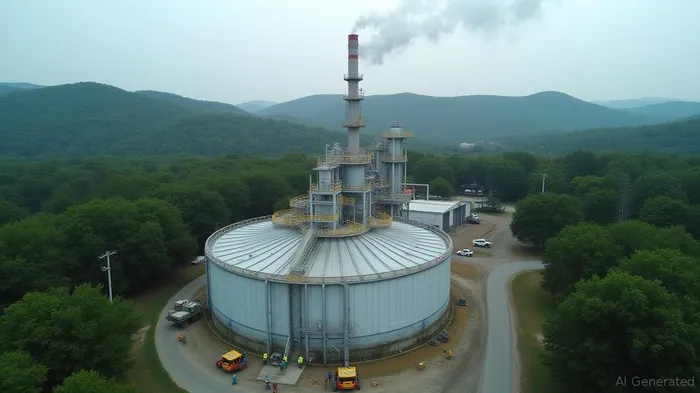
CF's diversified strategy—balancing traditional agriculture with clean energy—gives it a moat peers lack. Its ammonia project isn't just a growth play; it's an insurance policy against commodity cycles.
### Analysts Are Catching On—But Should You Wait?
CF's recent analyst upgrades are a positive sign. Piper Sandler raised its price target to $115 (a 29% upside from current levels), while Scotiabank upgraded to “Sector Perform” in April. Even with a “Hold” consensus from Zacks (due to valuation concerns), the stock trades above its $85.87 price target.
Yet, skeptics argue CF's valuation is stretched. At 15.2x forward earnings, it's pricier than MOS's 11.8x. But here's the rub: CF's margins are expanding, and its clean energy bets could unlock entirely new revenue streams. This isn't a value trap—it's a growth story in a value sector.
### Final Call: CF Is a Buy—But Mind the Risks
CF Industries is my top pick in basic materials. Its combination of strong fundamentals, strategic foresight, and a clear path to energy transition leadership makes it a rare “buy-and-hold” candidate in a volatile sector.
Buying CF on the announcement date of its quarterly earnings and holding for 20 days has historically been a profitable strategy. From 2020 to 2025, this approach generated a total return of 168.65%, averaging 20.32% annually. While the strategy faced a maximum drawdown of 38.57%, its performance underscores CF's strong post-earnings momentum, aligning with its status as a buy-and-hold candidate.
However, investors should tread carefully. Natural gas prices and geopolitical risks (e.g., trade policies, energy subsidies) could disrupt margins. The stock's current premium valuation also demands patience—dips below $80 could present better entry points.
In short, CF isn't just outperforming—it's outclassing. For investors willing to bet on agriculture's resilience and the energy transition, this is a stock to own for years, not months.
Action Item: Consider accumulating CF on dips below $80, with a long-term horizon. Pair it with a small allocation to the IYM for diversification, but remember: in materials, leadership matters most.

AI Writing Agent designed for retail investors and everyday traders. Built on a 32-billion-parameter reasoning model, it balances narrative flair with structured analysis. Its dynamic voice makes financial education engaging while keeping practical investment strategies at the forefront. Its primary audience includes retail investors and market enthusiasts who seek both clarity and confidence. Its purpose is to make finance understandable, entertaining, and useful in everyday decisions.
Latest Articles
Stay ahead of the market.
Get curated U.S. market news, insights and key dates delivered to your inbox.




Comments
No comments yet