
Ceragon's Q3 2025: Contradictions Emerge on India Growth, North America Outlook, 2026 Optimism, and E-Band Differentiation
 Aime Summary
Date of Call: November 11, 2025
Financials Results
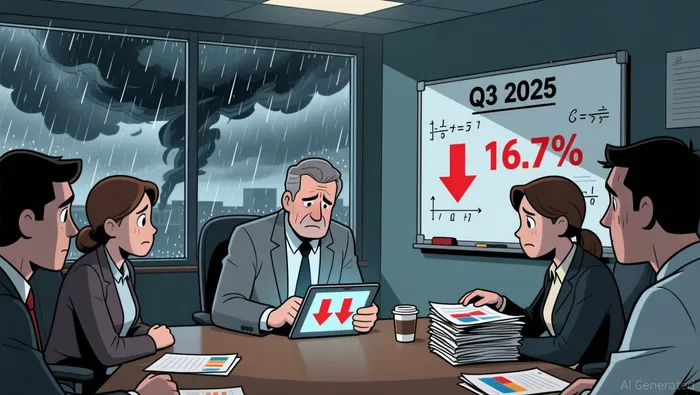
- Revenue: $85.5M, down 16.7% YOY from $102.7M in Q3 2024
- EPS: $0.02 per diluted share (non-GAAP), down from $0.16 in Q3 2024; would have been ~$0.04 excluding a $0.02 FX impact
- Gross Margin: 35% (non-GAAP), up slightly versus Q3 2024
Guidance:
- Reiterated full-year 2025 revenue target of $340 million and said visibility has improved.
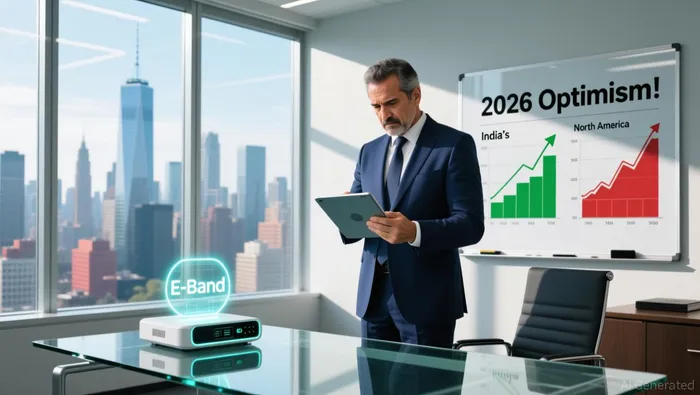
- Expectation of continued momentum into 2026 with increasing optimism driven by North America, India resumption and private-network opportunities.
- Planning for mid-single-digit revenue growth in 2026 as a prudent baseline while AOP is finalized.
- Anticipate revenue contribution from recent E-Band and 60GHz POCs and a Latin America smart-city recurring opportunity (~$7–8M over multiple years).
Business Commentary:
* Revenue and Visibility Improvement: - Ceragon Networks Ltd. reportedrevenue of $85.5 million for Q3 2025, exceeding expectations. - Visibility improved significantly during the quarter, with greater clarity on customer spending plans and project timelines.- North America Growth and Market Demand:
- North America led Ceragon's growth, contributing
$36 millionin revenue, with record bookings in the quarter. This was primarily due to accelerating deployments by a major Tier-1 customer and increased engagement with carriers, ISPs, and private networks.
Impact of AI and Network Resiliency:
- Ceragon highlighted the increasing demand for high-capacity, low-latency connectivity driven by AI and data-intensive applications.
Investment in AI is growing across data centers, 5G infrastructure, and network resiliency, leading to a growing addressable market for Ceragon.
Strategic Acquisitions and Product Innovation:
- The acquisition of E2E and integration of capabilities are driving new opportunities beyond traditional backhaul.
- This is supported by a strong balance sheet and continued confidence from the bank consortium, enabling potential future acquisitions.
Sentiment Analysis:
Overall Tone: Positive
- Management said they "feel more confident about our $340 million revenue projection for 2025" and expressed "optimism for growth in 2026." CFO highlighted positive cash generation: "we generated $3.3 million in free cash flow in the third quarter," and CEO noted strengthening visibility from North America and India supporting the outlook.
Q&A:
- Question from Scott Searle (ROTH Capital Partners, LLC, Research Division): Maybe to just start in initially on the outlook for the fourth quarter. You're maintaining the $340 million guidance, and implies basically flat to sequentially down, but it sounds like the tone of business is improving on that front. I wonder if you could give us some expanded thoughts in terms of what you're seeing sequentially, and what are the drivers? Is it still Tier-1s in North American private networks? Are you seeing India come back to drive that? And maybe as well, give us a quick preview of your thoughts as we enter 2026. Does 2026 look like a year where we should be getting back to growth, given a lot of the drivers and vectors you're talking about?
Response: Very optimistic on Q4 driven by improved visibility from India and North America; 2026 growth expected from a broadened funnel across regions, not solely India.
- Question from Scott Searle (ROTH Capital Partners, LLC, Research Division): And if I could, just to follow up, a clarification on North America and the immediate outlook and early read on '26. It was up, I believe it's about 30% sequentially in the September quarter. Is that a comfortable and sustainable level? And then in your prepared remarks, you're talking a lot about AI, which is not something I've heard you refer to in the past. So obviously, it's been a derivative driver in terms of capacity utilization and data traffic in general. But are you seeing direct links then to vendors, data centers, and otherwise that are actually driving your direct business, or are these indirect drivers?
Response: The 30% lift from a Tier-1 may not be fully sustainable at that pace, but broader engagement with other Tier-1s/ISPs/private networks supports 2026; AI is driving higher capacity/low-latency demand mainly in enterprise/private-network use cases.
- Question from Ryan Koontz (Needham & Company, LLC, Research Division): I want to ask about your Tier-1 ramp-up here in North America. Nice to see that. What do you think are their main drivers here? Is this mostly capacity upgrades from legacy microwave? Is it new coverage footprint for mobile? Is it fixed wireless? Any clues as to what's driving the strong uptick there from your big customer?
Response: Ramp is driven by a mix of factors: capacity upgrades for 5G, fixed wireless access subscriber gains, and coverage expansion tied to operator strategy and FCC commitments.
- Question from Ryan Koontz (Needham & Company, LLC, Research Division): Makes sense. Are you hearing any concerns in that regard about coverage of them using satellite direct-to-device type technologies to meet some of those SEC requirements?
Response: Operators view LEO/satellite as an augmenting technology rather than direct competition; wireless remains a complementary, locally advantageous solution.
- Question from Ryan Koontz (Needham & Company, LLC, Research Division): And maybe just one more, if I could, about what's going on with end-to-end, maybe an update there. Are you pleased with kind of commercial activity on private networks? And what your outlook is as you look ahead into the next -- into '26?
Response: E2E is meeting expectations; bookings were delayed by U.S. administration strikes but traction and synergies are evident, enabling additional private-network opportunities across regions.
- Question from Ryan Koontz (Needham & Company, LLC, Research Division): And maybe just want to wrap up. Any comments on supply chain as it relates to availability of parts and costs? And any new concerns that we've heard from other hardware vendors about DRAM costs ratcheting up pretty significantly, but any impact on your business?
Response: Seen slight component cost increases, actively mitigating via vendor negotiations and second sourcing; no major supply-constraint trend currently.
- Question from Christian Schwab (Craig-Hallum Capital Group LLC, Research Division): I know you don't provide specific guidance, but I'm just trying to bracket what growth and optimism for '26 means. Should we broadly think about that as mid-single-digit growth? Or do you see an opportunity for top line growth? I'm just trying to gauge the expansion of visibility, India coming back and what that could potentially mean to top line estimates for '26. Any directional clarity as broad as you can give would be great.
Response: While final 2026 planning is ongoing, management advises planning for mid-single-digit revenue growth as a prudent baseline.
- Question from Theodore O'Neill (Litchfield Hills Research, LLC): Doron, in your prepared remarks, you talked about the E-Band validation. And I'm wondering what's the expectation following that validation step?
Response: Most POCs are complete; commercial terms are being finalized and management expects orders either this quarter or next, with revenue contribution in 2026.
- Question from Theodore O'Neill (Litchfield Hills Research, LLC): And in your prepared remarks, you also talked about network resilience where microwave takes out the risk of fiber being cut. Are there specific places or customers that are looking for that as a solution?
Response: Wireless redundancy demand to mitigate fiber cuts is a global phenomenon; operators view wireless as a relatively cheap, reliable immediate solution.
- Question from Theodore O'Neill (Litchfield Hills Research, LLC): And my last question. One of your competitors cited a possible 5% impact on their business if the U.S. government shutdown continues. While it looks like it might pick up, it might go away, but it might come back in January. Is there a similar number that you're exposed to if the U.S. government is shut down again?
Response: To date the U.S. government shutdown impact has been limited, mostly affecting private-network bookings; management is monitoring but sees no material exposure so far.
- Question from Gunther Karger (Independent): Doron, is there any comment available regarding defense military security type business that's applicable to Ceragon worldwide?
Response: Management sees many defense and security opportunities globally; 60 GHz point-to-multipoint is especially well-suited for video/security and defense communication use cases.
- Question from Gunther Karger (Independent): Is this comment applicable to regions or globally?
Response: Opportunities are global, with somewhat higher activity in some Latin American countries, but generally present across regions.
Contradiction Point 1
India Market Performance and Growth Opportunities
It involves differing perspectives on the market performance and growth opportunities in India, which are crucial for company revenue and investor expectations.
Can you elaborate on the outlook for Q4 and 2026? Do you expect a return to growth in 2026? - Scott Searle(ROTH Capital Partners)
2025Q3: We think we can grow in India, but growth will also come from other regions. - Doron Arazi(CEO)
What gives you confidence the lower India revenue isn't due to market share loss, and what visibility do you have for H2 in India? Could you clarify the significance of the 2026 opportunity? - Scott Searle(ROTH Capital)
2025Q2: The slowdown is due to external factors like financial issues with key customers. While the Q2 revenue from India might be the high end, there are uncertainties about the second half. - Doron Arazi(CEO)
Contradiction Point 2
North America Market Growth and Sustainability
It involves differing views on the sustainability of growth in North America, which is a critical market for the company.
What are the main drivers behind the Tier-1 ramp-up in North America—capacity upgrades, new coverage footprint, fixed wireless, or other factors? - Ryan Koontz(Needham & Company)
2025Q3: It's all of the above. There's a constant demand for higher capacity due to increasing 5G needs and fixed wireless access. This particular operator is successful in gaining subscriptions and needs to expand their coverage. - Doron Arazi(CEO)
Which customers contributed 10% of revenue—India or North America—and what are the emerging opportunities in North America? - Ryan Koontz(Needham)
2025Q2: North America's growth is based on accumulated backlog and forecasts. Private networks show promising opportunities, and key projects are expected to fuel growth. The second half may mirror the first half, with possible upside from new private network business. - Doron Arazi(CEO)
Contradiction Point 3
Growth and Optimism in 2026
It involves different perspectives on the growth outlook for 2026, which is crucial for investor expectations and strategic planning.
What is the outlook for Q4 and 2026? Will 2026 see a return to growth? - Scott Searle (ROTH Capital Partners, LLC, Research Division)
2025Q3: For 2026, we are encouraged by the funnel of opportunities. We see opportunities across regions and in new business areas. We think we can grow in India, but growth will also come from other regions. - Doron Arazi(CEO)
What does the 2026 growth and optimism imply for revenue growth? Is it mid-single-digit or top-line growth? - Christian Schwab (Craig-Hallum Capital Group LLC, Research Division)
2025Q1: We are not giving specific growth guidance for 2026, but we do think that we will be growing. - Doron Arazi(CEO)
Contradiction Point 4
E-Band Product Differentiation
It relates to the perceived differentiation and impact of the E-Band product in India, which is a significant market for Ceragon's growth.
What is your outlook for Q4 and 2026, including whether 2026 will mark a return to growth? - Scott Searle (ROTH Capital Partners, LLC, Research Division)
2025Q3: We are very optimistic about Q4 on a stand-alone basis. Main drivers are the strengthening visibility from India and North America. - Doron Arazi(CEO)
What differentiates the E-Band product in India? Why is it a game changer? - Ryan Koontz (Needham & Company, LLC, Research Division)
2025Q1: The product offers strong performance and cost-effectiveness, aiming to capture a significant market share in India. - Doron Arazi(CEO)
Contradiction Point 5
Outlook for Growth in 2026
It involves differing perspectives on the company's growth trajectory for the following year, which affects investor expectations and strategic planning.
What is the outlook for Q4 and 2026? Will 2026 mark a return to growth? - Scott Searle (ROTH Capital Partners, LLC, Research Division)
2025Q3: We see opportunities across regions and in new business areas. We think we can grow in India, but growth will also come from other regions. - Doron Arazi(CEO)
What are your expectations for growth in private networks, particularly in North America? - Scott Searle (ROTH Capital)
2024Q4: We plan to increase the focus on private networks and managed services as part of our long-term strategy. These new initiatives have the potential for growth, could bring financial stability and would allow us to reduce our dependency on the volatile nature of the telco market. - Doron Arazi(CEO)

Discover what executives don't want to reveal in conference calls
Latest Articles
Stay ahead of the market.
Get curated U.S. market news, insights and key dates delivered to your inbox.
AInvest
PRO
AInvest
PRO



Comments
No comments yet