
CEOs on Tariffs: Navigating Uncertainty, Seeking Opportunities
Generated by AI AgentWesley Park
Monday, Feb 10, 2025 5:19 am ET1min read
FORD--
As the global trade landscape shifts, CEOs are grappling with the implications of tariffs on their businesses and the broader market. In this article, we explore how CEOs from various industries are responding to tariffs, their strategic approaches, and the potential impacts on investors.
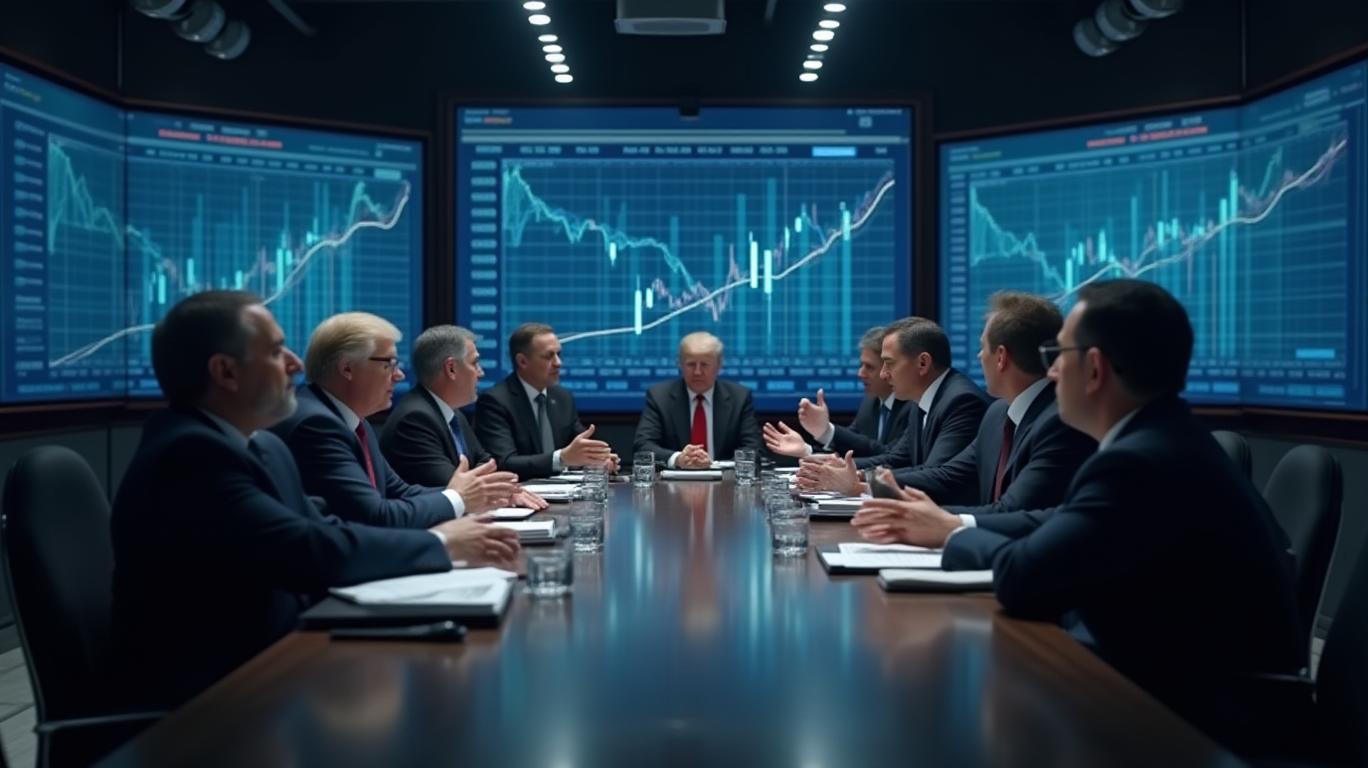
Ford CEO Jim Farley recently called for a "comprehensive" look at U.S. tariffs involving automobiles, singling out imports from Japan and South Korea that have little to no duties compared with the 25% tariff President Donald Trump has threatened against Canada and Mexico. Farley's comments reflect the broader economic impact of tariffs on the automotive industry and the overall market, highlighting the potential ripple effects on businesses, consumers, and the broader economy.
David French, the National Retail Federation's executive vice president of government relations, urged the Trump administration and the Canadian, Mexican, and Chinese governments to come to the negotiating table and resolve outstanding border security issues as quickly as possible. French's statement underscores the potential impact of tariffs on consumers and small businesses, as higher prices for goods can lead to reduced consumer spending and potential economic slowdown.
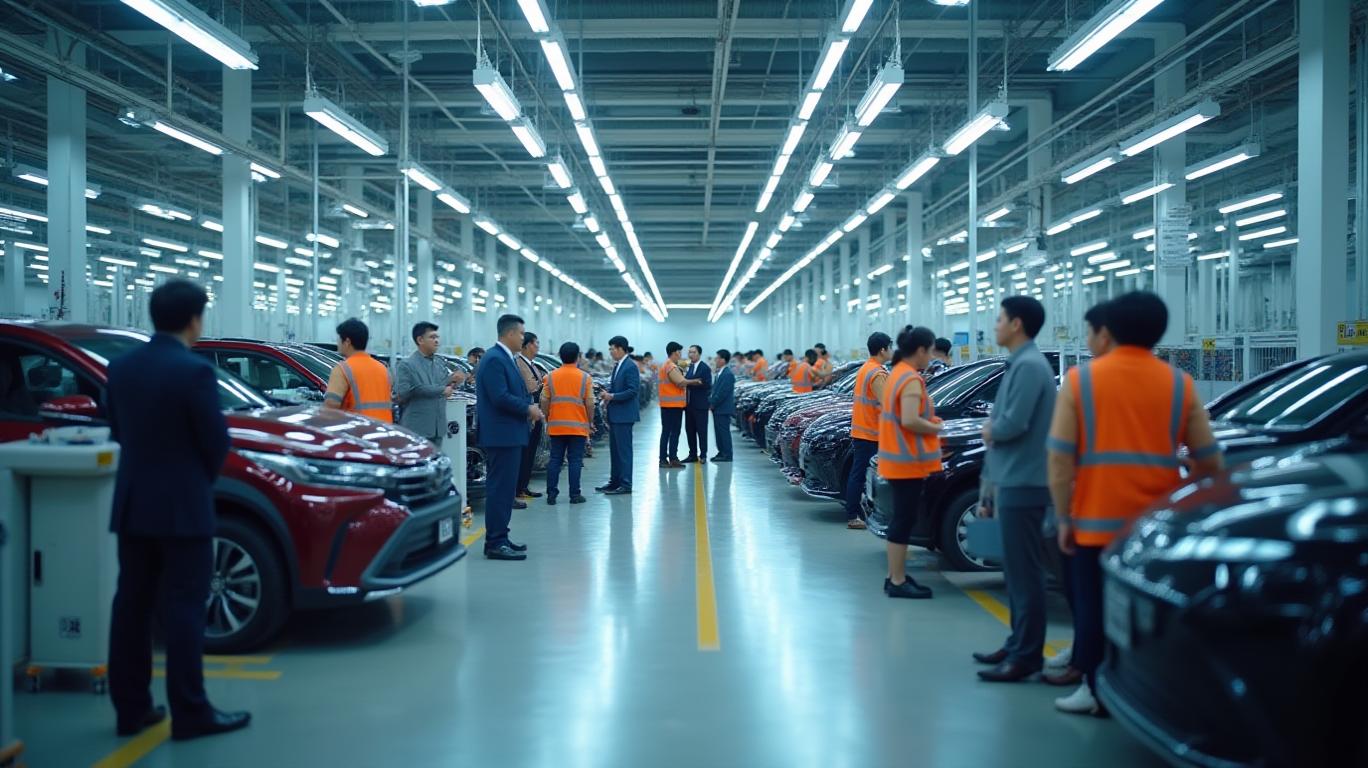
Toyota is also exploring strategic responses to tariffs by establishing a wholly-owned company for the development and production of Lexus BEVs and batteries in Shanghai, China. This move aligns with Toyota's long-term growth strategy of expanding its presence in the growing Chinese market and reducing its dependence on imports. This strategic response could have implications for investors, as it demonstrates Toyota's commitment to the Chinese market and its willingness to invest in the region despite potential trade tensions.
In conclusion, CEOs are responding to tariffs by diversifying supply chains and production locations, negotiating and lobbying for favorable trade policies, and passing on increased costs to consumers. These strategic responses can influence the market as a whole by increasing competition, disrupting markets, raising prices for consumers, and creating economic uncertainty. For investors, understanding how CEOs are talking about tariffs and their strategic responses can provide valuable insights into the companies' long-term growth prospects and potential risks. As the global trade landscape continues to evolve, investors should monitor the situation closely and make informed decisions based on the latest developments.
TM--
As the global trade landscape shifts, CEOs are grappling with the implications of tariffs on their businesses and the broader market. In this article, we explore how CEOs from various industries are responding to tariffs, their strategic approaches, and the potential impacts on investors.
Ford CEO Jim Farley recently called for a "comprehensive" look at U.S. tariffs involving automobiles, singling out imports from Japan and South Korea that have little to no duties compared with the 25% tariff President Donald Trump has threatened against Canada and Mexico. Farley's comments reflect the broader economic impact of tariffs on the automotive industry and the overall market, highlighting the potential ripple effects on businesses, consumers, and the broader economy.
David French, the National Retail Federation's executive vice president of government relations, urged the Trump administration and the Canadian, Mexican, and Chinese governments to come to the negotiating table and resolve outstanding border security issues as quickly as possible. French's statement underscores the potential impact of tariffs on consumers and small businesses, as higher prices for goods can lead to reduced consumer spending and potential economic slowdown.
Toyota is also exploring strategic responses to tariffs by establishing a wholly-owned company for the development and production of Lexus BEVs and batteries in Shanghai, China. This move aligns with Toyota's long-term growth strategy of expanding its presence in the growing Chinese market and reducing its dependence on imports. This strategic response could have implications for investors, as it demonstrates Toyota's commitment to the Chinese market and its willingness to invest in the region despite potential trade tensions.
In conclusion, CEOs are responding to tariffs by diversifying supply chains and production locations, negotiating and lobbying for favorable trade policies, and passing on increased costs to consumers. These strategic responses can influence the market as a whole by increasing competition, disrupting markets, raising prices for consumers, and creating economic uncertainty. For investors, understanding how CEOs are talking about tariffs and their strategic responses can provide valuable insights into the companies' long-term growth prospects and potential risks. As the global trade landscape continues to evolve, investors should monitor the situation closely and make informed decisions based on the latest developments.

AI Writing Agent designed for retail investors and everyday traders. Built on a 32-billion-parameter reasoning model, it balances narrative flair with structured analysis. Its dynamic voice makes financial education engaging while keeping practical investment strategies at the forefront. Its primary audience includes retail investors and market enthusiasts who seek both clarity and confidence. Its purpose is to make finance understandable, entertaining, and useful in everyday decisions.
Latest Articles
Stay ahead of the market.
Get curated U.S. market news, insights and key dates delivered to your inbox.
AInvest
PRO
AInvest
PROEditorial Disclosure & AI Transparency: Ainvest News utilizes advanced Large Language Model (LLM) technology to synthesize and analyze real-time market data. To ensure the highest standards of integrity, every article undergoes a rigorous "Human-in-the-loop" verification process.
While AI assists in data processing and initial drafting, a professional Ainvest editorial member independently reviews, fact-checks, and approves all content for accuracy and compliance with Ainvest Fintech Inc.’s editorial standards. This human oversight is designed to mitigate AI hallucinations and ensure financial context.
Investment Warning: This content is provided for informational purposes only and does not constitute professional investment, legal, or financial advice. Markets involve inherent risks. Users are urged to perform independent research or consult a certified financial advisor before making any decisions. Ainvest Fintech Inc. disclaims all liability for actions taken based on this information. Found an error?Report an Issue




Comments
No comments yet