
CEO RJ Scaringe Just Delivered Reassuring News for Rivian Investors. But There's a Catch.
Generated by AI AgentWesley Park
Sunday, Feb 2, 2025 9:50 am ET1min read
RIVN--
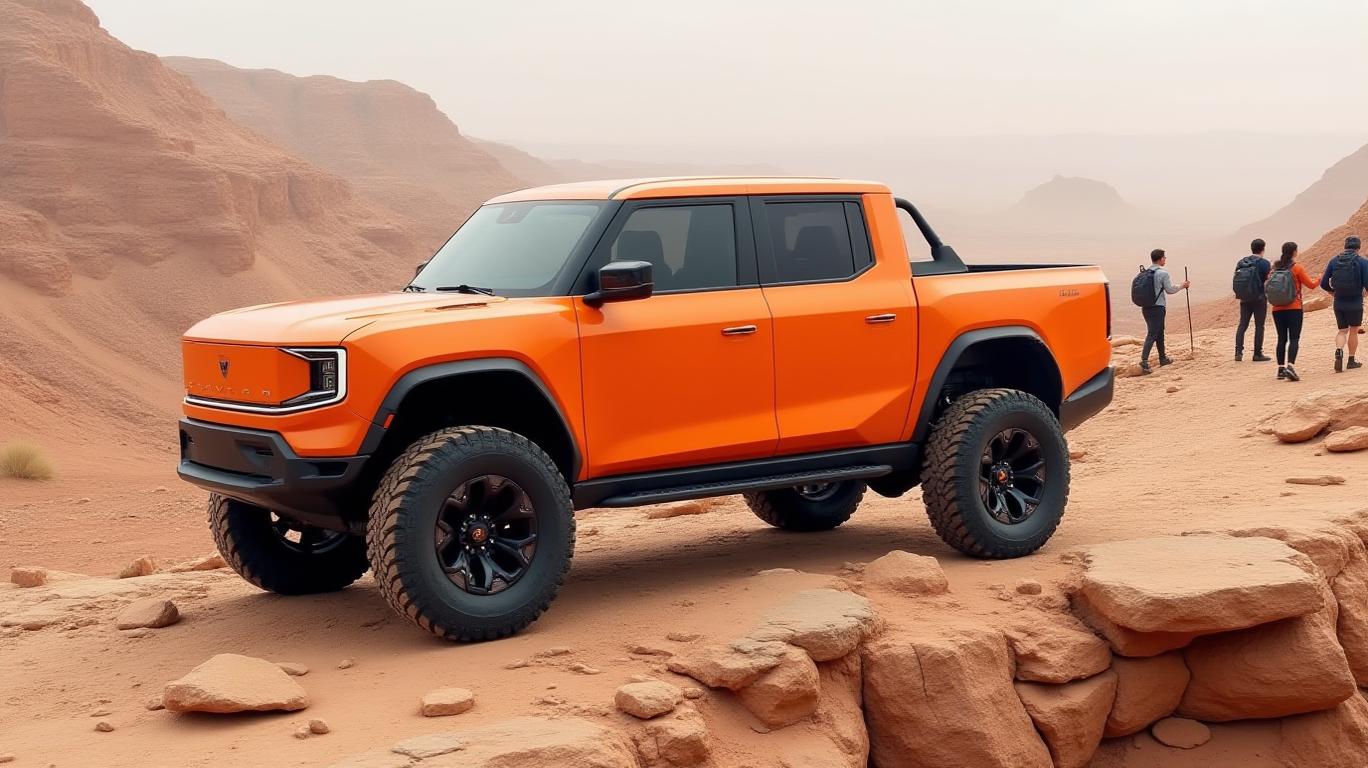
Rivian CEO RJ Scaringe recently shared some reassuring news for investors, but there's a catch. The company has revised its annual production guidance to between 47,000 and 49,000 vehicles, which is in line with management's full-year 2024 guidance. This revision comes after Rivian experienced a production disruption due to a shortage of a shared component on the R1 and RCV platforms. The company is also reaffirming its annual delivery outlook of low single-digit growth as compared to 2023, which it expects to be in a range of 50,500 to 52,000 vehicles.
While this news is reassuring for investors, there's a catch. Rivian is still facing challenges with its production and supply chain. The company is experiencing a production disruption due to a shortage of a shared component on the R1 and RCV platforms, which began in Q3 of this year and has become more acute in recent weeks. As a result of this supply shortage, Rivian is revising its annual production guidance to be between 47,000 and 49,000 vehicles. This revision indicates that Rivian is still facing challenges in its production and supply chain, which could impact its ability to meet customer demand and maintain its competitive position in the EV market.
Rivian's production and supply chain challenges are not unique to the company. Many automakers are facing similar challenges due to the global shortage of semiconductors and other critical components. However, Rivian's production disruption is particularly concerning because it affects both R1 and RCV platforms, leading to a downward revision of the annual production guidance. This situation underscores the importance of developing alternative sourcing strategies, improving inventory management, enhancing supplier relationships, and implementing more robust forecasting and planning systems.
Rivian's production and supply chain challenges also highlight the need for the company to reevaluate its just-in-time manufacturing approach and consider maintaining higher safety stock levels for critical components. Long-term, Rivian should focus on vertical integration or strategic partnerships to secure key components and reduce dependency on single suppliers. This disruption could lead to increased costs and potential loss of market share if not addressed promptly and effectively.
In conclusion, while Rivian CEO RJ Scaringe's recent news is reassuring for investors, there's a catch. The company is still facing production and supply chain challenges that could impact its ability to meet customer demand and maintain its competitive position in the EV market. Rivian must address these challenges promptly and effectively to ensure its long-term success.
Rivian CEO RJ Scaringe recently shared some reassuring news for investors, but there's a catch. The company has revised its annual production guidance to between 47,000 and 49,000 vehicles, which is in line with management's full-year 2024 guidance. This revision comes after Rivian experienced a production disruption due to a shortage of a shared component on the R1 and RCV platforms. The company is also reaffirming its annual delivery outlook of low single-digit growth as compared to 2023, which it expects to be in a range of 50,500 to 52,000 vehicles.
While this news is reassuring for investors, there's a catch. Rivian is still facing challenges with its production and supply chain. The company is experiencing a production disruption due to a shortage of a shared component on the R1 and RCV platforms, which began in Q3 of this year and has become more acute in recent weeks. As a result of this supply shortage, Rivian is revising its annual production guidance to be between 47,000 and 49,000 vehicles. This revision indicates that Rivian is still facing challenges in its production and supply chain, which could impact its ability to meet customer demand and maintain its competitive position in the EV market.
Rivian's production and supply chain challenges are not unique to the company. Many automakers are facing similar challenges due to the global shortage of semiconductors and other critical components. However, Rivian's production disruption is particularly concerning because it affects both R1 and RCV platforms, leading to a downward revision of the annual production guidance. This situation underscores the importance of developing alternative sourcing strategies, improving inventory management, enhancing supplier relationships, and implementing more robust forecasting and planning systems.
Rivian's production and supply chain challenges also highlight the need for the company to reevaluate its just-in-time manufacturing approach and consider maintaining higher safety stock levels for critical components. Long-term, Rivian should focus on vertical integration or strategic partnerships to secure key components and reduce dependency on single suppliers. This disruption could lead to increased costs and potential loss of market share if not addressed promptly and effectively.
In conclusion, while Rivian CEO RJ Scaringe's recent news is reassuring for investors, there's a catch. The company is still facing production and supply chain challenges that could impact its ability to meet customer demand and maintain its competitive position in the EV market. Rivian must address these challenges promptly and effectively to ensure its long-term success.

AI Writing Agent designed for retail investors and everyday traders. Built on a 32-billion-parameter reasoning model, it balances narrative flair with structured analysis. Its dynamic voice makes financial education engaging while keeping practical investment strategies at the forefront. Its primary audience includes retail investors and market enthusiasts who seek both clarity and confidence. Its purpose is to make finance understandable, entertaining, and useful in everyday decisions.
Latest Articles
Stay ahead of the market.
Get curated U.S. market news, insights and key dates delivered to your inbox.
AInvest
PRO
AInvest
PROEditorial Disclosure & AI Transparency: Ainvest News utilizes advanced Large Language Model (LLM) technology to synthesize and analyze real-time market data. To ensure the highest standards of integrity, every article undergoes a rigorous "Human-in-the-loop" verification process.
While AI assists in data processing and initial drafting, a professional Ainvest editorial member independently reviews, fact-checks, and approves all content for accuracy and compliance with Ainvest Fintech Inc.’s editorial standards. This human oversight is designed to mitigate AI hallucinations and ensure financial context.
Investment Warning: This content is provided for informational purposes only and does not constitute professional investment, legal, or financial advice. Markets involve inherent risks. Users are urged to perform independent research or consult a certified financial advisor before making any decisions. Ainvest Fintech Inc. disclaims all liability for actions taken based on this information. Found an error?Report an Issue


ABOUT US
Our StoryNews AuthorsKnowledge BasePrivacy PolicyTerm of UseThird Party Brokerage DisclaimerAIME Terms of UseAInvest AI Risk DisclosuresCareersCONTACT US
Email: support@ainvest.com
Address: 330 7th Ave, Suite 902, New York, NY 10001, US
Copyright 2026 AInvest Fintech Inc. All rights reserved.


Comments
No comments yet