
Former AT&T CEO Anne Chow Urges Leaders to Focus on Frontline Employees Amid Permacrisis
Anne Chow, former CEO of AT&TT-- Business, has highlighted a critical issue in the current business environment: leaders are often consumed by external crises, neglecting the development and support of their frontlineFRO-- employees. Chow, who is now a lead director on FranklinCovey’s board of directors and a director of 3MMMM-- and CSX, draws from her extensive experience to underscore the importance of focusing on the "freshman line"—the newest and youngest employees who are often the most overlooked.
During her tenure at AT&T, Chow observed that during crises, such as hurricanes or cyberattacks, the company's teams would rally together, dropping personal agendas to focus on restoring essential services. This unity and clarity of purpose led to exceptional performance. However, she questions why this level of alignment and execution is not sustained in normal times. Today, the business environment is characterized by a "permacrisis"—a constant state of instability due to factors like trade wars, AI disruption, and geopolitical risks. In this context, many leaders become fixated on issues beyond their control, neglecting matters within their influence, such as supporting their frontline employees.
Chow emphasizes that the frontline employees, including managers and new hires, are not just the future but the present of any organization. They are the ones directly interacting with customers, suppliers, and the market. Yet, they often receive less attention and training than senior staff. The complexity of the modern workplace, with its flatter hierarchies and rapid technological changes, has shifted much of this complexity onto the frontline, who are often unsupported. Traditional leadership development has focused on senior executives, leaving early-career professionals to navigate complex roles with minimal preparation.
Chow introduces the term "freshman line" to describe these newest team members, who bring unique skills and mindsets. They are native to new technologies, purpose-driven, and skeptical of traditional business practices. Their tendency to challenge the status quo can be an asset in a business environment that demands innovation. However, they are also more vulnerable to the impacts of uncertainty, with less context and experience to draw upon. Investing in this cohort is crucial for building organizational resilience and agility, especially during times of transformation.
Chow advises leaders to reallocate their energy towards supporting their frontline employees. This involves actively listening to their concerns and ideas, understanding their perspectives, and building their confidence. Leaders need to show up differently, coaching and advising rather than managing. This intentional support is necessary to cultivate business acumenABOS-- and decision confidence in the freshman line, who are increasingly driving internal change and representing the brand.
In conclusion, Chow calls on leaders to focus on attracting and developing their frontline talent. In an era of constant change, these early-career employees will shape how the organization adapts across technology, culture, and growth. Leaders who do not actively support and coach their freshman line risk falling behind in this rapidly evolving business landscape. 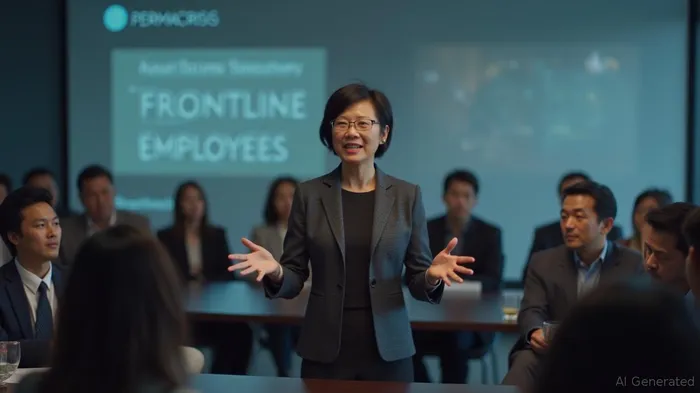

Stay ahead of the market.
Get curated U.S. market news, insights and key dates delivered to your inbox.
AInvest
PRO
AInvest
PRO



Comments
No comments yet