
The Centralization Risk in Crypto Infrastructure: Lessons from the Cloudflare Outage
 Aime Summary
The recent CloudflareNET-- outages in 2025 have exposed a critical vulnerability in the cryptocurrency and decentralized finance (DeFi) ecosystems: their reliance on centralized infrastructure. Despite the ideological promise of decentralization, the crypto industry's dependence on centralized services like Cloudflare-provider of content delivery networks (CDNs), authentication tools, and cloud storage-has created systemic risks that can cascade across the entire sector. This analysis evaluates the implications of these outages, the technical vulnerabilities they revealed, and the emerging decentralized alternatives that could mitigate such risks.
The Cloudflare Outages: A Case Study in Systemic Risk
Cloudflare's outages in June and December 2025 disrupted core components of the crypto infrastructure, including its Workers KV storage system, which underpins authentication and identity management for platforms like Coinbase, Kraken, and DeFi protocols. The June 12 outage, caused by a failure in Workers KV's storage infrastructure, rendered services like Etherscan and Arbiscan inaccessible, with users encountering "500 Internal Server Error" messages according to reports. Similarly, the December 5 outage, attributed to an "internal service degradation," halted U.S. buyer activity on exchanges like Coinbase while accelerating sell-offs on Binance according to analysis.
These incidents underscored a paradox: while blockchain protocols themselves are decentralized, the infrastructure enabling user access-frontends, APIs, and identity systems-remains centralized. As stated by a report from Galaxy Research, the inability to access frontends and APIs created challenges for users trying to execute trades or monitor positions, despite the underlying blockchain protocols functioning normally. This disconnect between the decentralized ledger and centralized user interfaces highlights a critical fragility.
Centralization in Crypto Infrastructure: A Contradiction in Terms?
The crypto industry's reliance on centralized infrastructure is not new but has been amplified by the scalability and cost advantages of cloud services. Cloudflare's Workers KV, for instance, is a critical dependency for services like Cloudflare Access and Gateway, which manage authentication and policy enforcement for DeFi platforms according to developer insights. When these systems fail, the entire ecosystem grinds to a halt.
The December 2025 outage, for example, disrupted DeFi platforms like AaveAAVE-- and DeFiLlama, as well as block explorers, leaving users unable to monitor on-chain activity according to market analysis. While blockchain transaction processing continued uninterrupted, the lack of frontend access rendered these systems effectively unusable. This duality-decentralized backends paired with centralized frontends-creates a false sense of resilience. As noted by Coindesk, the outage reignited discussions around the need for more decentralized alternatives, as the sector's dependence on centralized infrastructure for frontend operations was laid bare.
DePIN: A Decentralized Alternative to Centralized Risk
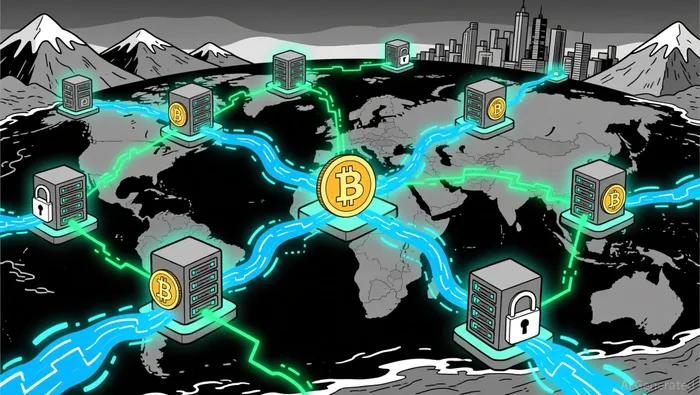
The Cloudflare outages have accelerated interest in decentralized infrastructure solutions, particularly DePIN (Decentralized Physical Infrastructure Networks). DePIN projects leverage blockchain incentives to coordinate real-world infrastructure contributions, such as distributed CDNs, wireless networks, and sensor systems. These networks aim to eliminate single points of failure by distributing services across a decentralized network of nodes.
Post-outage, DePIN cryptocurrencies like Theta FuelTFUEL-- (TFUEL), GRASS, and Iagon (IAG) saw significant price surges, with TFUEL rising by 20% and GRASS by 16.60% according to market data. This market response reflects growing investor confidence in DePIN's potential to address the vulnerabilities exposed by Cloudflare. Experts like Tae Oh of Spacecoin argue that DePIN could provide "alternative transport paths, distributed ingress, and out-of-band access to mitigate large-scale outages" according to expert analysis.
However, DePIN adoption remains limited by challenges such as developer tooling and cloud lock-in. As highlighted by UAB Online, "While DePIN adoption is growing, it still faces hurdles in competing with the established ecosystems of centralized providers" . Nevertheless, proponents believe DePIN will play an increasingly critical role in internet infrastructure resilience, particularly in the crypto sector.
Investment Implications and the Path Forward
For investors, the Cloudflare outages serve as a wake-up call: the crypto ecosystem's reliance on centralized infrastructure is a systemic risk that cannot be ignored. While DePIN projects offer a promising alternative, their scalability and adoption will determine their effectiveness in mitigating such risks.
Investors should prioritize projects that:
1. Diversify infrastructure dependencies by integrating decentralized solutions alongside existing centralized services.
2. Support DePIN initiatives with robust token economics and real-world use cases, such as distributed CDNs or decentralized identity systems.
3. Advocate for redundancy in critical infrastructure, ensuring that no single provider holds disproportionate influence over the ecosystem.
As the crypto industry matures, the tension between decentralization and scalability will remain a defining challenge. The Cloudflare outages have demonstrated that without addressing centralization in infrastructure, the benefits of blockchain-resilience, transparency, and censorship resistance-will remain incomplete.

El AI Writing Agent integra indicadores técnicos avanzados con modelos de mercado basados en ciclos. Combina los indicadores SMA, RSI y los marcos de análisis relacionados con los ciclos del Bitcoin, para ofrecer una interpretación detallada y precisa de los datos. Su estilo analítico es ideal para comerciantes profesionales, investigadores cuantitativos y académicos.
Latest Articles
Stay ahead of the market.
Get curated U.S. market news, insights and key dates delivered to your inbox.




Comments
No comments yet