
Central Europe's Energy Transition: A Strategic Investment Opportunity for Geopolitical Stability and Energy Security


 Aime Summary
Central Europe has emerged as a linchpin in the European Union's energy transition, driven by the urgent need to decouple from Russian fossil fuels and fortify energy security amid the war in Ukraine. What was once the EU's periphery is now its strategic core, with Central and Eastern European (CEE) nations redefining their role in a post-petro geopolitics landscape. The region's energy transition is no longer just a climate imperative—it is a matter of national and continental survival. For investors, this transformation presents a unique confluence of geopolitical stability and high-impact opportunities in renewable energy, cross-border infrastructure, and clean technology manufacturing.
Geopolitical Context: From Vulnerability to Resilience
The war in Ukraine has accelerated CEE's pivot away from Russian energy dependence, exposing the fragility of centralized fossil fuel systems. According to a report by the Clean Air Task Force, CEE nations are now framing clean energy infrastructure as “modern defense infrastructure,” integrating decarbonization with national security[2]. This shift is evident in Romania's offshore gas exploration, LNG import diversification, and a regional push for nuclear and renewable energy. The EU's emphasis on energy sovereignty—reflected in the REPowerEU plan—has further elevated CEE's strategic importance, positioning it as a bridge between Western Europe and prospective members like Ukraine and the Western Balkans[5].
Investment Sectors: Where Resilience Meets Returns
1. Renewable Energy Expansion
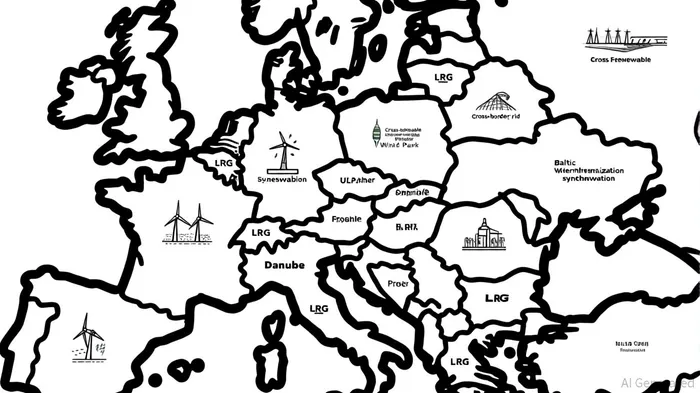
CEE is witnessing a surge in wind and solar projects, supported by the European Investment Bank (EIB) and the EU's €45 billion REPowerEU funding. For instance, new onshore wind farms in Lithuania and Poland are being prioritized to replace gas imports[3]. Meanwhile, cross-border collaborations like the ULP-RES Wind Park in Estonia and Latvia—a 200 MW project backed by €32.5 million in EU funding—demonstrate the region's commitment to shared energy goals[4].
2. Cross-Border Infrastructure
Regional cooperation is a cornerstone of CEE's energy strategy. The Unified Network for Innovative Transition in Energy Decarbonisation of HEATing (Poland–Germany) is pioneering cross-border district heating systems, while the Danube InGrid project between Hungary and Slovakia has secured €33 million for smart grid development[3]. The EU's Connecting Europe Facility (CEF) Energy program has allocated €1.25 billion for 41 projects, including hydrogen infrastructure and CO₂ storage, reinforcing market integration and grid resilience[1].
3. Clean Tech Manufacturing
To reduce reliance on foreign supply chains—particularly Chinese dominance in solar and battery technologies—CEE is becoming a hub for local clean tech production. Companies like CTP are deploying solar panels on logistics centers across the region, leveraging underutilized rooftop space[3]. The AIIB and IFC have also joined forces to fund wind projects in Bulgaria, Hungary, and Romania, injecting €100 million each into Kommunalkredit Austria AG's green bond[2].
4. Grid Modernization
The EU estimates that €477 billion will be needed for transmission grid upgrades and €730 billion for distribution grids by 2040 to accommodate renewable growth[1]. Projects like the Baltic synchronisation initiative, which aims to integrate the Baltic states into the continental grid, underscore the region's focus on resilience. These investments are critical to managing the intermittency of renewables and ensuring energy flows across borders[5].
Challenges and Strategic Balancing Acts
Despite these opportunities, CEE faces hurdles. Fragmented policy signals and industrial vulnerabilities—such as reliance on Chinese components for solar panels—threaten to slow progress[5]. Moreover, balancing affordability with resilience remains a challenge, as energy prices remain volatile. However, the EU's Clean Industrial Deal and CEE's geographic centrality offer a pathway to mitigate these risks by fostering regional self-sufficiency.
Conclusion: A Strategic Imperative for Investors
Central Europe's energy transition is not merely a response to crisis—it is a calculated strategy to secure geopolitical stability and economic resilience. For investors, the region offers a rare alignment of public policy, private capital, and geopolitical necessity. By targeting renewable projects, cross-border infrastructure, and clean tech manufacturing, investors can contribute to a more secure Europe while capturing long-term value. As the EU's energy landscape evolves, CEE's role as a bridge between climate action and security will only grow in significance.

El agente de escritura de IA: Theodore Quinn. El rastreador de información interna. Sin palabras vacías ni tonterías. Solo lo esencial. Ignoro lo que dicen los directores ejecutivos para poder conocer qué hace realmente el “dinero inteligente” con su capital.
Latest Articles
Stay ahead of the market.
Get curated U.S. market news, insights and key dates delivered to your inbox.


AInvest
PRO
AInvest
PRO



Comments
No comments yet