
Central Banks' Gold Rush: How De-Dollarization Fuels Precious Metals' Rise
The world's central banks are engaged in a quiet but historic shift: replacing U.S. dollars with gold. In 2024, global central bank gold purchases hit 1,045 metric tons—the third consecutive year surpassing the 1,000-ton threshold—according to the World Gold Council. This surge, driven by geopolitical tensions, distrust in the dollar, and regulatory changes, has profound implications for investors. As the U.S. dollar's safe-haven status fades, gold is emerging as the ultimate insurance policy. Here's why—and how to profit.
The Geopolitical Catalyst: Sanctions and Sovereignty
The Russia-Ukraine war marked a turning point. When Western nations froze $300 billion of Russia's dollar reserves in 2022, it exposed the vulnerability of holding assets in a currency controlled by adversaries. This wake-up call spurred nations to diversify their reserves. Poland, for instance, increased its gold reserves from 187 tons in 2018 to over 448 tons by 2024, explicitly citing “geopolitical risk management.” Hungary repatriated all its gold from foreign vaults, while Turkey added 75 tons in 2024 alone.
The 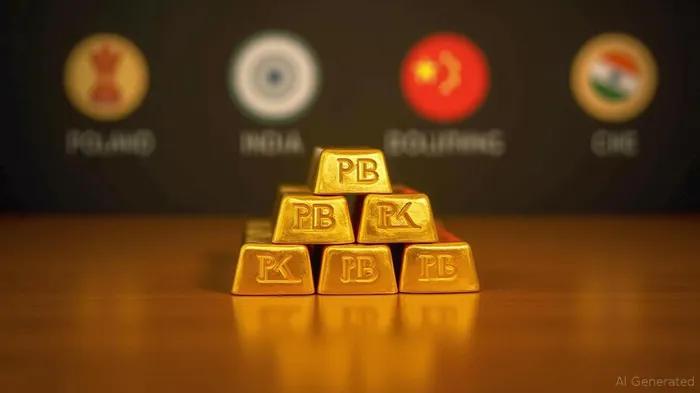 symbolizes this shift. These countries, part of the “Global South,” now account for the bulk of central bank gold buying. China, though opaque in its reporting, has maintained a decade-long accumulation program, holding an estimated 5,000+ tons (versus official figures of 2,280 tons).
Why the Dollar's Safe-Haven Status is Crumbling
The U.S. dollar's dominance, which once stemmed from its role in trade, reserves, and liquidity, is eroding. Foreign central banks now hold just 58% of their reserves in dollars, down from 70% in 2000. This decline reflects three key trends:
1. Sanctions Weaponization: The U.S. has weaponized its dollar-centric system to freeze assets of adversaries, incentivizing nations to seek alternatives.
2. Debt Overhang: U.S. government debt exceeds 130% of GDP, raising concerns about inflation and currency debasement.
3. New Payment Systems: China's Cross-Border Interbank Payment System (CIPS) and Russia's SPFS are reducing reliance on SWIFT and dollar transactions.
This chart illustrates the inverse relationship between gold and the dollar. As the DXYDXYZ-- weakens, gold often rises—a trend likely to persist as central banks continue diversifying.
The Regulatory Boost: Basel III and Institutional Demand
Regulatory changes have further fueled gold's appeal. The Basel III accord's 2022 reclassification of gold as a “tier-one asset”—equivalent to cash and top-rated government bonds—has incentivized banks to hold physical gold. This lowers capital requirements and enhances liquidity during crises, making gold a strategic reserve asset for both central and commercial banks.
Investment Implications: Gold ETFs and Miners with Leverage
Investors can capitalize on this trend through two primary avenues:
1. Gold ETFs: Funds like the SPDR Gold Shares (GLD) offer low-cost exposure to physical gold. With central banks buying at record rates, GLD's steady rise—up 15% since early 2024—reflects this institutional demand.
Gold ETFs are ideal for investors seeking broad, low-risk exposure.
- Gold Miners with Exploration Leverage: Companies like Barrick Gold (GOLD) or Newmont Corporation (NEM) benefit from rising gold prices and cost efficiencies. Miners operating in geopolitically stable regions (e.g., Canada, Australia) face less regulatory risk, making their reserves more predictable. For example, Barrick's 2024 output rose 8% year-on-year, with exploration budgets prioritized in low-risk jurisdictions.
Risks and Considerations
- Volatility: Gold prices are sensitive to interest rates and geopolitical events. A sudden Fed pivot or a de-escalation of tensions could trigger short-term dips.
- Currency Exposure: Investors in gold ETFs denominated in dollars may face headwinds if the dollar strengthens unexpectedly.
- Miner Specifics: Gold miners carry operational risks, such as production delays or commodity price swings.
The Bottom Line
Central banks' gold rush is no fleeting trend. With geopolitical risks elevated and the dollar's safe-haven status weakening, gold remains the ultimate hedge against financial instability. For investors, a 5–10% allocation to gold via ETFs like GLD or miners with exploration upside in stable regions offers a prudent defense against a shifting monetary landscape.
As the World Gold Council forecasts gold prices to hit $3,300/oz by end-2025, the question isn't whether to own gold—but how much, and in what form.

Stay ahead of the market.
Get curated U.S. market news, insights and key dates delivered to your inbox.


AInvest
PRO
AInvest
PRO



Comments
No comments yet