
Central Banks Caution on Stablecoin Dangers, Coinbase Argues Safety


 Aime Summary
The growing dominance of stablecoins has sparked warnings from central banks about potential systemic risks, with the Bank for International Settlements (BIS) and European Central Bank (ECB) cautioning that a mass redemption event could trigger global financial instability. Meanwhile, crypto exchanges like CoinbaseCOIN-- argue stablecoins are safer than traditional banking systems.
Central banks are increasingly concerned that stablecoins-digital tokens pegged to fiat currencies like the U.S. dollar-could become systemically important, mirroring the risks seen during the 2008 financial crisis. Olaf Sleijpen, President of the Dutch National Bank, and ECB Governing Council member, warned that a sudden loss of confidence in stablecoins could lead to fire-sales of U.S. Treasury bonds, forcing central banks to rethink monetary policy. "If stablecoins are notNOT-- that stable, you could end up in a situation where the underlying assets need to be sold quickly," Sleijpen said, referencing the potential for liquidity crises.
The BIS echoed these concerns in a June 2025 report, noting that a loss of confidence in stablecoins could trigger large-scale redemptions, disrupting the U.S. Treasury market. The report highlighted that stablecoin reserves, often held in short-term government bonds, could face rapid liquidation during a crisis, exacerbating volatility in global bond markets. This risk is amplified by the explosive growth of the sector, with industry forecasts projecting stablecoin markets could reach $2–$3 trillion by 2030.
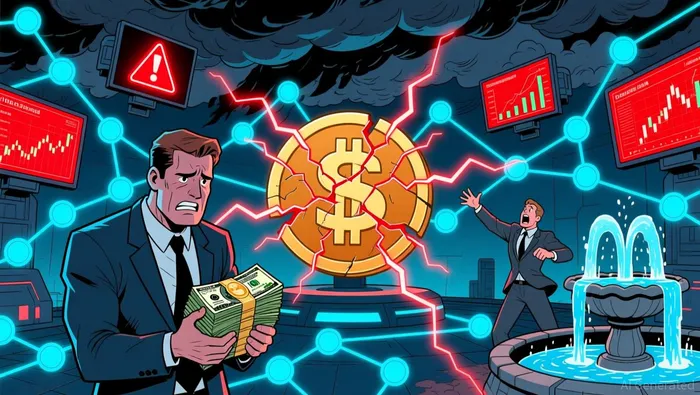 Historical parallels are already drawing attention. The 2023 depegging of USDC following the collapse of Silicon Valley Bank demonstrated how real-world financial shocks can ripple into crypto markets. Similarly, Trump's October 2025 threats of 100% tariffs on Chinese goods triggered a $20 billion crypto market selloff in a single day, underscoring how geopolitical tensions can destabilize digital assets. ECB officials warn that such volatility could accelerate stablecoin adoption in ways that undermine central bank control over monetary policy.
Coinbase, however, has pushed back against these warnings. The exchange's Chief Policy Officer, Faryar Shirzad, argued that stablecoins are inherently safer than traditional banking due to their full-reserve backing and liquidity. "Banks make long-term, often risky loans to private individuals and corporations, which exposes them to both credit and liquidity risks. In contrast, stablecoin issuers typically hold short-term government bonds, which are virtually risk-free and highly liquid," Shirzad said.
Regulators remain divided. While the ECB and BIS emphasize the need for preemptive oversight, U.S. Federal Reserve Governor Stephen Miran called stablecoins an "innovation" that has been unfairly stigmatized. The debate reflects broader tensions between financial innovation and stability, as stablecoin usage grows from $310 billion today to potentially $2 trillion in the next decade.

Stay ahead of the market.
Get curated U.S. market news, insights and key dates delivered to your inbox.
AInvest
PRO
AInvest
PRO



Comments
No comments yet