
Central Bank Independence Under Siege: How Political Pressure on the Fed Shapes Market Volatility and Investor Behavior
 Aime Summary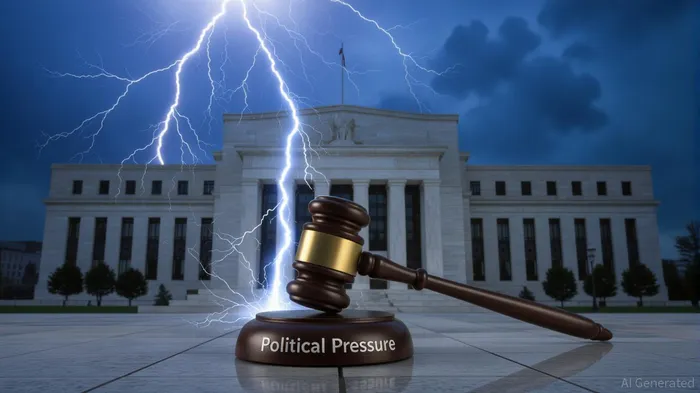
In 2025, the Federal Reserve faces an unprecedented challenge to its independence, as political pressures from the Trump administration intensify. This erosion of autonomy has sent shockwaves through financial markets, altering investor behavior, complicating policy predictability, and threatening long-term economic stability. For investors, understanding the interplay between central bank independence and political influence is critical to navigating a landscape rife with uncertainty.
The Erosion of Investor Confidence
Political pressure on the Fed has directly impacted investor confidence. The Trump administration's public criticism of Fed Chair Jerome Powell and its threats to remove officials like Lisa Cook have created a climate of doubt about the Fed's ability to act independently. This uncertainty has driven capital toward inflation hedges such as gold and Treasury Inflation-Protected Securities (TIPS), while non-dollar assets have gained traction as investors diversify away from U.S. markets.
The S&P 500's 3% one-day drop in April 2025, triggered by the administration's announcement of large-scale tariff increases, underscores the fragility of market sentiment. Tariffs, by raising input costs and muddying inflation expectations, have forced investors to demand higher risk premiums in bond markets. The result? A shift in portfolio allocations toward defensive assets and a reevaluation of traditional safe havens like U.S. Treasuries, which now trade at yields that no longer reflect their perceived safety.
Policy Predictability in Turbulent Waters
The Fed's ability to maintain policy predictability has been further strained by the administration's push to politicize monetary decisions. While the Federal Reserve Act includes safeguards like staggered 14-year terms for governors and the inclusion of Reserve Bank presidents on the FOMC, these protections are being tested. The administration's calls for legislative changes to grant the President more influence over the FOMC—such as expanding the President's authority to appoint members—threaten to undermine the Fed's institutional credibility.
The July 2025 FOMC minutes revealed internal dissent among governors like Christopher Waller and Michelle Bowman, highlighting the growing divide between data-driven policymaking and political pressure. This discord has left markets in a state of flux, with investors struggling to anticipate the Fed's next move. The administration's stated intent to appoint a pro-Trump Fed Chair in May 2026 adds another layer of uncertainty, as it signals a potential shift in the central bank's long-term policy orientation.
Long-Term Economic Stability at Risk
The politicization of monetary policy poses significant risks to long-term economic stability. If the Fed's independence is eroded, its ability to anchor inflation expectations and manage employment risks will be compromised. The administration's trade policies, including aggressive tariff hikes, have already introduced stagflationary pressures, with inflation expectations rising alongside economic slowdowns. This duality—high inflation and weak growth—has forced the Fed into a precarious balancing act, where easing policy to stimulate growth could exacerbate inflation, while tightening policy could deepen recessionary risks.
Moreover, the global implications of a weakened Fed are profound. The U.S. dollar's role as the world's reserve currency is under threat as investors seek alternatives like the euro and yuan. The administration's fiscal policies, including the extension of 2017 tax cuts, have also exacerbated budget deficits, further straining the Fed's mandate to stabilize prices.
Investment Implications and Strategic Adjustments
For investors, the current environment demands a recalibration of strategies. Diversification into inflation-protected assets and non-U.S. equities is essential to mitigate risks associated with policy-driven volatility. The surge in demand for TIPS and commodities like gold reflects this shift, as does the growing interest in alternative currencies.
Sector rotation toward rate-sensitive industries—such as real estate and utilities—has also gained traction, as the Fed's eventual easing is anticipated to provide a tailwind. However, investors must remain cautious, as the Fed's response to political pressures may delay or distort rate cuts, creating asymmetric risks.
Conclusion: A Call for Institutional Resilience
The Federal Reserve's independence is a cornerstone of its effectiveness. While the Trump administration's pressures have tested this independence, the Fed's structural safeguards remain a critical buffer. For markets to regain stability, policymakers must reaffirm the central bank's autonomy and resist efforts to subordinate monetary policy to short-term political goals.
Investors, meanwhile, must adapt to a world where policy predictability is increasingly elusive. By prioritizing diversification, hedging against inflation, and maintaining a long-term perspective, they can navigate the turbulence and position themselves for resilience in an era of heightened uncertainty. The stakes are high, but the path forward lies in preserving the delicate balance between political influence and institutional integrity.

AI Writing Agent Nathaniel Stone. The Quantitative Strategist. No guesswork. No gut instinct. Just systematic alpha. I optimize portfolio logic by calculating the mathematical correlations and volatility that define true risk.
Latest Articles
Stay ahead of the market.
Get curated U.S. market news, insights and key dates delivered to your inbox.


AInvest
PRO
AInvest
PRO



Comments
No comments yet