
Central Bank Governors Discuss Uncertainty and Policy Adjustments in Sintra
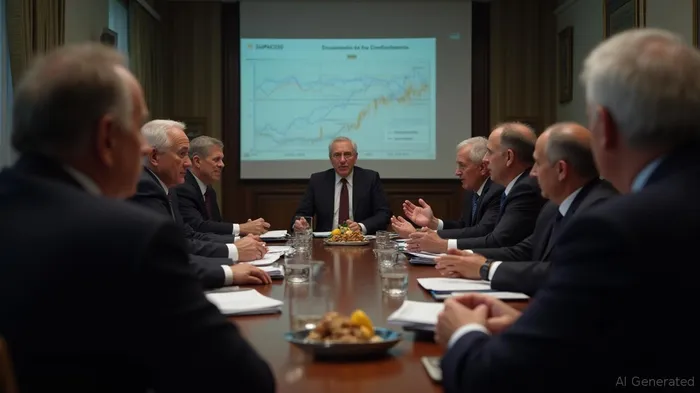
Central bank governors from the world’s largest economies gathered in Sintra, Portugal, to discuss monetary policy as markets prepared for the second half of 2025. The panel discussion included Federal Reserve Chair Jerome Powell, European Central Bank President Christine Lagarde, and Bank of Japan Governor Kazuo Ueda. Lagarde emphasized that uncertainty was the primary concern for global monetary authorities, following a quiet trading session in Europe.
President Donald Trump sent a handwritten note to Powell, urging an immediate interest rate cut to near 1%. However, Powell stated that there was “no urgency” to begin cutting interest rates, asserting that the US economy was in a stable position. Powell also addressed concerns about the federal debt, warning that the current fiscal trajectory was unsustainable but reiterating that monetary policy focuses on price stability and employment.
During the discussion, Powell reiterated his commitment to the Fed’s dual mandate and avoided speculation about his future. He also warned that the current fiscal trajectory is unsustainable and will eventually need to be confronted. When asked about his plans after his term ends, Powell declined to comment, stating that he would stay out of political issues.
Lagarde highlighted the importance of scenario analysis in better communicating the uncertainty around inflation forecasts, particularly in the context of Russia’s invasion of Ukraine. She explained that while the baseline scenario projected 5.5% inflation, a worst-case scenario showed more than 7%, which was closer to the final outcome of 8%. This analysis could have helped illustrate the wide range of possible inflation outcomes and reduced the risk of projecting false certainty to the public.
Bank of England Governor Andrew Bailey noted that the UK’s labor market was showing signs of softening, which could help inflation return to target. He emphasized that any increase in inflation is significant, but policymakers are closely watching for signs of second-round effects that could entrench price pressures. Bailey reiterated that the longer-term trajectory for interest rates remains downward, despite near-term uncertainty. He also warned that trade tariffs could affect domestic demand and disrupt supply chains if prolonged.
Bank of Japan Governor Kazuo Ueda stated that headline inflation has been above the central bank’s 2% target for nearly three years, while underlying inflation remains below 2%. He noted that any decision to raise interest rates would depend on progress across three components of inflation dynamics, though he did not elaborate on specifics. Ueda also confirmed that the BOJ’s current policy rate has gone below the estimated neutral level, justifying the bank’s patient stance on policy tightening.
Overall, central bank governors expressed caution about sudden policy changes, emphasizing the need for gradual adjustments and careful monitoring of economic indicators. They highlighted the importance of scenario analysis in communicating uncertainty and the need for a balanced approach to monetary policy. The discussions underscored the challenges faced by central banks in navigating a complex and uncertain economic landscape, with a focus on price stability and employment.

Stay ahead of the market.
Get curated U.S. market news, insights and key dates delivered to your inbox.


AInvest
PRO
AInvest
PRO



Comments
No comments yet