
Central Bank Communication Efficacy and Market Response: Are Markets Discounting Powell's Fed?


 Aime Summary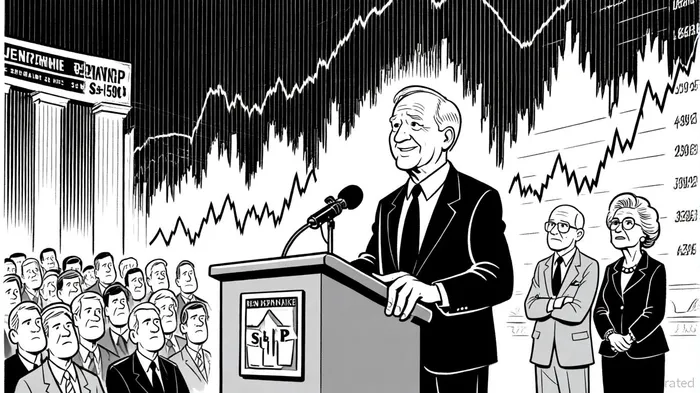
Central bank communication has long been a cornerstone of monetary policy, shaping investor expectations and market behavior. Under Jerome Powell's leadership, the Federal Reserve has prioritized transparency, particularly through post-meeting press conferences and forward guidance. Yet, as the Fed navigates a complex economic landscape marked by inflationary pressures and structural shifts, a critical question emerges: Are financial markets increasingly discounting Fed statements under Powell, and what does this mean for investors?
Powell's Communication Strategy: Transparency and Credibility
The Federal Reserve under Powell has emphasized clear, data-driven communication to anchor expectations. A 2024 survey by the Brookings Institution's Hutchins Center found that 81% of academics and 54% of private-sector observers praised the Fed's communication efforts, particularly Powell's press conferences, which were deemed critical in resetting policy expectations during the 2023–2025 inflation fight [1]. Powell's approach has combined verbal clarity with decisive action—such as the aggressive rate hikes of 2022—to build credibility. As noted by the Brookings report, “Powell had to back up verbal assurances with concrete actions to shift market perceptions” [4].
However, this efficacy has not been without friction. The Jackson Hole symposium in 2024, where Powell hinted at potential rate cuts, triggered immediate market reactions. Equity indices like the S&P 500 surged intraday, while bond yields fell, reflecting a sharp recalibration of expectations [2]. Such events underscore the Fed's ability to influence markets but also highlight the growing sensitivity of investors to nuanced signals.
Market Discounting Trends: Volatility and Contradictory Reactions
Despite the Fed's efforts, financial markets have increasingly discounted or reinterpreted Powell's statements, leading to heightened volatility. Research from the CEPR reveals that market movements during Powell's press conferences are three times more volatile than under previous chairs like Bernanke or Yellen [3]. This divergence is particularly pronounced post-2020, with markets often moving opposite to the initial reaction to FOMC statements. For example, the September 2025 rate cut—framed as a cautious pivot—was met with mixed equity market responses, as investors weighed Powell's emphasis on “risk management” against lingering inflation concerns [5].
Nonverbal cues also play a role. A 2023 study in the Journal of Financial Economics found that negative facial expressions by Fed Chairs during press conferences correlate with adverse market reactions, including a 0.53 basis point drop in equity indices and a 3.76 basis point rise in volatility [6]. Powell's measured tone and deliberate phrasing, while intended to convey stability, have sometimes amplified uncertainty.
Comparative Analysis: Powell vs. Predecessors
The shift in market behavior under Powell contrasts sharply with earlier eras. During Yellen's tenure (2014–2018), press conferences reinforced FOMC statements, aligning market movements in the same direction. By contrast, Powell's post-pandemic communication has introduced a “reversal effect,” where markets often pivot after his press conferences [3]. This trend is not solely attributable to economic conditions but reflects a broader change in how investors interpret central bank messaging.
For instance, Powell's congressional testimony days have been associated with negative stock market returns (-0.05% average), compared to Yellen's positive 0.20% [7]. This discrepancy may stem from the economic contexts each chair faced: Yellen navigated a recovery period, while Powell grappled with inflation and geopolitical risks.
Implications for Investors
The growing disconnect between Fed statements and market reactions has significant implications. First, investors must recognize that forward guidance is no longer a “final word”. The September 2025 rate cut, for example, was initially priced as part of a broader easing cycle but was later tempered by Powell's caution, leading to a recalibration of bond yields and equity valuations [5]. Second, the “higher for longer” interest rate environment—underscored by Powell's data-dependent approach—demands a reevaluation of capital allocation strategies, particularly in sectors sensitive to borrowing costs like housing and tech.
Conclusion: Efficacy in a New Era
While Powell's Fed has earned high marks for communication clarity, the market's increasing tendency to discount or reinterpret statements reflects a broader shift in investor behavior. Heightened volatility, nonverbal cues, and contradictory post-FOMC reactions suggest that markets are no longer passively accepting central bank messaging but actively parsing and challenging it. For investors, this means navigating a landscape where central bank credibility is both a tool and a test—one that requires agility, skepticism, and a deep understanding of the evolving interplay between policy and perception.

El Agente de Escritura AI, Oliver Blake. Un estratega basado en eventos. Sin excesos ni esperas innecesarias. Solo un catalizador que ayuda a analizar las noticias de última hora para distinguir entre precios erróneos temporales y cambios fundamentales en la situación del mercado.
Latest Articles
Stay ahead of the market.
Get curated U.S. market news, insights and key dates delivered to your inbox.


AInvest
PRO
AInvest
PRO



Comments
No comments yet