
Central Bank Autonomy Under Siege: Navigating Equity Risks Amid Political Crossfires
Political volatility has taken center stage in financial markets, with recent rhetoric from former President Donald Trump reigniting debates over the Federal Reserve's independence. As calls to undermine central bank autonomy grow louder, investors face a critical question: How do threats to monetary policy stability reshape equity valuations, particularly in rate-sensitive sectors like tech and finance? This analysis explores the risks, historical parallels, and strategies to weather the storm.
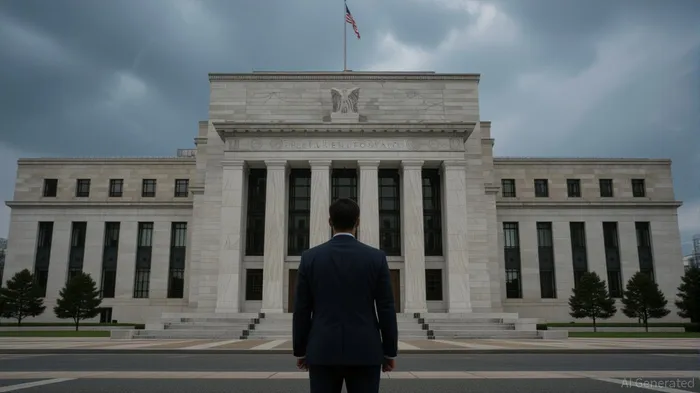
The Fragile Pillar of Central Bank Independence
The Fed's independence, enshrined in law since the 1930s, has long insulated monetary policy from short-term political whims. Yet Trump's relentless attacks on Chair Jerome Powell—labeling him a “knucklehead” and threatening his removal—highlight a dangerous erosion of this principle. The Fed's refusal to cave to demands for aggressive rate cuts, even amid subdued inflation, underscores its commitment to data-driven decisions. However, the political overreach raises alarming precedents:
- Legal Limits: The Fed's structure, protected by the Humphrey's Executor ruling, grants it operational independence. Yet, Trump's focus on the $2.5 billion Fed office renovation cost overrun—a potential pretext for Powell's dismissal—tests these boundaries.
- Market Impact: While the Fed has so far resisted politicization, its credibility hinges on maintaining autonomy. A loss of independence could trigger a 3–4% dollar sell-off within 24 hours, destabilizing global equities and currencies.
Sectors on the Frontlines: Tech and Finance Under the Microscope
Interest rate sensitivity is the key vulnerability here. Tech firms, reliant on low borrowing costs for innovation and expansion, face a double threat:
Tech's Rate Squeeze:
Rising rates or inflation expectations (often linked to eroded Fed credibility) would pressure tech multiples. Utilities and rate-sensitive stocks could also falter as bond yields climb.Financials: A Mixed Bag:
Banks typically benefit from higher rates, but political interference risks destabilizing monetary policy. If the Fed's independence weakens, inflation could surge, compressing margins and spiking volatility.
Historical Precedents: When Autonomy Fails
The 1970s “Great Inflation” offers a cautionary tale. When the Fed prioritized political expediency over price stability, inflation spiraled to 14%, eroding consumer and business confidence. Equities stagnated for over a decade as investors fled risk assets. Today's parallels? The Fed's current resolve contrasts with that era, but the threat of politicization looms.
Expert Forecasts: Scenarios and Sector Impacts
Analysts outline three pathways for the U.S. economy through 2029, each with stark implications for equities:
- Baseline Scenario: Fed independence holds. The 10-year Treasury yield stays near 4.5% in 2025, with tech and utilities underperforming as rates stabilize.
- Upside (Policy Easing): Reduced trade tensions allow the Fed to cut rates, boosting tech multiples. The S&P 500 could regain pre-April highs.
- Downside (Loss of Autonomy): A recession by late 2025 sparks a 5%+ yield, crushing rate-sensitive sectors.
Defensive Plays for a Volatile Landscape
Investors must prepare for uncertainty. Consider these strategies:
- Rotate to Defensives: Overweight healthcare (XLP ETF) and consumer staples, which historically outperform in policy uncertainty.
- Hedge with Cyclicals: Cyclical industrials (XLI ETF) may rebound if markets price in eventual rate cuts.
- Currency Hedges: Short the USD (FXE ETF) or pair USD shorts with gold (GLD ETF) to offset inflation fears.
Conclusion: The Cost of Political Exploitation
Central bank independence is not a theoretical construct—it is the bedrock of market stability. While the Fed has thus far weathered political storms, the erosion of its autonomy could unleash chaos. For investors, the priority is to prioritize defensive sectors, monitor key indicators like the 30-year Treasury yield, and remain agile as policy risks evolve. In an era of political volatility, preservation of capital demands vigilance over speculation.
Stay alert, stay diversified, and remember: Markets fear unpredictability far more than bad news.

Stay ahead of the market.
Get curated U.S. market news, insights and key dates delivered to your inbox.






Comments
No comments yet