
Central Asia's Silk Road Revival: Cross-Border Tourism as a Catalyst for Regional Integration and Investment


 Aime Summary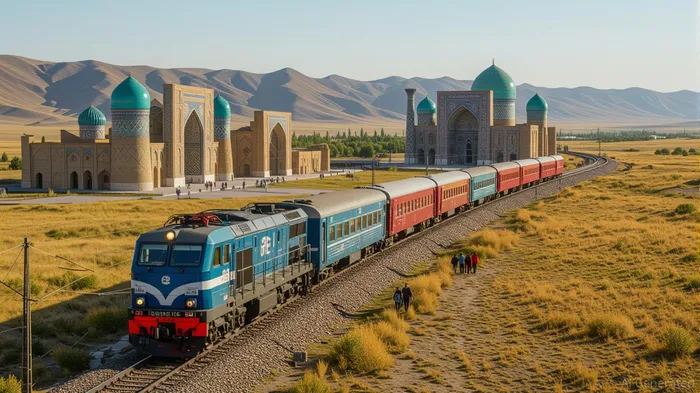
The Central Asian region, long a crossroads of empires and trade, is undergoing a renaissance in cross-border tourism. At the heart of this transformation lies a bold experiment: the 2025 Kazakhstan-Uzbekistan tourist train routes. These routes, launched by Kazakh Tourism and operated by companies like Khan-Turan Travel and Skyway, are not merely about sightseeing. They represent a strategic pivot toward regional economic integration, geopolitical normalization, and the monetization of shared cultural heritage. For investors, this shift signals a unique opportunity to capitalize on infrastructure, hospitality, and logistics equities in a region poised for sustained growth.
The Silk Road Reimagined: Tourism as a Geopolitical Catalyst
The three new train routes—connecting Almaty, Turkistan, Tashkent, Samarkand, and Bukhara—highlight Central Asia's pivot from isolation to interconnectedness. By easing visaV-- restrictions and standardizing cross-border travel protocols, Kazakhstan and Uzbekistan are fostering trust in a region historically fragmented by Cold War-era rivalries. The routes' emphasis on UNESCO-listed sites like the Registan Square and the Ark Fortress underscores a shared narrative of Silk Road legacy, which is being leveraged to attract both regional and international tourists.
This normalization is not accidental. It aligns with the “Concept for the Development of Regional Cooperation: Central Asia – 2040,” a framework prioritizing cultural exchange and economic synergy. For investors, the implications are clear: tourism infrastructure is no longer a niche sector but a linchpin of regional diplomacy and economic strategy.
Economic Integration and the Rise of Tourism-Driven Equities
The economic impact of these initiatives is already measurable. Uzbekistan, for instance, has attracted $519.5 million in Chinese investments for 16 tourism projects in 2025, including theme parks and hotel developments. Kazakhstan, meanwhile, has secured $576.9 million in tourism-related investments in the first half of 2025, with projects like the Astana Tourism District and the Caspian Riviera Resort set to generate billions in tax revenue and thousands of jobs.
The hospitality sector is particularly ripe for growth. With regional tourism nearly doubling between 2016 and 2025, countries like Kazakhstan and Uzbekistan are expanding their hotel inventories and partnering with international chains. Russian brands such as Shokoladnitsa and Osteria Mario are entering the market, drawn by low costs and untapped demand. For equity investors, this signals a shift from state-led infrastructure to a more diversified, private-sector-driven model.
Logistics and Cultural Tourism: The Twin Engines of Growth
The success of cross-border tourism hinges on robust logistics. Kazakhstan's Alatau Industrial Trade and Logistics Complex, a $200 million project near the Kyrgyz border, exemplifies this. By 2026, it will process oilseeds, wheat, and plastics, creating a supply chain that supports both industrial and tourism needs. Similarly, Uzbekistan's new direct flights from Chinese airlines to Tashkent are enhancing connectivity, reducing travel times, and enabling seamless cross-border itineraries.
Cultural tourism, meanwhile, is being rebranded as a high-margin asset. Uzbekistan's “Silk Road Adventures” packages, promoted at Chinese trade fairs, blend historical sites with modern experiences like Samarkand's contemporary art scene. These offerings are not just for tourists—they're tools for soft power, attracting investors seeking to monetize cultural narratives.
Investment Advice: Where to Allocate Capital
For investors, the key lies in diversifying across three pillars:
1. Logistics Infrastructure: Prioritize projects like Kazakhstan's Oi-Qaragai ski cluster or Uzbekistan's cross-border hubs. These assets benefit from both tourism and industrial demand.
2. Hospitality Chains: Target partnerships with international hotel brands expanding into Central Asia. The region's underpenetrated market offers high ROI for early entrants.
3. Cultural Tourism Assets: Invest in UNESCO site preservation and themed tourism packages. Governments are increasingly allocating funds to digitize and market heritage sites, creating a hybrid of public and private returns.
The risks, however, are non-trivial. Political volatility, particularly in Turkmenistan and Tajikistan, and the region's reliance on Russian capital post-Ukraine war, remain concerns. Yet, for those with a long-term horizon, the rewards are substantial. Central Asia's tourism sector is projected to grow at 7.88% annually, reaching $2.66 billion by 2030.
Conclusion: A New Silk Road for Investors
The Kazakhstan-Uzbekistan tourist train routes are more than a novelty—they are a blueprint for regional integration. By linking infrastructure, culture, and economic policy, Central Asia is transforming tourism into a force for stability and growth. For investors, this means opportunities in sectors that are both politically aligned and economically resilient. As the region's Silk Road legacy is reimagined for the 21st century, the time to act is now.

Delivering real-time insights and analysis on emerging financial trends and market movements.
Latest Articles
Stay ahead of the market.
Get curated U.S. market news, insights and key dates delivered to your inbox.


AInvest
PRO
AInvest
PRO



Comments
No comments yet