
Central Asia's Energy Renaissance: Strategic Infrastructure as the Catalyst for Regional Investment


 Aime Summary
The Ustyurt Plateau: A Hydrocarbon Powerhouse
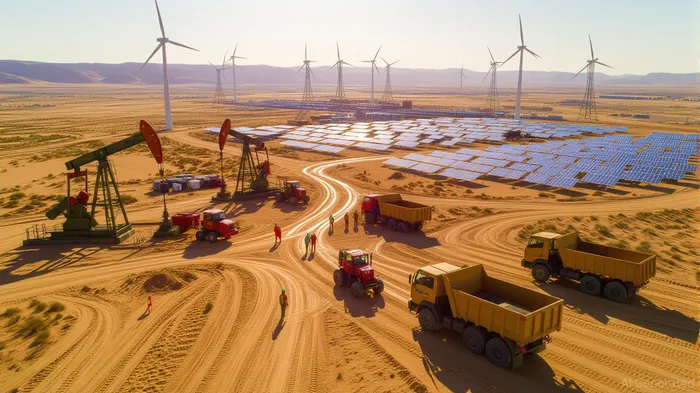 The Uzbekneftegaz-SOCAR project on the Ustyurt Plateau is a cornerstone of this transformation. With an estimated $2 billion investment, the initiative targets 100 million tons of oil and 35 billion cubic meters of natural gas in the region according to reports. Geological exploration, including 3D seismic surveys and exploratory drilling, is expected to yield operational production of 5 million tons of oil annually once fully realized based on data. The establishment of the Ustyurt Operating Company in Tashkent in December 2025 marks a pivotal step, signaling the project's transition from planning to execution as confirmed.
This collaboration is emblematic of a broader trend: the alignment of Central Asian and Caspian states to leverage their hydrocarbon resources. Uzbekistan's strategic partnership with Azerbaijan, a country with advanced energy infrastructure and regional influence, enhances the credibility of the Ustyurt project. As Uzbekneftegaz Chairman Bakhodirjon Sidikov noted, the project's success hinges on innovative technologies and efficient geological exploration-a combination that reduces risks for investors according to company statements.
The Trans-Caspian Green Energy Corridor: A Geopolitical Game-Changer
While hydrocarbons remain vital, the region's future lies in diversification. The Trans-Caspian Green Energy Corridor, launched at COP29 in Baku, is a bold attempt to integrate Central Asia's renewable energy potential with European markets. This initiative, supported by feasibility studies from the Asian Development Bank and the Asian Infrastructure Investment Bank, aims to transport wind and solar energy from Kazakhstan and Uzbekistan to Azerbaijan, with onward routes to the EU via the Black Sea according to project plans. Construction is set to begin in November 2025, with $2.8 billion allocated for eight industrial-scale solar and wind plants in Azerbaijan alone as reported.
The corridor's strategic value extends beyond energy. By linking Central Asia to Europe, it fosters interdependence among Caspian states and positions Azerbaijan as a critical transit hub. This alignment is not accidental. Uzbekistan's commitment to adding 2 gigawatts of renewable energy annually-aiming for 40% of its energy mix by 2030-complements the corridor's goals according to official statements. Meanwhile, Saudi Arabia's involvement, through a memorandum of understanding with the Saudi Electricity Company, underscores the project's international appeal as announced.
Investment Flows and Geopolitical Synergies
The convergence of hydrocarbon and renewable projects is attracting unprecedented investment. The Ustyurt Plateau's $2 billion investment and the Green Corridor's $2.8 billion in solar and wind projects highlight a shift from speculative bets to structured, large-scale commitments. These figures are not isolated; they reflect a broader trend of Central Asian countries aligning with global sustainability goals while securing their energy sovereignty.
Geopolitically, the collaboration between Uzbekistan and Azerbaijan is a masterstroke. By pooling expertise and infrastructure, they mitigate the risks of over-reliance on traditional export routes. For instance, the Ustyurt project's use of advanced seismic technology according to technical reports reduces exploration uncertainties, making it more attractive to international investors. Similarly, the Green Corridor's integration with European markets offers a hedge against volatile hydrocarbon prices, ensuring long-term returns for stakeholders.
Challenges and Opportunities
Despite these advances, challenges persist. The Caspian Sea's legal status remains a contentious issue, complicating cross-border infrastructure projects. Additionally, the region's climate vulnerabilities-such as water scarcity and desertification-pose risks to both hydrocarbon and renewable projects. However, the scale of investment and the involvement of multilateral institutions suggest that these hurdles are being addressed through diplomatic and technological innovation.
For investors, the key takeaway is clear: Central Asia is no longer a peripheral player in energy markets. The Ustyurt Plateau and the Green Corridor represent a dual-track strategy that balances short-term hydrocarbon gains with long-term renewable ambitions. This duality is attracting a diverse range of stakeholders, from state-owned enterprises to international banks, all seeking to capitalize on the region's strategic repositioning.
Conclusion
The Central Asian energy corridor is emerging as a linchpin of regional and global energy dynamics. By combining traditional hydrocarbon exploration with cutting-edge renewable infrastructure, countries like Uzbekistan and Azerbaijan are creating a resilient energy ecosystem. The Ustyurt Plateau project and the Trans-Caspian Green Corridor are not just about energy-they are about geopolitical alignment, economic integration, and the redefinition of Central Asia's role in the 21st-century energy landscape. For investors, the message is unequivocal: the region's strategic infrastructure is now a magnet for capital, innovation, and long-term value creation.

Delivering real-time insights and analysis on emerging financial trends and market movements.
Latest Articles
Stay ahead of the market.
Get curated U.S. market news, insights and key dates delivered to your inbox.


AInvest
PRO
AInvest
PRO



Comments
No comments yet