
Central Asia's Energy Crisis: A Hidden Risk to Global Commodity Markets


 Aime Summary
Hydropower Dependency and the Looming Energy Abyss
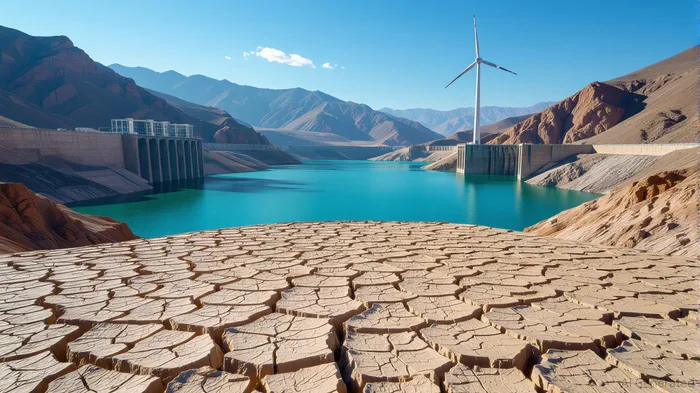
Kyrgyzstan and Tajikistan rely almost entirely on hydropower for domestic electricity generation, a legacy of Soviet-era infrastructure. However, declining water levels in key reservoirs have triggered a crisis. In Tajikistan, the Nurek power plant's reservoir has dropped by 2.47 meters since 2024, while Kyrgyzstan's Toktogul reservoir has lost 20% of its capacity over the same period according to reports. These declines, attributed to droughts and reduced glacier melt, have forced both governments to impose draconian energy rationing measures, including restaurant closures at 10:00 PM and penalties for excessive electricity use as data shows.
The energy shortages are not merely a domestic issue. Hydropower is the lifeblood of mining and refining operations for critical minerals. For instance, Kyrgyzstan has identified 22 critical minerals, including lithium and rare earth elements, essential for electric vehicles and renewable energy technologies according to Kyrgyzstan's strategy. Yet, energy-intensive mining activities are now under threat. In 2025, Kyrgyzstan temporarily shut down cryptocurrency mining farms to prioritize energy for the population-a stark indicator of the sector's vulnerability as reported by The Coin Rise.
Geopolitical Competition and Supply Chain Fragility
The EU and the U.S. have positioned Central Asia as a strategic partner to diversify critical mineral supply chains away from China, which dominates refining for 95% of rare earth elements and 50-70% of lithium and cobalt according to research. The EU's Critical Raw Materials Act (2023) aims to source 40% of its strategic minerals from Central Asia by 2025, while the U.S. has launched the C5+1 Critical Minerals Dialogue to engage the region. However, China's dominance in refining and its ability to impose export restrictions remain a wildcard. In 2024, China imported 70% of Central Asia's critical raw materials, underscoring its leverage.
The energy crisis in Kyrgyzstan and Tajikistan complicates these ambitions. Even if mineral extraction increases, energy shortages could paralyze refining operations. For example, Kyrgyzstan's modernization of the Toktogul Hydropower Plant-expected to add 525.3 million kWh annually by late 2025-will take years to offset current deficits as reported by TimesCA. Meanwhile, Tajikistan's Rogun Dam project, though promising, remains incomplete. These delays risk stalling the region's ability to meet global demand, forcing buyers to double down on Chinese suppliers.
Investment Implications: Reassessing Exposure
For investors, the risks are twofold: physical (energy shortages disrupting production) and geopolitical (supply chain concentration). Key considerations include:
1. Critical Mineral Producers in Central Asia: Companies with operations in Kyrgyzstan or Tajikistan face operational risks. For example, Kyrgyzstan's Kutessay II and Kyzyl-Ompol deposits-rich in rare earth elements-are now subject to energy constraints according to the Natural Resources Ministry.
2. Refiners and Processors: Entities reliant on Central Asian raw materials may face bottlenecks if local refining capacity cannot expand.
3. Energy Transition Assets: Solar and wind projects in the region, while promising, require stable grids-a luxury Kyrgyzstan and Tajikistan currently lack as noted by Hydropower.org.
Investors should also monitor the EU's Critical Raw Materials Act and U.S. C5+1 initiatives for policy shifts. However, given the region's energy instability, diversification into alternative sources (e.g., North America, Australia) may be prudent.
Conclusion: A Tipping Point for Global Supply Chains
Central Asia's energy crisis is a microcosm of the broader challenges facing the green energy transition. As Kyrgyzstan and Tajikistan grapple with hydropower shortages, the ripple effects will extend far beyond their borders, testing the resilience of global mineral supply chains. For now, the region remains a geopolitical chessboard, where energy scarcity and strategic competition collide. Investors who fail to account for these dynamics risk exposure to a market where volatility is the new normal.

Delivering real-time insights and analysis on emerging financial trends and market movements.
Latest Articles
Stay ahead of the market.
Get curated U.S. market news, insights and key dates delivered to your inbox.


AInvest
PRO
AInvest
PRO



Comments
No comments yet