
CenterPoint Energy: A Grid of Steel in a World of Storms—Why This Utility Is Powering Ahead
The recent spring storm that struck Houston in May 2025, leaving 167,000 customers without power, wasn't just a test of CenterPoint Energy's infrastructure—it was a ringing endorsement of its modernization strategy. While the outage was significant, the company restored 90% of customers within days, leveraging upgrades like stronger poles, automated grids, and cloud-based outage tracking. This is no accident: CenterPoint has spent years transforming itself into a utility built for climate chaos. For investors, this is a golden opportunity to bet on a company at the forefront of grid resilience—a sector that's only going to grow as extreme weather intensifies.
The Storm Test—and How CenterPoint Passed
The May storm, with winds up to 70 mph, was a microcosm of the threats utilities face in an era of climate volatility. But CenterPoint's response was a masterclass in preparedness. Within hours, 1,300 personnel and 143 vegetation crews were deployed, and its new cloud-based outage tracker—designed to handle 20 million users hourly—kept customers informed in real time. Compare this to Hurricane Beryl in 2024, when the old system collapsed under demand. The difference? $550 million in grid hardening investments, including 26,000 new storm-resistant poles, 400 miles of underground lines, and 5,150 automated devices that reroute power autonomously.
This isn't just about weathering storms—it's about reducing outage minutes by 125 million annually. That's 239 years of restored power for customers. The market hasn't fully priced in this transformation.
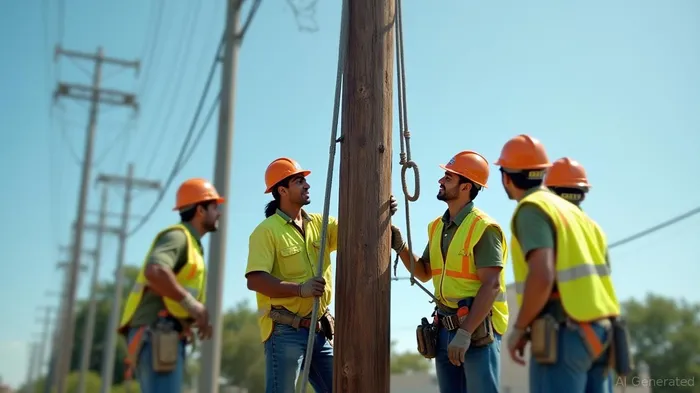
The Infrastructure Play: Grid Modernization as a Growth Engine
Utilities are often seen as sleepy investments, but CenterPoint is anything but. Its $5.75 billion Systemwide Resiliency Plan (SRP)—launched in 2025—aims to slash outage impacts by 1.3 billion minutes by 2029. Here's what's in the pipeline:
- Self-Healing Grids: Automating 100% of high-traffic lines to isolate faults and reroute power instantly.
- Flood-Proofing: Raising 99% of substations above the 500-year floodplain.
- Going Underground: Buried lines now account for 50% of the system, shielding them from wind and debris.
These upgrades aren't just defensive—they're offensive. By minimizing downtime, CenterPoint reduces customer churn and improves revenue stability. Add in 100 weather stations and advanced vegetation management (6,000 miles cleared!), and you've got a grid built to thrive in chaos.
ESG Integration: Climate Resilience as a Competitive Advantage
ESG isn't just a buzzword here—it's a business model. CenterPoint's investments in grid hardening align perfectly with ESG mandates, particularly in climate adaptation. By reducing outage risks, it lowers operational costs and regulatory scrutiny. Texas regulators, still smarting from the 2021 winter storm, have mandated outage tracking systems and infrastructure hardening. CenterPoint isn't just complying—it's leapfrogging competitors by turning compliance into a competitive edge.
Investors in ESG-focused funds are already taking notice. The company's $44 billion in assets and 7 million customers make it a scale player, while its forward-looking capital allocation ensures it's positioned for a decarbonizing economy.
Risks? Sure—but They're Overblown
Critics will cite regulatory delays or economic headwinds. But CenterPoint's early completion of its Phase Two resiliency targets (done by June 1, 2025, ahead of deadlines) shows execution discipline. The worst-case scenario? More storms. But that's precisely why investors should want to own this stock. When disaster strikes, CenterPoint's grid will outperform, and its stock will follow.
The Bottom Line: Buy CenterPoint for the Grid of the Future
This isn't a bet on cheap utility dividends—it's a play on grid resilience as a growth sector. With climate disasters costing the U.S. economy over $100 billion annually, utilities that harden their systems first will dominate. CenterPoint's stock trades at a 12.5x EV/EBITDA multiple, below its 10-year average, even as it executes on a $5.75 billion plan.
Action to Take: Buy CNP now. Set a target of $65 (a 25% upside from current levels) as investors recognize its leadership in grid modernization. And keep an eye on the June 2025 regulatory filings—the company's next phase of capital allocation could unlock even more value.
In a world where the only constant is chaos, CenterPoint isn't just surviving—it's building the grid that'll power the future. This is a stock you'll want in your portfolio when the next storm hits.

Stay ahead of the market.
Get curated U.S. market news, insights and key dates delivered to your inbox.
AInvest
PRO
AInvest
PRO



Comments
No comments yet