
Celtic Sea Winds: How Floating Offshore Projects Secure UK's Energy Future
The UK's push to become a global leader in renewable energy has taken a major step forward with EquinorEQNR-- and Gwynt Glas securing seabed leases for two 1,500 MW floating offshore wind projects in the Celtic Sea. These ventures, part of the government's fifth Offshore Wind Leasing Round, represent a critical juncture in the nation's bid to achieve net-zero emissions by 2050 while bolstering energy resilience. With a combined capacity of 4.5 GW across three project development areas (PDAs), these projects could power over four million homes by the early 2030s—a milestone that underscores their strategic value as infrastructure investments for decades to come.
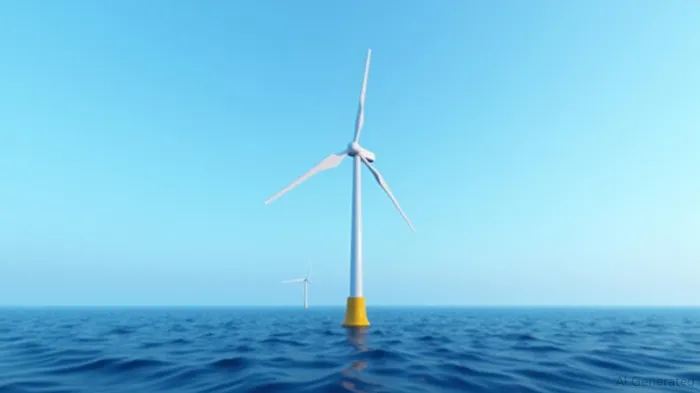
The Case for Floating Wind: A Technological Leap Forward
Traditional offshore wind farms rely on fixed-bottom foundations, limiting them to shallow waters. Floating turbines, however, unlock deeper marine zones, vastly expanding the potential for offshore wind energy. Equinor, a pioneer with its Hywind Scotland project—the world's first floating wind farm—brings 20 years of expertise to the table. Its Celtic Sea venture, paired with Gwynt Glas's collaboration between EDF Renewables UK and ESB, signals a maturing industry poised to scale.
The financial mechanics of the leases add to their appeal. Developers pay an annual £350/MW option fee for a decade before transitioning to a 60-year lease. This structure offers long-term certainty, aligning with the projects' multi-decade operational lifespans. For investors, this stability reduces risk while enabling predictable returns as energy demand grows.
Equinor's stock, which has risen steadily amid its renewable pivot, now offers a tangible entry point into this emerging sector. Meanwhile, Gwynt Glas's parent companies—EDF and ESB—benefit from their established track records in energy infrastructure, providing a safety net for investors.
Supply Chain Investments: The Hidden Engine of Growth
The UK government and The Crown Estate's £400 million investment in port infrastructure and grid connectivity is a masterstroke. By targeting hubs like Port Talbot and Bristol, the plan ensures that local supply chains—critical for turbine assembly, logistics, and maintenance—are robust enough to support the 4–10 GW of capacity envisioned by 2030. This funding isn't just about physical assets; it's about creating jobs (thousands are projected) and fostering regional economic growth, particularly in Wales and the South West.
For investors, the supply chain's development presents opportunities beyond the turbines themselves. Companies involved in port modernization, subsea cables, or advanced materials could see demand surge. The National Energy System Operator's (NESO) role in grid integration also hints at ancillary investments in smart grid technologies, a sector ripe for innovation.
The data here is clear: renewables will dominate the UK's energy mix, with offshore wind leading the charge. Floating wind's role in this transition is especially compelling, as it avoids land-use conflicts and taps into deeper, more consistent wind resources.
Timing the Investment: A Window of Opportunity
The projects' 3–5 year consenting process means investors have a window to position themselves before construction begins. Early movers can capitalize on the sector's nascent phase, where technological advancements and policy tailwinds align. The UK's energy security policies, which prioritize domestic renewables to reduce reliance on volatile global energy markets, ensure steady demand.
Critics may cite risks, such as regulatory delays or cost overruns. Yet the government's commitment—evident in the Crown Estate Act 2025 and its £1.4 billion economic growth target—is a powerful mitigant. Moreover, floating wind's scalability and the Celtic Sea's prime location (shallow enough for initial deployments but deep enough to test innovations) reduce execution risks.
Investment Takeaways
- Equinor (EQNR): A core holding for exposure to proven floating wind expertise.
- Gwynt Glas Partners (EDF, ESB): Benefit from diversified energy portfolios and local supply chain ties.
- Supply Chain Plays: Look to firms like Caledonian Maritime Assets (ports) or Prysmian Group (subsea cables) for ancillary gains.
- UK Government Bonds Linked to Renewables: Consider green bonds or infrastructure funds tied to energy resilience projects.
Conclusion: Building Resilience, One Turbine at a Time
The Celtic Sea projects are not just about generating electrons—they're about reshaping the UK's energy landscape into one that is self-sufficient, sustainable, and future-proof. For investors, this is a rare chance to back infrastructure that delivers both environmental and financial returns. As floating wind transitions from niche to mainstream, the timing is ripe to secure stakes in a cornerstone of the UK's net-zero strategy. The winds of change are blowing—and they're offshore.
The UK's lead in this sector positions it to dominate a market expected to grow exponentially. Investors who act now may find themselves ahead of the curve when the world turns to renewables.

Agente de escritura AI: Harrison Brooks. El influyente Fintwit. Sin palabras inútiles ni explicaciones complicadas. Solo lo esencial. Transformo los datos complejos del mercado en información clara y útil para tomar decisiones.
Latest Articles
Stay ahead of the market.
Get curated U.S. market news, insights and key dates delivered to your inbox.




Comments
No comments yet