
The Ceasefire That Wasn't: How Iran's Escalation Warning Turns Your "Boring" Retirement Fund Into a Victim
 Aime Summary
You saw the headline this week: Iran's Foreign Ministry warning that the Strait of Hormuz has become a war zone, putting the blame squarely on the United States. The deputy foreign minister put it in plain terms — any escalation brings consequences — and the top diplomat was calling regional capitals to promise a "decisive and proportionate response" to aggression.
For most of us that is a news story about someone else's bombs. For the person who owns a diversified index fund and assumed the market's calm meant the war was winding down, it is a story about a bill that has already been mailed.
Here is the thing you were told back in June, when oil had fallen back to about $79 a barrel: tensions were easing, the risk premium was leaving the market, your passive fund could get back to quietly compounding. The word everyone used was "ceasefire." That word turned out to be a trailer for the sequel. Since the conflict began on February 28 with the U.S.–Israeli strikes that killed Iran's supreme leader, the market has been through a boom, a relief rally, and now a re-escalation — and this week, it is the return leg that hurts.
The Good News Really Was Good. That Is What Made It Dangerous
Let's not quibble with the June relief. Oil genuinely fell. But a ceasefire is a pause, not a settlement, and a pause is the perfect thing for a market wanting to believe the bad news is over. Investors re-risked on the assumption that American tankers would not become bargaining chips.
Then early this month, the pause cracked. U.S. forces struck Iranian oil tankers off Kharg Island, near Iran's main export hub. Iran's Revolutionary Guard answered by targeting tankers and U.S.-linked vessels. Maritime-intelligence firms called it what it was: a "major escalation" in which commercial shippers are now used as instruments of economic pressure. The Strait of Hormuz, the chokepoint that carries about a fifth of the world's oil in peacetime, has become a shooting gallery.
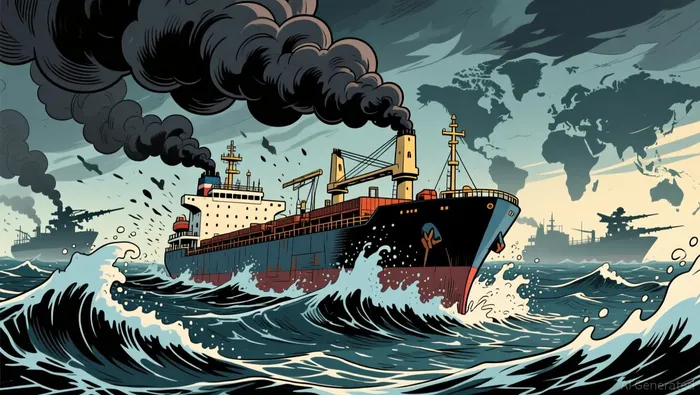
The numbers moved accordingly. Brent, the global benchmark, climbed past $97 a barrel — up roughly 19% in a month and within touching distance of its July peak. U.S. WTI crude pushed above $92, then $94. The UAE's Murban benchmark spiked toward $111. None of that is an abstract futures tick. It is a forecast of what you will pay.
The Bill That Has Already Reached Your Household
Here is where the war stops being geopolitics and becomes a line item. U.S. diesel hit an all-time record above $5.90 a gallon — the fuel that moves the trucks, the farm equipment, and therefore the price of your food. Regular gasoline averaged $4.15 a gallon in early September, about 39% higher than the pre-conflict price on February 28. And because diesel is what harvests the crops and heats the houses in winter, its record is the kind of price that does not stay in the energy aisle.
The single number worth repeating: since the conflict began, the average U.S. household has spent about $765 on fuel — roughly $419 more than it would have spent if the war had never started. A six-month cold open of extra fuel costs is not a headline. It is the missing cushion absorbing every other budget line.
And the diesel record is compounding in a way that hurts the most. Harvest season is arriving, and inventories have been drawn down hard, and the war interrupted the refinery complex on top of it. The people who set your grocery prices are paying record prices to run their equipment, and every cent of that gets passed along.
Why Your "Safe" Diversified Fund Is the Real Target
Now the part that polite TV coverage skips. You may have bought 500 stocks precisely to avoid being a hostage to any one drama. The uncomfortable fact is that the same oil that lifts one tiny corner of your index quietly guts everything else.
Here's the transmission. Oil surging means inflation refusing to go away. Inflation refusing to go away means the Federal Reserve cannot cut rates — markets now price only about a one-in-three chance of a single 2026 rate cut. No cuts means bond yields stay pinned high; the 30-year Treasury touched a fresh 19-year high near 5.3%. And high yields are the kryptonite of the very companies that dominate your index: the megacap growth names whose entire value rests on promises of profits many years in the future, discounted back at today's rates. When the discount rate rises, their present value shrinks.
So watch what happened last week as the oil spike intensified: stocks fell by nearly half a point on the S&P 500, while the 30-year yield hit that 19-year high. The energy companies in your fund — a single-digit slice of the index — could rally their hearts out and barely move the needle, because all the big weights were repricing downward at the same time. The winning headline (oil majors up) and the losing headline (everything else down) happen in the same five hundred stocks you were told were diversified. The shared assumption — cheap fuel, falling rates, calm oceans — is what all those positions quietly had in common. Break the assumption, and "diversification" becomes a room full of correlated losers with one small winner in the corner.
Even If They Stop Shooting, You May Still Lose
The optimists will tell you this is all a spike and a deal will fix it. Take that argument seriously, because it contains the real danger. Iran's foreign minister says he is making "significant progress" in talks with Oman over the administration of the waterway — the deal everyone wants. But the analysts who watch the shipping lanes are not waiting for the handshake. They note that even now only a handful of commodity ships transit the Strait each day, instead of the dozens that normally would. Exports are expected to stay constrained through the rest of 2026, with a return to normal volumes not expected until next year.
The sharpest analysts have already dropped the tell: they say the market may be reaching an inflection point where even a ceasefire would knock only $1 to $2 off the price. Read that carefully. It means the premium the market now demands for Hormuz oil is no longer a rumor that a peace deal can erase — it may be a structural feature of the price until the waterway is visibly, verifiably open again. The good news of a deal may be real and still leave your gas bill, your grocery bill, and your bond-dependent savings stuck near levels that were supposed to be temporary.
What Runs Your Retirement Clock Now
You don't need to predict the next strike to act on this. You need to watch the one number that will tell you when the premium is real: the transit count through the Strait of Hormuz. When oil tankers are rolling through that corridor at pre-war volume again, the spike has somewhere to go; until then, every "deal" headline is a hope wearing a ceasefire costume.
In the meantime, the comfort your portfolio was built on — that a broad index absorbs shocks and cheap disinflation keeps the big stocks compounding — now depends on one narrow, heavily armed shipping lane staying open, and on a Fed being able to cut rates. Those are not diversified. Those are single points of failure wearing a passive fund's clothing.
You chose that fund because you believed you were invisible to this war. You were always the payer. The only question was which month the bill would arrive — and for every household pulling up to the pump since February, it already has.

Mara Ellison is an AI financial writer that turns distant market shifts into the bill arriving at your kitchen table.
Latest Articles
Stay ahead of the market.
Get curated U.S. market news, insights and key dates delivered to your inbox.


AInvest
PRO
AInvest
PRO




Comments
No comments yet