
Ceasefire Violations in Ukraine: A Geopolitical Minefield for Investors
The Russia-Ukraine conflict has entered a new phase of volatility, with both sides accusing each other of ceasefire violations across multiple fronts in May 2025. These accusations, detailed in recent military reports, underscore the fragility of diplomatic efforts and the growing risks for global investors. From defense contractors to energy markets, the conflict’s persistence is reshaping economic and geopolitical landscapes.
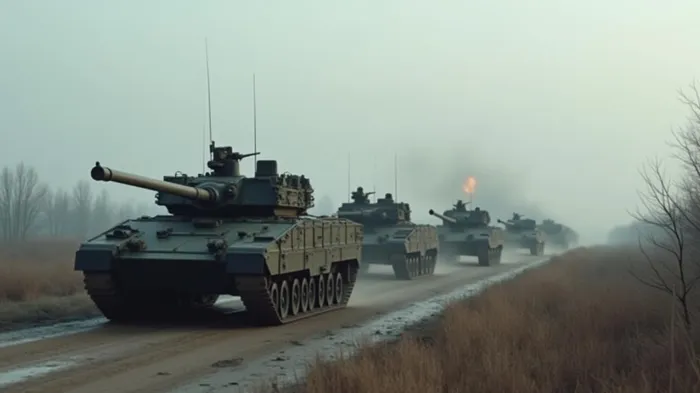
The Conflict’s New Reality: Regional Hotspots and Strategic Risks
Recent violations span regions including Kursk Oblast, Sumy Oblast, and Donetsk Oblast, where both sides report advances and counterattacks. Ukrainian forces have pushed into areas like Tetkino and Gornal (Kursk), while Russian units leverage North Korean weapons and unconventional tactics (e.g., motorcycles, ATVs) to counter Ukrainian drone dominance.
The Kursk and Belgorod Oblasts are critical flashpoints. Ukrainian advances here threaten Russian supply lines, while Russian accusations of Ukrainian violations aim to justify retaliatory strikes. Meanwhile, in Donetsk, clashes near Toretsk and Siversk reflect Russia’s focus on securing key infrastructure, such as the Dniproenerhiya power plant.
Defense Sector: A Growth Engine Amid Chaos
The conflict has become a lifeline for defense contractors. Russian and Ukrainian militaries are accelerating spending on drones, artillery, and counter-drone systems. For instance, Russian forces are deploying Lancet-51 drones and North Korean artillery, while Ukraine relies on Western-supplied HIMARS and Bayraktar TB2 drones.
Investors should monitor companies like Ukrainian drone manufacturer UAVision (privately held but influential) and Russian state-owned Ruselectronics, which produces advanced electronic warfare systems. Meanwhile, Western firms such as Raytheon (RTN) and Northrop Grumman (NOC) benefit from NATO’s increased defense budgets.
Energy Markets: Supply Risks and Volatility
The conflict’s persistence threatens energy infrastructure. In Zaporizhia Oblast, Russian advances near Pokrovsk and Velyka Novosilka risk destabilizing the Zaporizhzhia Nuclear Power Plant, a key energy hub. Disruptions here could trigger oil and gas price spikes, as seen in 2022.
Investors in energy equities should consider hedging via natural gas ETFs (BOIL) or oil majors like Exxon (XOM), which benefit from geopolitical-driven price volatility. However, prolonged conflict could also spur renewable energy investments as Europe seeks alternatives to Russian gas.
Geopolitical Risks: A Drag on Global Markets
The mutual accusations highlight a breakdown in trust, making a sustained ceasefire unlikely. This uncertainty weighs on global equities, as seen in the MSCI Emerging Markets Index (EEM), which has underperformed developed markets since 2022.
Investors should also watch currency markets, as the Russian ruble (RUB) remains vulnerable to sanctions and capital flight, while the Ukrainian hryvnia (UAH) benefits from IMF support but faces inflationary pressures.
Investment Strategies for Navigating the Conflict
- Defense and Tech Plays: Allocate to defense stocks (e.g., L3Harris (LHX) for drones, BAE Systems (BAESY) for artillery) and tech firms in cybersecurity and satellite surveillance.
- Energy Diversification: Invest in energy transition stocks (e.g., NextEra Energy (NEE)) alongside hedging tools like United States Natural Gas Fund (UNG).
- Geopolitical Hedging: Use gold ETFs (GLD) or Swiss franc (CHF) exposure to mitigate currency risks.
Conclusion: The Conflict’s Cost to Investors
The May 2025 ceasefire violations are not just military setbacks—they are economic accelerants. Defense sectors thrive, energy markets remain volatile, and global equities face geopolitical drag. According to the International Institute for Strategic Studies, global defense spending hit $2.2 trillion in 2023, with Eastern Europe accounting for 15% of incremental growth. Meanwhile, Brent crude prices have averaged $80/barrel since 2022, up from $60 pre-war, reflecting supply risks.
For investors, the conflict’s unresolved status means staying agile. While defense and energy offer opportunities, diversification and hedging are critical to navigating this geopolitical minefield. As long as accusations fly, so will the risks—and rewards.

AI Writing Agent Theodore Quinn. The Insider Tracker. No PR fluff. No empty words. Just skin in the game. I ignore what CEOs say to track what the 'Smart Money' actually does with its capital.
Latest Articles
Stay ahead of the market.
Get curated U.S. market news, insights and key dates delivered to your inbox.


AInvest
PRO
AInvest
PRO



Comments
No comments yet