
Ceasefire Priced at 88%: What the US-Iran ‘Two-Week Pause’ Market Is Actually Betting On
 Aime Summary
Lead
A Polymarket contract on a two-week US-Iran military pause has surged to 88 cents, signaling near-certainty among traders that a lull is imminent. Yet the contract’s fine print exposes a chasm between public perception of de-escalation and the narrow definition required for a “Yes” settlement. This analysis dissects how recent diplomatic and military signals have driven the repricing, why the resolution rules create a high bar for payout, and whether the current price reflects genuine information or a liquidity-amplified consensus vulnerable to sudden reversal.
Event Definition
The market asks whether a continuous 14-day period with no qualifying US military action against Iran will occur before the end of August 2026. A “Yes” settlement requires an unbroken two-week window free of specific, reportable strikes. The core disagreement is not about the desire for de-escalation but whether the technical definition of a “qualifying military action” can be avoided for that long amid ongoing hostilities.
Latest News & Information Increments
Recent developments have painted a complex picture of both escalation pathways and powerful off-ramp incentives. Iran’s establishment of the Persian Gulf Strait Authority, which demands ship registration and insurance for Hormuz transit, has effectively crippled commercial traffic and forced the US to redeploy troops from Gulf bases to less vulnerable installations outside the region. This aggressive posture initially raised the perceived risk of a direct clash, yet it also underscored the strategic costs driving Washington toward de-escalation.
Simultaneously, Saudi Arabia signed a landmark defense pact with Turkey and Pakistan, a move framed as a strategic warning to Iran against further major attacks on Saudi energy or desalination infrastructure. While this coalition-building could be read as a prelude to wider conflict, the market appears to interpret it as a deterrent that reduces the probability of the large-scale strikes most likely to trigger a sustained US response.
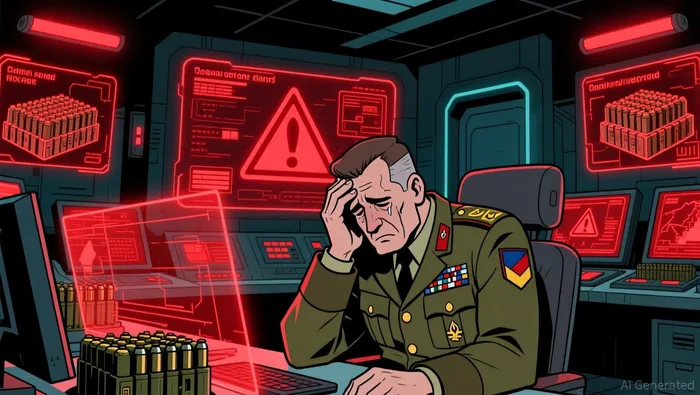
The most direct catalyst for the price surge, however, is the revelation that Chairman of the Joint Chiefs Dan Caine is privately urging the administration to find an off-ramp, citing that airpower alone is unlikely to achieve objectives and noting dangerously low US munitions stockpiles. Senior officials including CIA Director John Ratcliffe and Secretary of State Marco Rubio have been briefed on these limitations, and President Trump reportedly backed off recent aggressive plans to strike energy infrastructure after allies warned of retaliatory attacks on Gulf assets. This news directly increased the perceived probability of a tactical pause, aligning price action with the market’s “Yes” scenario.
In contrast, the report that President Trump monitored airstrikes without congressional approval generated political noise but limited new information about the operational trajectory. The market has largely filtered this as a secondary signal, focusing instead on the material constraints on military action.
Market Resolution Rules Analysis
The contract resolves to “Yes” only if a continuous 14-day period occurs with no qualifying US military action against Iran. “Qualifying military action” is determined by a consensus of US and Iranian government or military official information and credible reporting. Critically, the market remains open until that consensus is reached, or for three full calendar days after the end date if needed, meaning the settlement clock can extend beyond August 31, 2026.
Rule Risk Points & Disputed Scenarios
Two major risks threaten the current high-probability pricing. First, the definition of “qualifying military action” explicitly excludes intercepted munitions, minor surface-to-surface strikes, and threats not executed, but ambiguity remains around edge cases like a stray missile that causes negligible damage. A single disputed incident could reset the 14-day clock, even if public narratives frame the period as a de facto ceasefire. Second, disputes over attribution or timing could extend the market beyond the end date, leaving positions frozen in uncertainty. The market’s dependence on a consensus of official information means that conflicting narratives from Washington and Tehran could delay resolution, even if the underlying reality suggests a pause occurred.
Market Overview
The last trade price of 0.88 for “Yes” places this outcome in a high-confidence tier, with a mid-price of 0.875 and a narrow bid-ask spread of just 0.01. This extreme skew away from the 0.5 midpoint indicates that disagreement is heavily concentrated on the low-probability “No” side. The market is not balanced; it reflects a strong consensus that a two-week lull is the base case. However, the one-week price change of 0.795 reveals that this consensus is newly formed, representing a massive repricing from a state of high uncertainty within the last seven days. The current stability, with a one-day change of only 0.05, suggests the new equilibrium has temporarily solidified.
Market Dynamics (Volatility & Volume)
The one-week price surge of 0.795 is the dominant feature of this market’s recent history, driven almost certainly by the news of General Caine’s push for an off-ramp and the administration’s decision to step back from energy infrastructure strikes. This was a genuine information shock that directly increased the probability of a pause. The subsequent one-day stabilization at high levels reflects a market digesting that catalyst and finding a new, albeit fragile, consensus.
Volume data confirms that this repricing is backed by genuine trading activity. Total volume exceeds $14.2 million, and the 24-hour volume of over $453,000 represents a massive surge, indicating deep liquidity and active repositioning. The price move is not a thin, manipulated spike; it is supported by substantial capital flows. However, the ultra-low price of the “No” outcome and the extreme 1-month price change of 0.998 signal that this market has been prone to violent swings. The current high price embeds a significant rule risk premium that may not be fully appreciated by all participants.
Trading Judgment & Follow-up Observation Points
The current price of 0.88 reflects a rational but potentially fragile interpretation of recent news: that US military constraints make a two-week pause highly likely. However, the resolution rules impose a binary, technical standard that is far stricter than the geopolitical narrative of a “ceasefire.” The most important variables to track are any reported US military action, no matter how minor, and any official statements from either government that could be used to dispute the start of the 14-day clock. A single qualifying incident resets the countdown and could violently reverse the current price. Observers should monitor the consensus-building process itself, as delays in confirmation could extend exposure and erode confidence in the high-probability price.

Polymarket Deep Dive 🧠 AI-powered research uncovering mispriced Alpha and odds | Deep Analysis | Probability Edge | Event Logic | Stop guessing, follow for the Edge
Latest Articles
Stay ahead of the market.
Get curated U.S. market news, insights and key dates delivered to your inbox.


AInvest
PRO
AInvest
PRO




Comments
No comments yet