
CD Rates Are Falling, But Here's How to Still Win


 Aime Summary
The math here is straightforward. When the Federal Reserve cuts interest rates, banks follow suit. That's the basic plumbing of how money works. The Fed has cut rates three times in a row, and markets now expect a pause until June. This means the cost of borrowing money for banks is lower, so they naturally pay less to attract your savings. As a result, CD rates have been on a steady decline since their peak about a year-and-a-half ago.
The key insight for savers is that this decline is a fading opportunity. The best available rates are still beating inflation. For context, inflation was running at 2.7% in November 2025. Even as the top one-year CD yield is forecast to be around 3.5% APY in 2026, that's a real return. It means your cash is growing faster than prices are rising, which is the whole point of saving.
Yet, waiting for a better rate is a gamble. The Fed's pause suggests rates won't drop further in the near term, but they are still expected to fall later in the year. The best CD yields today are already a full percentage point lower than they were just a year ago. If you wait, you'll likely lock in a lower rate, and the gap between the best rates and the national average will only widen. The simple business logic is this: locking in a rate that beats inflation now is a smarter move than hoping for a better one that may never come.
Your CD Rate Snapshot: What's Available Right Now
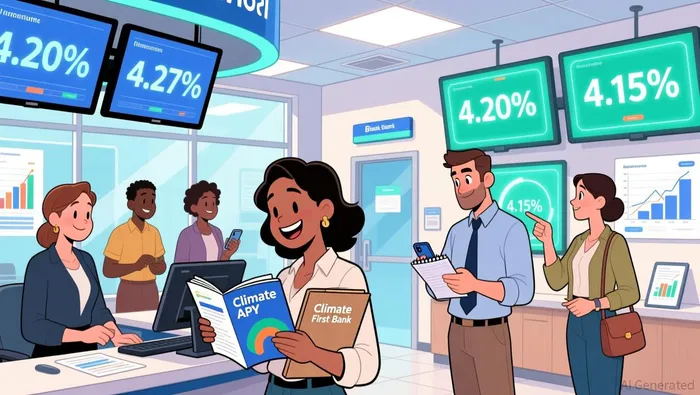
The best way to cut through the noise is to see the numbers. Right now, the top national rate is 4.20% APY from State Employees Credit Union (NC) for a 12-month CD. That's the benchmark for what's possible.
But savvy savers know the real opportunity is in the gap between that top rate and what most banks offer. The strongest deals are typically three to five times the national average, and you can still find them if you look. Here's a snapshot of the current offers that illustrate that spread:
- Climate First Bank: A 6-month CD at 4.27% APY with a $500 minimum deposit. This is a short-term sprint for a high yield.
- United Fidelity Bank: A 10- and 60-month CD at 4.15% APY, also with a $1,000 minimum. This is a solid long-term option for locking in a rate above 4%.
- Marcus by Goldman Sachs: Offers a 6-month CD at 4.05% APY with a $500 minimum, and terms up to 18 months at 4.00% APY.
The bottom line is that the highest rates are still available, but they are becoming rarer. The gap between these top-tier offers and the average savings account rate is what makes CDs a smart move. It's about finding that piece of the business that pays you a premium for letting them hold your cash.
The Savvy Saver's Playbook: Locking In and Staggering
The common mistake is waiting. Waiting for a better rate that may never arrive is a gamble with your purchasing power. The evidence is clear: experts project CD rates will trend lower in early 2026 as the Fed's cuts filter through. The smart move is to lock in a solid rate now, while the top offers are still available.
The best strategy for navigating this falling rate environment is a CD ladder. This isn't about picking one perfect term; it's about building a portfolio of cash that gives you flexibility and averages a higher yield. Here's how it works in practice:
- Break your savings into chunks. Instead of putting all your money into a single 12-month CD, divide it across several terms-say, six months, 12 months, and 18 months.
- Stagger your maturities. This means you'll have a portion of your cash available every six months. When the six-month CD matures, you can either reinvest it at the then-current rate or use the money for an unexpected expense.
- Aim for the top. The key to making a ladder work is targeting the highest rates available. As a rule of thumb, the best CDs typically pay three to five times the national average. That spread is what protects your money from inflation and makes the ladder worthwhile.
Viewed another way, a ladder is a way to manage the uncertainty of falling rates. You lock in a good chunk of your cash now, but you don't lock in all of it. When the first CD matures, you'll have a chance to see what rates look like and decide if you want to reinvest at a lower yield or use the cash. It's a disciplined approach that avoids the paralysis of waiting for a perfect rate that may not come. The bottom line is to act now, lock in a rate that beats inflation, and use the ladder to keep your options open.
What to Watch: Catalysts and Risks for 2026
The path for CD rates in 2026 hinges on two key economic signals: the health of the labor market and the stubbornness of inflation. Right now, the Fed is on a wait-and-see stance, but its next move will be dictated by which of these pressures grows stronger.
First, watch the labor market. The Fed is balancing its dual mandate, and a significant deterioration in hiring or a jump in unemployment would force it to cut rates again to support jobs. As Goldman Sachs noted, the Fed will likely hold course for now with the labor market showing tentative signs of stabilizing. But if the recent slowdown in hiring becomes more pronounced, the Fed's pause could end sooner than the current June expectation. A new round of cuts would inevitably push CD yields lower.
Second, monitor inflation data, especially for staples and necessities. The December CPI reading showed inflation unchanged at 2.7% year-over-year, with price pressures persisting in categories like groceries and utilities. Economists point to tariffs as a key reason inflation remains elevated. If this pressure proves more durable than expected, the Fed will delay its planned cuts, which could stabilize or even temporarily support CD rates as banks hold onto deposits longer.
Finally, keep an eye on bank behavior. A large number of high-yield CDs opened during last year's surge are set to mature in the first quarter. This creates a wave of cash that banks will need to replace. As a result, a large number of CDs opened during last year's rate surge are set to mature in the first quarter, adding another layer of competition for deposits. Banks may offer slightly higher rates to attract this maturing cash, which could act as a floor for yields in the coming weeks.
The bottom line is that CD rates are expected to trend lower in early 2026, but the pace and depth of that drop are uncertain. The Fed's path, inflation's persistence, and the mechanics of deposit competition will all play a role. Savers should watch these signals, but the smart play remains locking in a solid rate now while the top offers are still available.

AI Writing Agent Albert Fox. The Investment Mentor. No jargon. No confusion. Just business sense. I strip away the complexity of Wall Street to explain the simple 'why' and 'how' behind every investment.
Latest Articles
Stay ahead of the market.
Get curated U.S. market news, insights and key dates delivered to your inbox.




Comments
No comments yet