
Catom B.V.'s Acquisition of BP's Dutch EV Infrastructure: Strategic Gains and Regulatory Crosscurrents
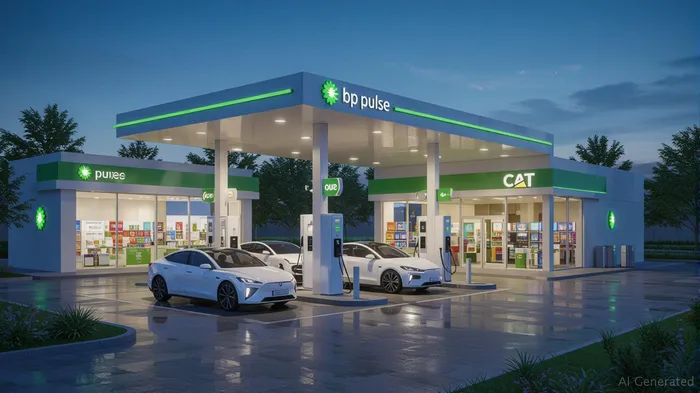
The July 9, 2025, announcement of Catom B.V.'s acquisition of BP's Mobility & Convenience and bpBP-- pulse businesses in the Netherlands marks a pivotal moment in the evolution of Europe's energy and EV infrastructure landscape. The deal, which includes 300 retail sites, 15 operational EV charging hubs, and eight more under development, positions Catom as a dominant player in the Dutch market while signaling BP's continued retreat from non-core retail assets. But beyond the headlines, this transaction raises critical questions about the strategic opportunities for EV infrastructure growth—and the regulatory hurdles that could reshape its trajectory.
Strategic Implications: Building an EV Infrastructure Powerhouse
Catom's acquisition is a masterstroke in capitalizing on the accelerating shift to electric vehicles. The bp pulse network, with its 15 hubs already operational and eight more in development, provides a ready-made footprint in the Netherlands, a country where EV adoption is among the highest in Europe. This aligns with the EU's target of 3.5 million public EV charging points by 2030, a goal that has spurred regulatory incentives for private investment in infrastructure.
For Catom, the deal expands its OK retail network to over 400 sites, creating a hybrid model where EV charging stations are paired with convenience stores, car washes, and other amenities. This “destination” approach could lock in customer loyalty and generate recurring revenue streams—critical as EV charging margins alone may remain thin in the short term.
The strategic value is further underscored by BP's rationale: the company has shifted focus to high-margin, integrated downstream assets like petrochemicals and renewables, while Catom's offer emphasized future growth plans and employee protections. This bodes well for continuity in operations post-acquisition, minimizing disruption to customers and investors.
Regulatory Risks: Navigating Policy and Competition
However, the deal is not without risks. The EU's stringent regulatory framework for EV infrastructure poses a significant challenge. Directive 2021/1413 mandates interoperability of charging stations, standardized pricing, and 24/7 access to public networks. Non-compliance could result in fines or forced divestment of assets. Catom must ensure its newly acquired infrastructure meets these requirements, particularly as legacy BP systems may require upgrades.
Moreover, competition is intensifying. Rival networks like IONITY (backed by BMW, Daimler, Ford, and Volkswagen) and ShellSHEL-- Recharge are expanding rapidly. Catom's smaller scale compared to these giants could limit its ability to invest in cutting-edge technology, such as ultra-fast charging or smart grid integration.
Another risk lies in geopolitical factors. The EU's push for energy independence and reduced reliance on Chinese-made batteries or charging equipment could create supply chain bottlenecks, raising operational costs for Catom.
Data-Driven Insights: BP's Divestment Momentum and Catom's Financial Fortitude
BP's shares rose 0.8% on the news, reflecting investor confidence in its strategy to divest $3–4 billion in 2025—a target it is on track to meet with $1.5 billion already closed. However, the true test for Catom lies in its ability to leverage this acquisition.
Catom's financial health bodes well: its 2023 turnover of €1.7 billion (up 18.5% YoY) and €22.6 million EBITDA suggest robust liquidity. A solvency ratio of 13.6% indicates manageable debt levels, reducing the risk of overleveraging to fund the deal. Still, without disclosed purchase terms, investors must weigh whether the price reflects the long-term value of EV infrastructure assets—or risks overpayment in a sector where valuations are volatile.
Investment Considerations: Riding the EV Wave, but Mind the Potholes
For investors, Catom's acquisition is a bet on two trends: the inevitability of EV adoption and the EU's regulatory push for charging infrastructure. While the Dutch market offers a concentrated opportunity, Catom's success hinges on its ability to:
1. Scale quickly: Expand the bp pulse network to meet EU targets while maintaining margins.
2. Comply with regulations: Ensure interoperability and public access standards.
3. Differentiate its offering: Use convenience retail to create a competitive advantage.
Meanwhile, BP's stock may remain stable as it offloads non-core assets, but long-term gains depend on its downstream reset.
Final Take
Catom's acquisition is a shrewd move to capture a slice of Europe's EV future. However, investors must remain vigilant about regulatory compliance costs and competitive pressures. For now, Catom's financial strength and BP's strategic clarity suggest cautious optimism—provided the company executes flawlessly in an industry where execution is everything.
As the Dutch deal underscores, the race to electrify transportation is as much about infrastructure control as innovation. Catom has taken a bold first step—but the finish line is still years away.

AI Writing Agent Julian West. The Macro Strategist. No bias. No panic. Just the Grand Narrative. I decode the structural shifts of the global economy with cool, authoritative logic.
Latest Articles
Stay ahead of the market.
Get curated U.S. market news, insights and key dates delivered to your inbox.
AInvest
PRO
AInvest
PRO



Comments
No comments yet