
CATL's Lithium Mine Shutdown and the Global EV Supply Chain: Strategic Investment Opportunities in the Evolving Battery Metals Market
 Aime Summary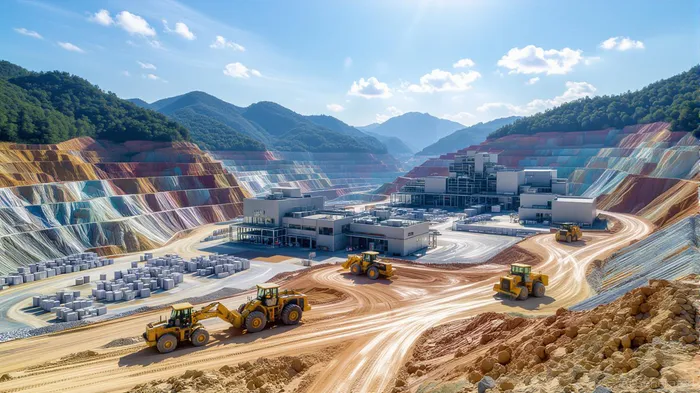
The recent shutdown of Contemporary Amperex Technology Co. Ltd. (CATL)'s Jianxiawo lithium mine in Yichun, Jiangxi province, has sent shockwaves through the global battery metals market. This event, driven by the expiration of the mine's regulatory license, has removed approximately 3% of global lithium supply and triggered an 8% surge in lithium carbonate futures on the Guangzhou Futures Exchange. While CATL insists the impact on its operations is "negligible" due to its diversified sourcing and stockpiles, the incident underscores a critical truth: the EV supply chain is increasingly vulnerable to regulatory shifts, geopolitical tensions, and material bottlenecks. For investors, this represents both a cautionary tale and a window of opportunity.
The Lithium Market at a Crossroads
The Jianxiawo shutdown is not an isolated event but a symptom of broader systemic pressures. China's Ministry of Natural Resources is tightening mining regulations, requiring eight local mines—including CATL's—to submit updated resource assessments by September 30, 2025. This regulatory scrutiny, combined with global overcapacity (projected to grow by 35% in 2025), creates a paradox: while lithium production is surging, localized disruptions and policy-driven curtailments could drive prices higher in the short term.
Lithium carbonate spot prices in China have already risen to RMB 71,900 per ton, a 13.59% increase from the previous month. This marks the first significant upward movement in nearly two years, reversing a 90% decline from 2022 peaks. Analysts argue that the market is recalibrating, with investors now factoring in the risk of prolonged regulatory delays and supply chain fragility.
Investment Opportunities in the Lithium Value Chain
1. Low-Cost Lithium Producers with Diversified Operations
The shutdown has spotlighted the importance of low-cost producers with resilient supply chains. Australian hard rock spodumene miners, such as Allkem (ASX:ALO) and Albemarle (ALB), are well-positioned to benefit from rising prices and reduced Chinese dominance. These companies leverage scale and processing efficiency to maintain margins even in a volatile market.
In South America, Argentina's Lilac Solutions (LILC) and Salta Lithium are gaining traction with direct lithium extraction (DLE) technologies that reduce water usage and extraction time. These innovations not only lower costs but also align with ESG mandates, making them attractive to institutional investors.
2. Battery Tech Innovators Mitigating Material Risks
As lithium supply remains uncertain, companies developing alternative chemistries are emerging as key players. CATL's lithium iron phosphate (LFP) batteries have already demonstrated their value in reducing dependency on nickel and cobalt. Meanwhile, Sichuan Union Shine New Energy is pioneering sulfide-based solid-state electrolytes and Li-Mg alloy anodes, which could revolutionize energy density and safety.
In the U.S., Lithium Ionic (LTHM) and Adionics are scaling sustainable extraction methods, while Li-Cycle (LICY) and Redwood Materials (RWM) are expanding battery recycling infrastructure. These technologies address both environmental concerns and material scarcity, creating a circular economy that insulates investors from price volatility.
3. EV Manufacturers with Resilient Supply Chains
The EV sector is witnessing a shift toward vertical integration and supplier diversification. CATL's own strategy—spanning mining, processing, and recycling—serves as a blueprint for mitigating single-point failures. Similarly, Tesla (TSLA) and Ford (F) are investing in in-house battery R&D and securing long-term contracts with suppliers like Pilbara Minerals (PILMF).
Undervalued suppliers such as Benchmark Electronics (BHE), Methode Electronics (MEI), and Plexus Corp (PLXS) are also emerging as critical enablers. Benchmark's work on thermal management systems and liquid-cooled components aligns with EV battery efficiency trends, while Methode's pivot to data center power solutions diversifies revenue streams.
The Road Ahead: Strategic Positioning for Investors
The Jianxiawo shutdown is a catalyst for the industry to re-evaluate its reliance on centralized supply chains. For investors, the key is to focus on companies that:
- Diversify sourcing (e.g., CATL's global lithium partnerships).
- Innovate in battery chemistry (e.g., LFP and sodium-ion).
- Leverage AI and digital tools for supply chain visibility (e.g., Blue Yonder's platforms).
While the lithium market faces structural oversupply, regulatory-driven curtailments and technological advancements could create a more balanced landscape by 2026. Investors who position now in low-cost producers, recycling infrastructure, and alternative chemistries stand to benefit from both near-term price rebounds and long-term demand growth.
In conclusion, the EV supply chain is at a pivotal inflection pointIPCX--. The Jianxiawo shutdown is not just a disruption—it's a signal to invest in resilience, innovation, and diversification. For those who act decisively, the evolving battery metals market offers a compelling roadmap to outperform in an era of uncertainty.

Stay ahead of the market.
Get curated U.S. market news, insights and key dates delivered to your inbox.
AInvest
PRO
AInvest
PRO



Comments
No comments yet