
CATL's Lithium Mine Production Halt: A Catalyst for Supply Chain Rebalancing and Strategic Investor Reallocation
 Aime Summary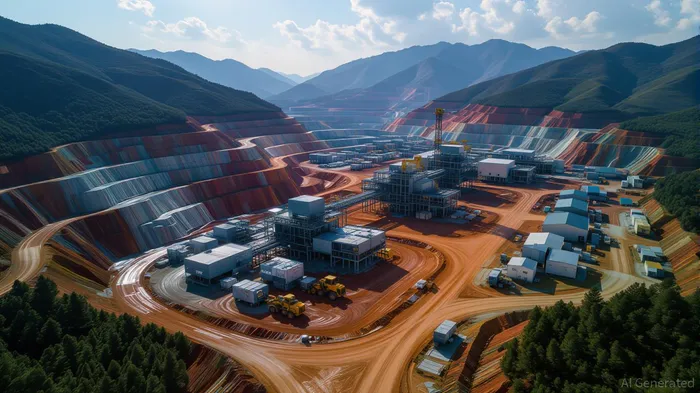
The temporary suspension of production at Contemporary Amperex Technology Co. Ltd.'s (CATL) Jianxiawo lithium mine in Jiangxi province has emerged as a pivotal event in the global EV battery sector. This halt—CATL's first in over a decade—reflects a confluence of regulatory enforcement, resource bottlenecks, and market rebalancing. For investors, it underscores a critical inflection point: the transition from a period of oversupply and fragmented supply chains to one defined by tighter regulation, strategic consolidation, and a reorientation toward sustainability.
Regulatory Tightening and Supply Chain Resilience
The production halt was precipitated by China's revised Mineral Resources Law, enacted in July 2025, which centralized lithium mining permits under the Ministry of Natural Resources. This move eliminated loopholes that allowed lithium extraction under permits for other minerals, such as kaolinite. The Jianxiawo mine, which accounted for 3% of global lithium production, was forced to suspend operations until it could demonstrate compliance with the new standards. This regulatory shift is part of a broader effort to address overcapacity, standardize extraction practices, and ensure environmental sustainability—a trend mirrored in other critical mineral sectors like steel and coal.
The immediate impact was a 14% surge in lithium carbonate prices on the Guangzhou Futures Exchange (GFEX), peaking at 80,000 yuan ($11,128) per ton in July 2025. While prices later corrected by 14%, the volatility highlighted the fragility of a supply chain still grappling with excess capacity. UBSUBS-- analysts project a potential 11–23% rebound in lithium prices for the remainder of 2024, contingent on prices recovering to $10,968 per ton (excluding VAT). This volatility signals a market in flux, where short-term disruptions are reshaping long-term dynamics.
Industry Consolidation and Strategic Reallocation
The production halt has accelerated industry consolidation, favoring firms with robust compliance frameworks, vertical integration, and diversified sourcing. Smaller, non-compliant producers are exiting the market, while leaders like CATL are leveraging their scale to strengthen supply chain resilience. For instance, CATL's $8.2 billion investment in a lithium processing plant in Hungary and its joint venture with StellantisSTLA-- in Spain illustrate a strategic pivot toward localized production and regional self-sufficiency. These moves align with a broader trend of supply chain regionalization, driven by geopolitical tensions and the need for circularity in critical mineral flows.
The regulatory crackdown has also intensified global competition for refining capacity. China's 85% dominance in lithium refining contrasts with the EU's stricter regulations, such as the classification of black mass as hazardous waste. This divergence creates opportunities for firms that can navigate regulatory complexity while maintaining environmental compliance. Investors should prioritize companies that are not only vertically integrated but also investing in recycling technologies and alternative battery chemistries—such as sodium-ion and solid-state—to future-proof their portfolios.
Investment Implications and Thematic Shifts
For long-term investors, the production halt underscores the importance of positioning in firms that optimize for sustainability, diversification, and innovation. Key themes to consider include:
- Vertical Integration and Diversified Sourcing: Companies with control over multiple stages of the supply chain—mining, refining, and battery production—are better insulated from disruptions. CATL's strategic partnerships and investments in overseas facilities exemplify this trend.
- Sustainability and Circular Economy: As regulatory scrutiny intensifies, firms that prioritize recycling and reduce reliance on primary raw materials will gain a competitive edge. For example, CATL's advancements in battery recycling technologies align with circular economy goals.
- Geopolitical Resilience: The EU's 2040 recycling targets and the U.S. Department of Energy's $3 billion investment in domestic critical mineral production highlight the need for supply chains that span multiple regions. Investors should favor firms with diversified geographic exposure.
Navigating Volatility and Positioning for Growth
While the lithium market remains volatile, the structural shifts initiated by CATL's production halt present opportunities for strategic reallocation. Equity investors should focus on companies with strong balance sheets, regulatory agility, and a commitment to innovation. Futures traders, meanwhile, must hedge against near-term price swings while positioning for long-term trends, such as the EU's push for self-sufficiency and the U.S. focus on domestic production.
In conclusion, the Jianxiawo mine's temporary closure is not merely a supply-side disruption but a catalyst for a more disciplined and resilient lithium market. For investors, the path forward lies in aligning with firms that prioritize sustainability, adapt to regulatory shifts, and build supply chains capable of withstanding geopolitical and environmental challenges. The EV battery sector is evolving from a commodity-driven race to a strategic battleground where innovation, compliance, and diversification will define success.

Stay ahead of the market.
Get curated U.S. market news, insights and key dates delivered to your inbox.


AInvest
PRO
AInvest
PRO



Comments
No comments yet