
Cathay Pacific's Strategic Jet Order and Its Implications for Global Aviation Recovery
 Aime Summary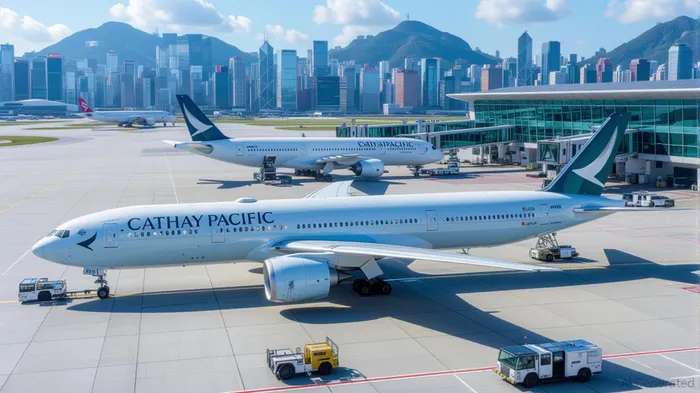
The global aviation industry is on the cusp of a transformative phase, driven by pent-up demand, technological innovation, and a renewed focus on sustainability. Cathay Pacific's recent order for 14 additional BoeingBA-- 777-9 aircraft—bringing its total commitment to 35 of the 777X variant—offers a compelling case study of how airlines are repositioning themselves for long-term growth. For investors, this move signals not just a bet on a single carrier but a broader confidence in the aerospace supply chain, from manufacturers to maintenance providers.
A Supply Chain Renaissance
Cathay's decision to expand its 777X order reflects a strategic alignment with the industry's shift toward fuel-efficient, low-emission aircraft. The 777-9, with its 20% reduction in fuel use and 40% lower noise footprint compared to the 777-300ER, is a cornerstone of this transition. For Boeing, the order represents a lifeline for its 777X program, which has faced years of delays due to certification hurdles and production bottlenecks. Cathay's commitment—despite these challenges—underscores its faith in Boeing's ability to deliver a product that meets both operational and environmental demands.
But the implications extend beyond Boeing. Cathay's order also secures demand for General Electric's GE9X engines, the most powerful commercial turbofans in service. The airline has contracted for 70 GE9X engines, along with service and maintenance agreements, creating a steady revenue stream for GE AerospaceGE--. This is critical for investors tracking the engine manufacturer's recovery from pandemic-era production cuts and supply chain disruptions.
Long-Term Aerospace Stock Positioning
For investors, the 777X order highlights two key investment themes: the resurgence of aerospace manufacturing and the growing importance of maintenance, repair, and overhaul (MRO) services.
Aerospace Manufacturers: Boeing's ability to secure large orders like Cathay's is a positive signal for its long-term viability. While the company's recent financials remain under scrutiny due to 777X delays and 737 MAX liabilities, Cathay's order—valued at over HK$100 billion in total investment—demonstrates that major airlines still view Boeing as a strategic partner. Investors should monitor Boeing's progress in resolving 777X certification issues and its capacity to meet delivery timelines.
MRO Providers: As Cathay's 777-9s enter service in 2027, demand for specialized maintenance will surge. Companies like Lufthansa Technik, ST Engineering, and AAR CorporationAIR--, which offer advanced MRO services for next-gen aircraft, are well-positioned to benefit. Cathay's emphasis on sustainability also opens opportunities for firms specializing in retrofitting older aircraft with eco-friendly technologies, a niche that could gain traction as regulators tighten emissions standards.
Strategic Risks and Rewards
Cathay's order is not without risks. The 777X program's history of delays raises questions about Boeing's operational discipline. If delivery timelines slip further, Cathay's fleet modernization could face bottlenecks, potentially impacting its ability to compete with rivals like Emirates and Singapore Airlines, which are also investing in widebody aircraft. However, Cathay's CEO Ronald Lam has emphasized the airline's confidence in Boeing, suggesting that the carrier views the 777X as a long-term strategic asset rather than a short-term gamble.
For investors, the key is to balance these risks with the broader industry tailwinds. The International Air Transport Association (IATA) projects that global air travel will return to pre-pandemic levels by 2025, with long-haul demand recovering faster than expected. Cathay's investment in premium cabins, including its Aria Suite Business Class and upcoming Halo Suite First Class, aligns with a shift toward high-margin, experience-driven travel—a trend that could drive profitability even in a competitive market.
Investment Advice
- Position in Aerospace Giants: Consider long-term exposure to Boeing and GE Aerospace, but do so with a focus on their ability to resolve operational challenges. Boeing's stock remains volatile, but its order book and Cathay's commitment could provide a floor for valuation.
- Diversify into MRO Services: Allocate capital to MRO firms with expertise in next-gen aircraft. These companies are less cyclical than manufacturers and offer recurring revenue streams tied to aircraft lifecycles.
- Monitor ESG Trends: Cathay's emphasis on sustainability—via the 777-9's efficiency and its investments in Sustainable Aviation Fuel (SAF) partnerships—aligns with regulatory pressures. Investors should favor aerospace firms with clear ESG roadmaps.
Conclusion
Cathay Pacific's 777X order is more than a fleet renewal—it is a vote of confidence in the future of global aviation. For investors, it underscores the resilience of the aerospace sector and the opportunities embedded in its supply chain. While risks remain, the alignment of technological innovation, environmental goals, and strategic airline investments creates a compelling case for long-term positioning in aerospace manufacturing and MRO services. As Cathay's 777-9s take to the skies in 2027, they will not only redefine the airline's fleet but also serve as a barometer for the industry's broader recovery.

Delivering real-time insights and analysis on emerging financial trends and market movements.
Latest Articles
Stay ahead of the market.
Get curated U.S. market news, insights and key dates delivered to your inbox.




Comments
No comments yet