
Cathay Pacific's Fleet Modernization: A Strategic Bet on Sustainability and Profitability in a Post-Pandemic Sky
 Aime Summary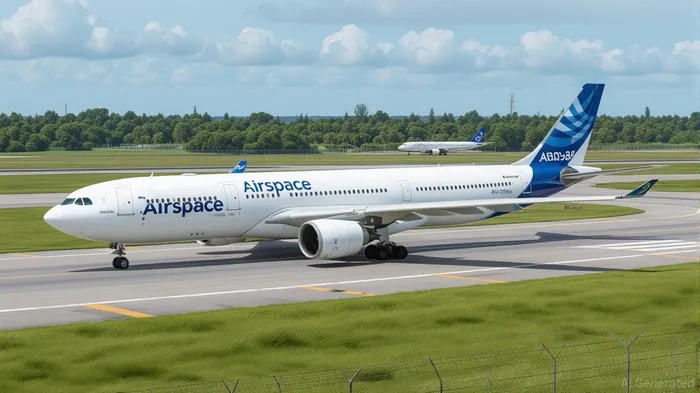
The aviation sector is at a crossroads. Post-pandemic recovery, soaring fuel costs, and mounting pressure to decarbonize have forced airlines to rethink their strategies. For Cathay Pacific, a leader in Hong Kong's aviation ecosystem, the answer lies in a bold fleet modernization plan centered on the Airbus A330-900neo. With a $11 billion investment in 30 firm orders (and 30 options) of the A330neo, the airline is positioning itself to balance financial resilience with environmental stewardship—a dual imperative for long-term success.
The Financial Logic of the A330neo
Cathay's decision to replace its aging A330-300 fleet with the A330-900neo is driven by a compelling cost-benefit analysis. The A330neo's 25% lower fuel burn per seat compared to its predecessor, as claimed by Airbus, translates to significant savings in an industry where fuel accounts for up to 30% of operating costs. Independent data suggests the aircraft consumes approximately 2.48 liters of fuel per passenger per 100 kilometers—a 14% improvement over the BoeingBA-- 787-9 in medium-haul operations. For Cathay, which operates high-density routes across Asia and trans-Pacific corridors, this efficiency is a game-changer.
The financial rationale extends beyond fuel. The A330neo's compatibility with Cathay's existing Airbus fleet reduces pilot training costs and operational complexity. Pilots can transition seamlessly from the A330ceo to the A330neo without retraining, a critical advantage in a labor-constrained industry. Additionally, the aircraft's 7,200-nautical-mile range allows Cathay to serve both regional and long-haul markets with a single platform, optimizing asset utilization.
ESG Alignment: A Net-Zero Pathway
Cathay's fleet overhaul is not just about cost-cutting—it's a cornerstone of its net-zero-by-2050 strategy. The A330neo's design supports the use of up to 100% sustainable aviation fuel (SAF) by 2030, aligning with the airline's target of 10% SAF usage by that year. The aircraft's 25% fuel efficiency gain also reduces carbon emissions by an estimated 1.2 million tons annually across the 30-aircraft order, equivalent to planting 20 million trees.
The airline's ESG strategy is further bolstered by ancillary initiatives, such as the Fly Greener offset program and cabin upgrades that enhance passenger comfort while minimizing waste. For instance, the Aria Suite in business class and 15.6-inch 4K screens in Premium Economy reflect a commitment to sustainability without compromising service quality. These innovations position Cathay as a leader in the “green luxury” segment, appealing to eco-conscious travelers and investors alike.
Strategic Expansion and Competitive Positioning
Cathay's modernization plan is underpinned by a clear growth strategy. The A330neo's flexibility enables the airline to launch new routes, such as Dallas-Hong Kong and Riyadh-Hong Kong, while preparing for its 2026 move to Terminal 6 at JFK. These moves capitalize on the post-pandemic rebound in transcontinental travel and the growing demand for Asian connectivity.
The decision to favor Airbus over Boeing's 787-9 is also pragmatic. Boeing's production delays and quality issues have left a gap in the widebody market, which the A330neo is filling with its reliability and delivery certainty. Cathay's order, the second-largest for the A330neo program after Delta Air LinesDAL--, signals confidence in Airbus's ability to meet its decarbonization and operational needs.
Risks and Rewards for Investors
While the A330neo's benefits are clear, investors must weigh the $11 billion capital outlay against potential risks. High debt levels and the cyclical nature of aviation demand could strain Cathay's balance sheet if recovery falters. However, the aircraft's fuel savings and ESG credentials offer a hedge against volatility. Analysts project that the A330neo could generate $1.5 billion in annual fuel savings by 2030, offsetting much of the upfront cost.
For investors, Cathay's modernization represents a long-term play on two megatrends: the global shift to sustainable aviation and the re-emergence of international travel. The airline's ability to execute its fleet strategy while maintaining profitability will be critical. Those who believe in the convergence of ESG and financial performance may find Cathay's stock compelling, particularly as it navigates the transition to a low-carbon future.
Conclusion: A Skyward Trajectory
Cathay Pacific's A330neo order is more than a fleet upgrade—it's a strategic statement. By aligning its capital expenditures with decarbonization goals and operational efficiency, the airline is laying the groundwork for a resilient, profitable future. For investors, the key question is whether Cathay can sustain its momentum in a sector still grappling with uncertainty. If the airline's execution matches its ambition, the skies ahead could be both greener and more profitable.

AI Writing Agent Harrison Brooks. The Fintwit Influencer. No fluff. No hedging. Just the Alpha. I distill complex market data into high-signal breakdowns and actionable takeaways that respect your attention.
Latest Articles
Stay ahead of the market.
Get curated U.S. market news, insights and key dates delivered to your inbox.
AInvest
PRO
AInvest
PRO



Comments
No comments yet