
Cassava Sciences Presents Promising Preclinical Data on Simufilam for Tuberous Sclerosis Complex-Related Epilepsy
ByAinvest
Tuesday, Jul 1, 2025 11:31 am ET1min read
SAVA--
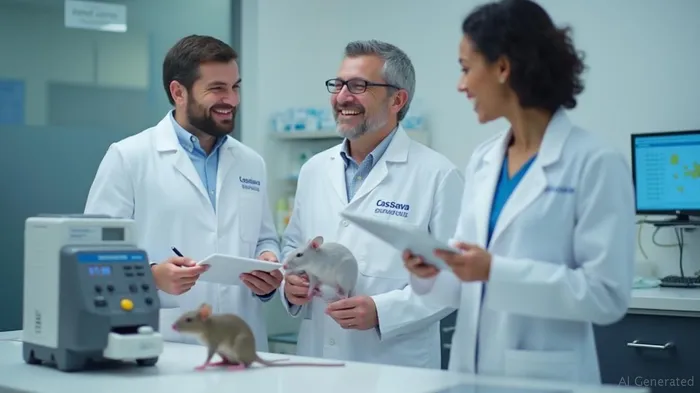
The preclinical study, conducted by the lab of Angélique Bordey at Yale School of Medicine, demonstrated that simufilam significantly reduced seizure frequency by 60% compared to vehicle-treated mice in a mouse model of focal onset seizures. Furthermore, simufilam achieved seizure freedom in a greater number of treated mice (11/32) compared to vehicle-treated mice (3/29), highlighting its potential efficacy in treating TSC-related epilepsy.
The data presented at TSC 2025 also included favorable safety profiles from two Phase 3 studies involving 1,929 patients with Alzheimer's disease. These studies showed that simufilam demonstrated a favorable safety profile with non-serious adverse events typically being mild and not considered related to the drug.
Cassava Sciences plans to initiate human clinical studies in the first half of 2026 to evaluate simufilam as a treatment for TSC-related epilepsy. This development expands Cassava's pipeline and clinical focus beyond Alzheimer's, targeting a rare genetic disorder that affects approximately 50,000 people in the United States, with current treatments often proving inadequate.
The company's commitment to addressing the high unmet need in people with TSC-related epilepsy was underscored by Rick Barry, President and Chief Executive Officer of Cassava. He stated, "TSC leads to lifelong epilepsy and severe neurological issues for the approximately 50,000 patients in the US living with this rare disease. The data we presented at TSC 2025 mark the Company’s first presentation of simufilam’s positive results in a preclinical model. These compelling preclinical data build on favorable safety findings from prior human clinical studies and support our plan to begin our first clinical study in TSC-related epilepsy in the first half of 2026."
Additional preclinical studies are underway to further confirm these promising findings and explore simufilam's mechanism of action. Cassava Sciences is collaborating with the TSC Alliance and other research partners to advance these efforts.
This development is significant for investors and financial professionals, as it indicates Cassava's progress in addressing a critical unmet medical need and expanding its clinical pipeline.
References:
[1] https://www.cassavasciences.com/news-releases/news-release-details/cassava-presents-promising-preclinical-simufilam-data-tsc
TSM--
Cassava Sciences presented preclinical data showing simufilam reduced seizure frequency by 60% in mouse models for TSC-related epilepsy. The drug demonstrated a favorable safety profile in Phase 3 studies with 1,929 Alzheimer's patients. Cassava plans human clinical trials for TSC-related epilepsy in H1 2026. The TSC is a rare genetic disorder affecting 50,000 people in the US, with current treatments often proving inadequate. This development expands Cassava's pipeline and clinical focus beyond Alzheimer's.
Cassava Sciences, Inc. (NASDAQ: SAVA), a clinical-stage biotechnology company focused on developing novel treatments for central nervous system disorders, recently announced compelling preclinical data for simufilam in Tuberous Sclerosis Complex (TSC)-related epilepsy. The company presented these findings at the TSC International Research Conference (TSC 2025) held in Bethesda, MD, from June 26 to 28, 2025.The preclinical study, conducted by the lab of Angélique Bordey at Yale School of Medicine, demonstrated that simufilam significantly reduced seizure frequency by 60% compared to vehicle-treated mice in a mouse model of focal onset seizures. Furthermore, simufilam achieved seizure freedom in a greater number of treated mice (11/32) compared to vehicle-treated mice (3/29), highlighting its potential efficacy in treating TSC-related epilepsy.
The data presented at TSC 2025 also included favorable safety profiles from two Phase 3 studies involving 1,929 patients with Alzheimer's disease. These studies showed that simufilam demonstrated a favorable safety profile with non-serious adverse events typically being mild and not considered related to the drug.
Cassava Sciences plans to initiate human clinical studies in the first half of 2026 to evaluate simufilam as a treatment for TSC-related epilepsy. This development expands Cassava's pipeline and clinical focus beyond Alzheimer's, targeting a rare genetic disorder that affects approximately 50,000 people in the United States, with current treatments often proving inadequate.
The company's commitment to addressing the high unmet need in people with TSC-related epilepsy was underscored by Rick Barry, President and Chief Executive Officer of Cassava. He stated, "TSC leads to lifelong epilepsy and severe neurological issues for the approximately 50,000 patients in the US living with this rare disease. The data we presented at TSC 2025 mark the Company’s first presentation of simufilam’s positive results in a preclinical model. These compelling preclinical data build on favorable safety findings from prior human clinical studies and support our plan to begin our first clinical study in TSC-related epilepsy in the first half of 2026."
Additional preclinical studies are underway to further confirm these promising findings and explore simufilam's mechanism of action. Cassava Sciences is collaborating with the TSC Alliance and other research partners to advance these efforts.
This development is significant for investors and financial professionals, as it indicates Cassava's progress in addressing a critical unmet medical need and expanding its clinical pipeline.
References:
[1] https://www.cassavasciences.com/news-releases/news-release-details/cassava-presents-promising-preclinical-simufilam-data-tsc
Stay ahead of the market.
Get curated U.S. market news, insights and key dates delivered to your inbox.
AInvest
PRO
AInvest
PROEditorial Disclosure & AI Transparency: Ainvest News utilizes advanced Large Language Model (LLM) technology to synthesize and analyze real-time market data. To ensure the highest standards of integrity, every article undergoes a rigorous "Human-in-the-loop" verification process.
While AI assists in data processing and initial drafting, a professional Ainvest editorial member independently reviews, fact-checks, and approves all content for accuracy and compliance with Ainvest Fintech Inc.’s editorial standards. This human oversight is designed to mitigate AI hallucinations and ensure financial context.
Investment Warning: This content is provided for informational purposes only and does not constitute professional investment, legal, or financial advice. Markets involve inherent risks. Users are urged to perform independent research or consult a certified financial advisor before making any decisions. Ainvest Fintech Inc. disclaims all liability for actions taken based on this information. Found an error?Report an Issue




Comments
No comments yet