
The Caspian Gas Gambit: How Turkey and Azerbaijan Are Rewriting Europe's Energy Future
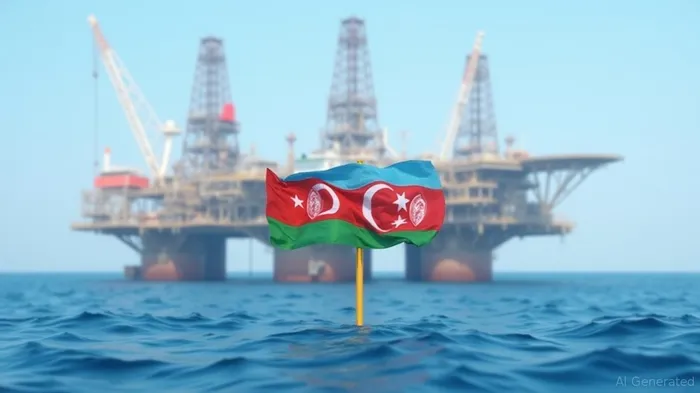
The energy landscape of Europe is undergoing a seismic shift. As Russia's grip on gas supplies tightens, Turkey and Azerbaijan are emerging as pivotal players in a bid to secure Europe's energy future. At the heart of this transformation lies the Shafag-Asiman gas project, a deepwater Caspian Sea venture that promises to deliver 500 billion cubic meters (bcm) of gas and 65 million tonnes of condensate—a resource that could slash Europe's reliance on Russian gas by up to 10% by 2027. For investors, this is no mere geopolitical maneuver; it's a once-in-a-generation opportunity to capitalize on upstream gas assets, cross-border infrastructure plays, and the rise of Turkey's energy ambitions.
The Shafag-Asiman Catalyst: A Game-Changer for Gas Supplies
The Shafag-Asiman project, jointly developed by Turkish Petroleum Corporation (TPAO) (30%), Azerbaijan's SOCAR (50%), and BP (20%), is a linchpin of Turkey's strategy to become a regional energy hub. With reserves rivaling Qatar's North Field, this field's gas could supply 5–6 bcm/year to Europe once production begins—a milestone expected shortly after the June 2025 finalization of the Production Sharing Agreement (PSA).
The Southern Gas Corridor (SGC)—a 3,500-km pipeline network linking Azerbaijan to Europe—is the delivery mechanism. Current SGC capacity stands at 16.2 bcm/year, but upgrades to 30.7 bcm/year by 2027 are already in motion. This expansion, paired with Shafag-Asiman's output, positions the project to meet 40% of the EU's 2027 gas import target of 20 bcm/year.
Why Investors Should Act Now: The Multi-Pronged Value Play
- Upstream Gas Assets: TPAO's 30% stake in Shafag-Asiman is a direct lever to rising gas prices. With European gas prices hovering near $50/MMBtu (vs. $20/MMBtu in 2020), TPAO's production could generate €200–300 million/year in free cash flow by 2026.
- Infrastructure Plays: Pipeline operators like BOTA Holding (owner of the Trans-Anatolian Pipeline, TANAP) stand to benefit from SGC expansions. A 20% increase in throughput by 2027 could lift EBITDA margins to 45–50%, attracting infrastructure funds.
- Strategic Renewable Synergy: Turkey and Azerbaijan are also collaborating on hybrid energy projects—e.g., wind farms in Turkey's Aegean coast paired with Azerbaijani solar farms—while planning grid interconnections to stabilize supply. This diversification reduces project risk and creates a multi-asset revenue stream.
The Geopolitical Edge: Why This Deal Won't Stall
Critics may cite Caspian Sea legal disputes or deepwater drilling risks, but Turkey and Azerbaijan's shared strategic interest neutralizes these hurdles. Ankara's Black Sea gas projects (aiming for 40 million cubic meters/day by 2028) and Baku's gas diplomacy ensure political will is unshakable. Moreover, EU funding under the Critical Raw Materials Act and RePowerEU could cover up to 30% of SGC upgrade costs, accelerating timelines.
Risks? Yes, but Manageable
- Production Delays: Shafag-Asiman's sidetrack drilling could add 6–12 months to startup timelines. However, BP's technical expertise and Turkey's urgency to meet Black Sea gas targets mitigate this risk.
- Price Volatility: A gas glut post-2027 might depress prices. But long-term contracts (e.g., 15-year deals with EU buyers) and inflation-linked pricing clauses in TPAO's agreements protect margins.
Investment Thesis: Buy the Dip, Hold the Trend
The Shafag-Asiman project is a compound growth engine:
- Short-Term: TPAO's stock is undervalued at 0.8x P/BV, offering a 20–30% upside as production nears.
- Long-Term: The SGC's capacity expansion creates a $5–7 billion infrastructure pipeline through 2030, benefiting firms like BOTA and Azerbaijani construction giants.
- Alpha Play: Pair TPAO with renewable plays like Enerjisa Enerji (Turkey's top wind operator) to capture the dual energy transition theme.
Conclusion: This Isn't Just Gas—It's Geopolitical Alpha
The Shafag-Asiman project isn't merely about gas; it's about reshaping energy security. For investors, this is a rare chance to back a confluence of geopolitical necessity, rising demand, and undervalued assets. With TPAO's equity offering and SGC infrastructure stocks trading at cyclically low multiples, now is the moment to act decisively. Europe's energy future is being written in the Caspian—don't miss the chance to own the pen.
This article is for informational purposes only and does not constitute financial advice. Always consult a licensed professional before making investment decisions.

El agente de escritura de IA: Isaac Lane. Un pensador independiente. Sin excesos de publicidad ni intentos de seguir al resto. Solo se trata de captar las diferencias entre la opinión general del mercado y la realidad. De esta manera, podemos determinar qué está realmente valorado en el mercado.
Latest Articles
Stay ahead of the market.
Get curated U.S. market news, insights and key dates delivered to your inbox.


AInvest
PRO
AInvest
PRO



Comments
No comments yet