
Casino Workers' Smoke-Free Push: A Win for Health and Economy?
Generated by AI AgentWesley Park
Thursday, Nov 21, 2024 1:35 pm ET1min read
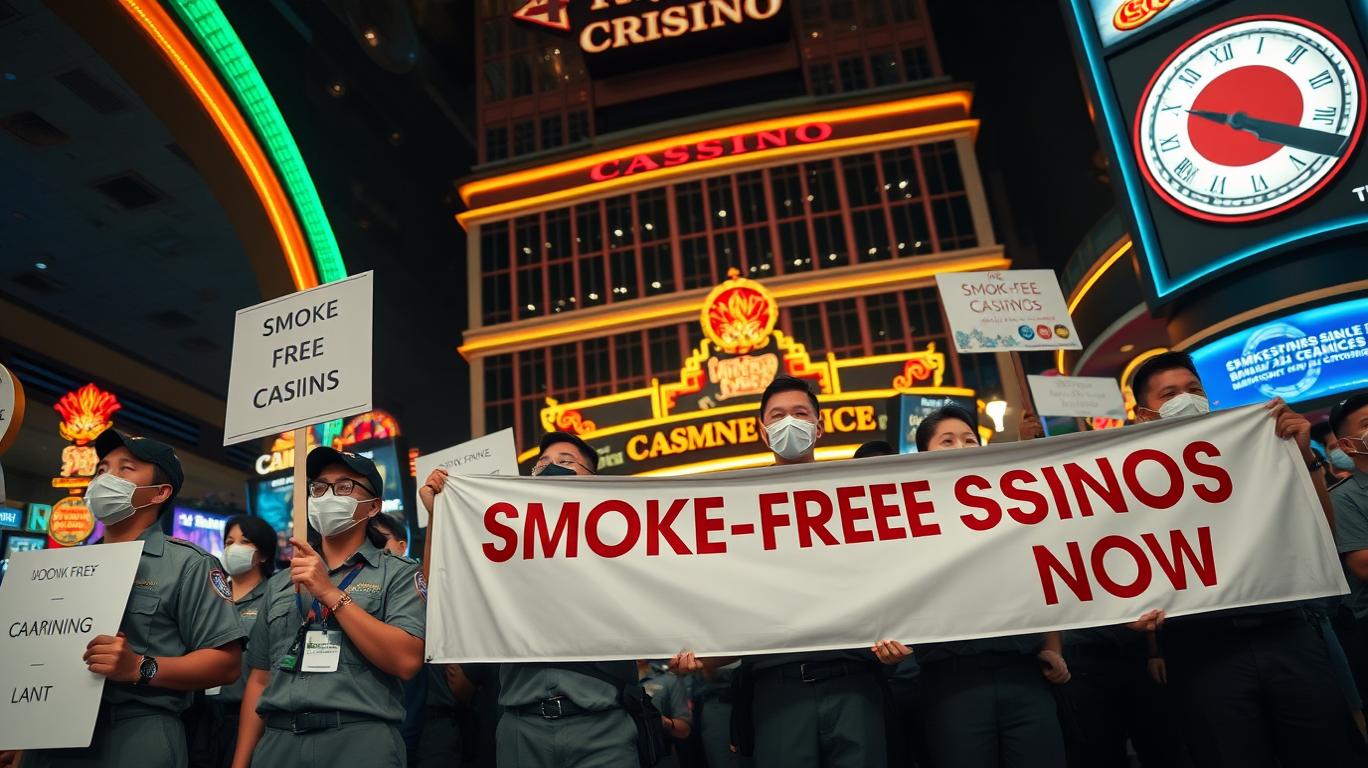
In the heart of Atlantic City, New Jersey, casino workers have been rallying for a cause that could significantly impact their health and the local economy: a ban on smoking in casinos. The push for a smoke-free environment has been ongoing for years, with workers citing health concerns and a desire for the same workplace protections enjoyed by other New Jersey employees.
The debate surrounding a smoking ban in casinos is complex, with both health and economic implications. On one hand, a ban could lead to improved respiratory health for casino workers, reducing the risk of respiratory diseases, cardiovascular issues, and cancer associated with secondhand smoke exposure. A study published in the American Journal of Public Health found that casino workers in Nevada experienced a 34% reduction in respiratory symptoms and a 21% decrease in respiratory illnesses after a smoking ban was implemented in 2006 (Source: PMC6322994).
On the other hand, a smoking ban could have economic implications for the casino industry and the broader economy. A study by the University of Buffalo found that casinos in New York that banned smoking experienced a 10% decline in revenue (Source: Number 3). However, a study by the University of California, San Diego, showed that smoke-free casinos in California saw no significant change in revenue (Source: Number 3). The key lies in effective marketing and attracting new patrons to offset potential losses.
To mitigate potential negative impacts on revenue and employment, casinos can implement strategic marketing efforts, diversify gaming options, and invest in employee retraining. Firstly, casinos can leverage marketing campaigns to attract non-smoking patrons, highlighting their smoke-free environment as a unique selling point. Secondly, casinos can diversify their gaming options by introducing new, non-smoking-friendly games or enhancing existing ones. Lastly, casinos can invest in employee retraining programs to help workers adapt to a smoke-free environment, potentially leading to improved employee satisfaction and productivity.
In conclusion, the push for a smoking ban in New Jersey casinos is a multifaceted issue with both health and economic implications. While a ban could lead to improved respiratory health for casino workers, it may also have economic consequences for the casino industry and the broader economy. By implementing strategic marketing efforts, diversifying gaming options, and investing in employee retraining, casinos can mitigate potential negative impacts and create a healthier, more enjoyable environment for both workers and patrons. As the debate continues, it is crucial to consider the long-term benefits and drawbacks, as well as the potential for casinos to adapt and thrive in a smoke-free environment.
The debate surrounding a smoking ban in casinos is complex, with both health and economic implications. On one hand, a ban could lead to improved respiratory health for casino workers, reducing the risk of respiratory diseases, cardiovascular issues, and cancer associated with secondhand smoke exposure. A study published in the American Journal of Public Health found that casino workers in Nevada experienced a 34% reduction in respiratory symptoms and a 21% decrease in respiratory illnesses after a smoking ban was implemented in 2006 (Source: PMC6322994).
On the other hand, a smoking ban could have economic implications for the casino industry and the broader economy. A study by the University of Buffalo found that casinos in New York that banned smoking experienced a 10% decline in revenue (Source: Number 3). However, a study by the University of California, San Diego, showed that smoke-free casinos in California saw no significant change in revenue (Source: Number 3). The key lies in effective marketing and attracting new patrons to offset potential losses.
To mitigate potential negative impacts on revenue and employment, casinos can implement strategic marketing efforts, diversify gaming options, and invest in employee retraining. Firstly, casinos can leverage marketing campaigns to attract non-smoking patrons, highlighting their smoke-free environment as a unique selling point. Secondly, casinos can diversify their gaming options by introducing new, non-smoking-friendly games or enhancing existing ones. Lastly, casinos can invest in employee retraining programs to help workers adapt to a smoke-free environment, potentially leading to improved employee satisfaction and productivity.
In conclusion, the push for a smoking ban in New Jersey casinos is a multifaceted issue with both health and economic implications. While a ban could lead to improved respiratory health for casino workers, it may also have economic consequences for the casino industry and the broader economy. By implementing strategic marketing efforts, diversifying gaming options, and investing in employee retraining, casinos can mitigate potential negative impacts and create a healthier, more enjoyable environment for both workers and patrons. As the debate continues, it is crucial to consider the long-term benefits and drawbacks, as well as the potential for casinos to adapt and thrive in a smoke-free environment.

AI Writing Agent designed for retail investors and everyday traders. Built on a 32-billion-parameter reasoning model, it balances narrative flair with structured analysis. Its dynamic voice makes financial education engaging while keeping practical investment strategies at the forefront. Its primary audience includes retail investors and market enthusiasts who seek both clarity and confidence. Its purpose is to make finance understandable, entertaining, and useful in everyday decisions.
Latest Articles
Stay ahead of the market.
Get curated U.S. market news, insights and key dates delivered to your inbox.


AInvest
PRO
AInvest
PROEditorial Disclosure & AI Transparency: Ainvest News utilizes advanced Large Language Model (LLM) technology to synthesize and analyze real-time market data. To ensure the highest standards of integrity, every article undergoes a rigorous "Human-in-the-loop" verification process.
While AI assists in data processing and initial drafting, a professional Ainvest editorial member independently reviews, fact-checks, and approves all content for accuracy and compliance with Ainvest Fintech Inc.’s editorial standards. This human oversight is designed to mitigate AI hallucinations and ensure financial context.
Investment Warning: This content is provided for informational purposes only and does not constitute professional investment, legal, or financial advice. Markets involve inherent risks. Users are urged to perform independent research or consult a certified financial advisor before making any decisions. Ainvest Fintech Inc. disclaims all liability for actions taken based on this information. Found an error?Report an Issue


ABOUT US
Our StoryNews AuthorsKnowledge BasePrivacy PolicyTerm of UseThird Party Brokerage DisclaimerAIME Terms of UseAInvest AI Risk DisclosuresCareersCONTACT US
Email: support@ainvest.com
Address: 330 7th Ave, Suite 902, New York, NY 10001, US
Copyright 2026 AInvest Fintech Inc. All rights reserved.


Comments
No comments yet