
Cash Cat Meme Token Surges on Robinhood Chain Amid Community Nostalgia
 Aime Summary
- Cash Cat (CASHCAT) operates as a cultural artifact on the Robinhood ChainC--, deriving value entirely from community narrative and nostalgia for the platform's early mascot.
- The token enforces a fixed 1 billion supply with zero transaction taxes and permanently locked liquidity to mitigate rug-pull risks.
- Unlike utility-focused projects such as Cashelix, CASHCAT explicitly promises zero utility, positioning itself as fan fiction with a ticker.
- The Robinhood Chain, an Ethereum Layer-2 network launched in July 2026, has seen memeMEME-- coins dominate early trading volumes.
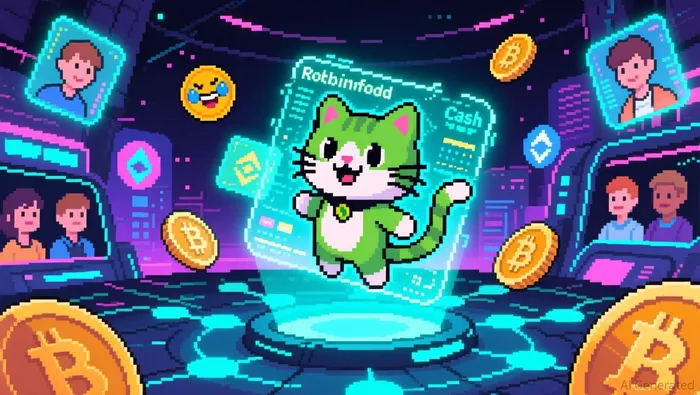
Cash Cat represents a distinct segment of the cryptocurrency ecosystem, functioning as a nostalgic tribute to the original Cash Cat mascot from Robinhood’s pre-rebranding identity. Unlike utility-focused projects, CASHCAT explicitly promises zero utility, positioning itself as fan fiction with a ticker where value is derived entirely from community narrative and social engagement. The token serves as a cultural artifact within the cryptocurrency ecosystem, specifically native to the Robinhood Chain, an Ethereum Layer-2 network launched in July 2026.
Technically, CASHCAT is the flagship meme token on the Robinhood Chain, which is built on Arbitrum technology. While the underlying chain is designed for tokenized real-world assets, meme coins like CASHCAT have dominated early trading volumes, highlighting the platform's appeal to retail-driven activity. The token is accessible via decentralized exchanges within the ecosystem and centralized platforms like Robinhood.
The tokenomics are designed for transparency and simplicity, aligning with its meme-coin status. It has a fixed total supply of 1 billion tokens, all of which are currently in circulation. The project enforces a 0% tax on transactions.
Crucially, 100% of the initial liquidity was provided to a decentralized exchange pool, and the corresponding liquidity provider tokens were burned, permanently locking the foundational liquidity. There are no complex governance or staking mechanisms, with the project managed by anonymous founders and community direction.
How Does Cash Cat Differ From Utility Tokens?
Cash Cat stands in sharp contrast to utility-driven digital assets currently entering the market. Cashelix, for example, introduced CASX, a utility token designed to facilitate peer-to-peer blockchain payments. The Cashelix project aims to replace fragmented traditional payment infrastructure with a low-cost, transparent alternative. CASX supports transaction fees, staking, and ecosystem governance, positioning itself as a functional utility asset rather than a speculative instrument.
While Cash Cat relies on social engagement, Cashelix builds its token around practical platform utility. The token is intended to become integral to transactions within the ecosystem, with platform-generated fees contributing to infrastructure, security, and operational sustainability. Transaction fees generated through platform usage are intended to support ecosystem development, infrastructure maintenance, and security improvements.
Cashelix targets the growing demand for efficient, low-cost, and transparent peer-to-peer financial infrastructure. By leveraging P2P infrastructure, users can transact directly while benefiting from blockchain security and reduced costs compared to traditional methods. The project’s roadmap begins with a blockchain-based P2P payment module, with future phases expected to introduce merchant tools, staking functionality, and expanded financial services.
What Are The Key Risks And Tokenomics?
The tokenomics of Cash Cat are designed for transparency and simplicity, aligning with its meme-coin status. It has a fixed total supply of 1 billion tokens, all of which are currently in circulation. The project enforces a 0% tax on transactions.
Crucially, 100% of the initial liquidity was provided to a decentralized exchange pool, and the corresponding liquidity provider tokens were burned, permanently locking the foundational liquidity. There are no complex governance or staking mechanisms, with the project managed by anonymous founders and community direction.
In contrast, Cashelix has established a structured token allocation framework prioritizing development, liquidity, and community growth. The project initially focuses on its P2P transaction module, laying the foundation for future financial services. The CASX smart contract has been independently audited to provide technical review and transparency ahead of wider distribution.
A defining element of the Cashelix presale is its structured fundraising model. Instead of an open-ended sale, Cashelix established predefined presale rounds with strict timelines and fixed hard caps. Each stage operates within published allocation and fundraising limits, concluding when a hard cap or scheduled closing date is reached.
This approach is designed to provide participants with greater visibility into token offerings, stage conclusions, and overall distribution structure. A spokesperson emphasized that transparency should begin before the first token is sold, with CASX structured around defined rounds, hard caps, transparent tokenomics, and genuine platform utility.
The divergence between these two projects highlights the bifurcation in the current market. One side embraces pure cultural narrative and community-driven value, while the other focuses on functional infrastructure and utility. Investors must carefully distinguish between these models when assessing risk and potential returns.
The Robinhood Chain’s early adoption by meme coins suggests a strong retail appetite for speculative assets. However, the lack of utility in tokens like CASHCAT introduces unique volatility risks compared to utility-driven alternatives. The permanently locked liquidity provides a layer of security, but the value remains entirely dependent on social sentiment.
As the ecosystem matures, the distinction between cultural artifacts and functional utilities will likely become more pronounced. Projects like Cashelix aim to build sustainable economic engines, while tokens like Cash Cat serve as tributes to platform history. Understanding this distinction is crucial for navigating the evolving digital asset landscape.
The launch of the Robinhood Chain has introduced new dynamics to the Layer-2 space. With meme coins dominating early trading volumes, the platform has quickly established itself as a hub for retail-driven activity. This trend underscores the enduring power of community narratives in the cryptocurrency market.
Investors should remain cautious of the speculative nature of meme tokens while recognizing their cultural significance. The fixed supply and locked liquidity of Cash Cat provide a structured framework for this speculation. Meanwhile, utility-focused projects like Cashelix offer a different value proposition based on practical application.
The market response to these divergent models will likely shape the future of digital assets. As more platforms emerge, the ability to distinguish between utility and narrative will remain a critical skill for global investors. The current landscape offers a clear example of the diverse strategies employed in the crypto space.

Blending traditional trading wisdom with cutting-edge cryptocurrency insights.
Latest Articles
Stay ahead of the market.
Get curated U.S. market news, insights and key dates delivered to your inbox.


AInvest
PRO
AInvest
PRO




Comments
No comments yet