
Casey's Q1 2027 Earnings Call: Fuel Margin Volatility Clashes with Stable Guidance, Grocery Softness Tied to Category Trends
 Aime Summary
Date of Call: Sep 9, 2026
Financials Results
- Revenue: $5.68B, an increase of $1.11B, or 24.3% from the prior year
- EPS: $7.37 per diluted share, up 28% from the prior year
- Gross Margin: 42.2%, up 30 basis points from the prior year
Guidance:
- Same-store volumes in Q2 expected to be consistent with Q1 results and within annual guidance ranges.
- Fuel CPG in Q2 expected to be in the low 40 cents per gallon range.
- Current cheese costs are slightly favorable versus the prior year.
- Q2 operating expense increase expected to be similar to Q1.
- Annual guidance to be updated on the Q2 earnings call.
Business Commentary:
Strong Financial Performance:
- Casey's General Store reported a
diluted EPSof$7.37 per share,up 28%from the prior year, withEBITDAof$485 million,17%higher year-on-year. - The growth was driven by an increase in prepared food and dispensed beverage transactions and strong performance in whole pies and energy drinks.
Fuel Margin Volatility and Strategic Management:
- Fuel margin for the quarter was
nearly 48 cents per gallon, with same-store gallonsdown 0.3%, but positive on a two-year stack basis. - The volatility in fuel margins was influenced by geopolitical events and market dynamics, yet the company managed to maintain a strong position by balancing margin and gallons.
Impact of Store Remodels and Integration:
- Approximately
1%of the total store base faced disruptions due to remodeling legacy Sefco stores, creating a25 basis pointheadwind for inside same-store sales. - Despite these challenges, the remodels have led to significant lifts in prepared food and dispensed beverage sales, with remodeled stores showing
30%average lift in PF and DB sales.
Prepared Foods and Dispensed Beverages Growth:
- Prepared food and dispensed beverage same-store sales were up
4.8%, with a gross profit margin of59.3%. - This growth was driven by compelling value, continued innovation, and strong traffic, especially in whole pies and ready-to-drink cocktails.
Operating Expense Management:
- Total operating expenses increased by
8%, driven by same-store employee expenses, operations, and credit card fees. - The company managed expenses efficiently, with wage rate increases offset by flat labor hours, and expects to maintain controlled OpEx growth relative to EBITDA.

Sentiment Analysis:
Overall Tone: Positive
- Statements include: 'outstanding first quarter performance,' 'strong first quarter result,' 'remodeled stores have performed exceptionally well,' 'We're off to a great start to the year,' 'I'm as excited as ever about our progress,' and 'building on the momentum we have going throughout the fiscal year and beyond.'
Q&A:
- Question from Bonnie Herzog (Goldman Sachs): Could you provide color on the Q1 OpEx drivers and how you expect the cadence for OpEx to trend from here, and how much of the increase was tied to new stores, SEFCO, labor, credit card fees, or other inflationary pressures?
Response: OpEx increase of 8% driven by: ~1.5% from same-store employee expense, ~2% from same-store operations (repairs, utilities, insurance), ~2% from new units, ~1.5% from same-store credit card fees, and ~1% from other items. Long-term, OpEx growth expected to be slower than EBITDA growth.
- Question from Matthew Rothway (for Mark): Are you seeing any impact from price investments from mass merchants on your inside sales, or any shift from convenience store peers and pricing?
Response: No unusual competitive activity from C-stores; national pizza chains have taken more price while Casey's has taken minimal price, widening the gap and benefiting Casey's unit and dollar growth in PF&DB.
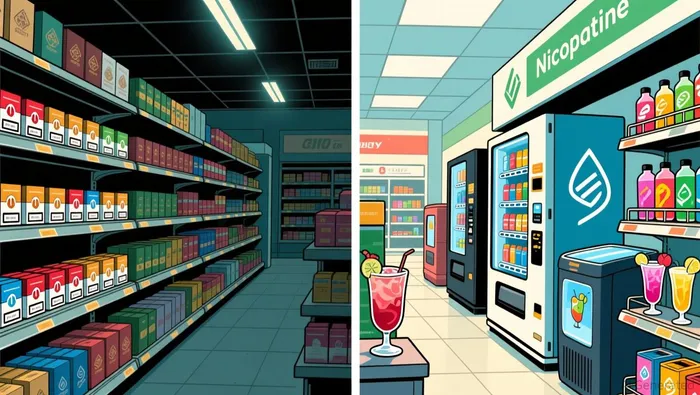
- Question from Chuck Sarankoski (North Coast Research): Can you talk about the shift from cigarettes to nicotine alternatives and what it means for inside merchandising and space allocation?
Response: Nicotine alternatives up 47% in Q1 vs. cigarette decline; Casey's adjusted back-bar space years ago to favor alternatives and will give them even more space, positioning to be a category leader.
- Question from Warren: How much are you covered on cheese costs and for how many quarters?
Response: Approximately 80% covered into the first quarter of next fiscal year, with a modest margin tailwind for the next three quarters.
- Question from Corey: Could you give an update on chicken wings and talk about M&A strategy in Texas?
Response: Wings performing well with 38% of orders being wings-only, increasing PF frequency. In Texas, focusing on acquisitions and new builds; SEFCO remodels are performing above 30% lift in PF&DB, and new stores are also doing well.
- Question from Kelly: Could you provide more color on the weaker trends in beer, snacks, and cigarettes, including when they started and if there's a trade-down or promotion plans?
Response: Cigarette decline is long-term secular trend; snacks pressured by national brand price increases, offset by private label growth; beer soft due to category challenges, offset by liquor strength (ready-to-drink cocktails up >30%).
- Question from Brad: Why did same-store gallons turn negative after six quarters of positive growth, and is fewer gas sales impacting the inside comp?
Response: Same-store gallons down 0.3% due to ~50 bps drag from SEFCO remodels; overall trend shows share gain in fuel. Higher fuel prices lead to fewer gallons per trip but more trips, which benefits inside sales.
- Question from Christina Katai (Deutsche Bank): Is the weakness in snacks entirely due to pricing/value perception, or is there a more durable shift like towards healthier consumption or GLP-1 usage?
Response: Weakness in national brand chips is likely due to price/value, not GLP-1; Casey's private label chips up 16% units. Trend towards protein-rich snacks is noted but not yet material enough to change merchandising strategy.
- Question from Bobby: How are remodeled SEFCO stores performing versus corporate average, and what does that indicate for the Texas opportunity?
Response: Remodeled SEFCO stores show >30% PF&DB lift post-remodel and were high-volume, high-prepared foods performers. Texas is viewed as a long-runway market with strong performance from both remodels and new stores.
- Question from Daniel: Are there certain states or areas where you're seeing a stronger or weaker consumer?
Response: No significant state-level strength or weakness jumps out; geographic footprint in low-cost living areas benefits consumers, with an example of gas tax arbitrage affecting Illinois/Indiana border stores.
- Question from Sam Barton (Milius Research): Has the M&A industry changed in recent quarters, and how will it contribute to the 120 new unit growth target?
Response: M&A environment remains good as small operators struggle; multiples stable but EBITDA lower. For the 120 new units, approximately half expected from new industry builds and half from small deal M&A.
Contradiction Point 1
Fuel Margin Volatility and Guidance
Contradiction on the stability of fuel margins and their alignment with guidance.
Edward Kelly (Wells Fargo) - Edward Kelly (Wells Fargo)
2027Q1: Fuel margins in Q1 were volatile, fluctuating between the 30s, 40s, and 60s... no solid trend can be identified. The company’s mid-40s fuel margin guidance remains unchanged. - Steve Bramlage(CFO)
Are the current fuel margin dynamics sustainable through the quarter, and do any current factors raise concerns about the mid-40s margin guide? - Edward Kelly (Wells Fargo)
2027Q1: The quarter was volatile with fuel margins fluctuating between the 60s, 40s, and even 30s... No solid trend can be described for the quarter. The company's guidance and outlook remain based on the assumption that the conflict continues. - Steve Bramlage(CFO)
Contradiction Point 2
Grocery/General Merchandise Performance Drivers
Contradiction on the primary cause of softness in grocery and general merchandise.
Anonymous - Anonymous
2027Q1: Trends in grocery and prepared food were consistent with recent quarters... Softness in grocery and general merchandise was driven by category trends (beer, snacks, cigarettes) rather than cash constraints. - Darren Rabelas(CEO)
How much did the comp D cell in grocery and prepared food decline due to consumers being squeezed by gas prices during the quarter? - Greg Millick (Evercore ISI)
2027Q1: Lower-income consumers were slightly more impacted, but all three income cohorts showed positive growth. Softness in grocery and general merchandise was driven more by category trends (beer, snacks, cigarettes) than demographic trends. - Darren Rebelez(CEO)
Contradiction Point 3
Fuel Margin Trends and Dynamics
Contradiction on fuel margin predictability and drivers between quarters.
[Questioner's Name]([Questioner's Company]) - [Questioner's Name]([Questioner's Company])
2027Q1: Fuel margins in Q1 were volatile, fluctuating between the 30s, 40s, and 60s depending on geopolitical headlines... no solid trend can be identified. - Steve Bramlage(CFO)
Can you discuss the trend in fuel margins during Q1 and the rest of the quarter, and whether current factors raise questions about the sustainability of the mid-40s margin guidance? - Robert Griffin (Raymond James & Associates, Inc.)
2026Q4: The quarter's outcome differed due to greater volatility in fuel prices, which was 'choppier' than in the past. The company's practice of holding fuel prices relatively flat during this volatile period allowed them to capture margin when prices dropped, leading to an outsized gain. - Darren Rebelez(CFO)
Contradiction Point 4
Grocery and Prepared Food Performance Trends
Contradiction on the underlying cause of softness in grocery/snacks.
[Questioner's Name]([Questioner's Company]) - [Questioner's Name]([Questioner's Company])
2027Q1: Softness in grocery and general merchandise was driven by category trends (beer, snacks, cigarettes) rather than cash constraints. - Darren Rabelas(CFO)
To what extent did rising gas prices impact the comp D cell in grocery and prepared food during the quarter by reducing consumer cash availability? - Michael Montani (Evercore ISI Institutional Equities)
2026Q4: In Q4, traffic was up ~3% and ticket was up ~2.5%, driving the same-store comp. The company is winning on traffic (more sustainable) with minimal price action, primarily in nicotine. - Darren Rebelez(CFO)
Contradiction Point 5
Fuel Margin Volatility and Trends
Contradiction on identifying a trend versus stating volatility.
[Questioner's Name] - [Questioner's Name]
2027Q1: Fuel margins in Q1 were volatile, fluctuating between the 30s, 40s, and 60s... No solid trend can be identified. - Steve Bramlage(CFO)
Can you discuss the trend in fuel margins during Q1 and the sustainability of those dynamics throughout the quarter? - Corey Tarlowe (Jefferies LLC, Research Division)
2026Q3: Recent events... historically cause temporary fuel margin compression... Margins later expand when prices fall. Over a cycle, it is a net positive. - Darren Rebelez(CEO)

Discover what executives don't want to reveal in conference calls
Latest Articles
Stay ahead of the market.
Get curated U.S. market news, insights and key dates delivered to your inbox.


AInvest
PRO
AInvest
PRO




Comments
No comments yet