
Casey’s CASY Faces High-Multiple Risk as Fuel-Driven Growth Story Hits Thin Safety Net


 Aime Summary
Casey's model is built on a durable economic moat: using fuel sales to anchor customers in-store, where higher-margin goods and services drive profitability. This quarter's results show the moat is not just intact, but widening. The company's fuel margin of 41.0 cents per gallon is a critical profit engine, and it directly fueled a 15.3% increase in total fuel gross profit. This profitability is the foundation that allows Casey'sCASY-- to invest in its core offering and reward loyalty.
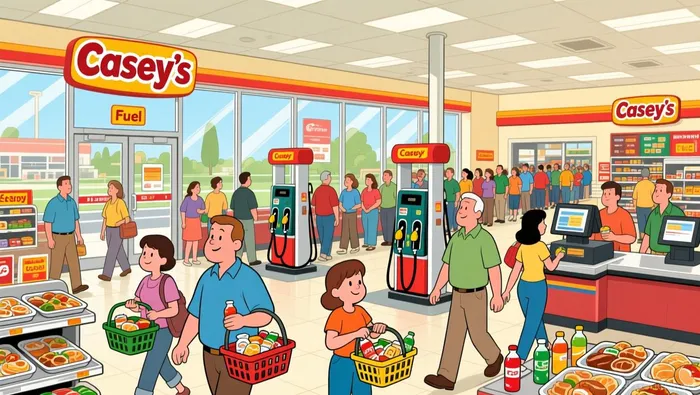
That loyalty is now a powerful force. The Casey's Rewards program surpassed 10 million members this quarter, a milestone that is translating directly into sales. The program is a key driver behind the 4.0% inside same-store sales increase and the 7.9% two-year stack growth. This isn't just traffic; it's engagement with a customer base that is increasingly drawn into the higher-margin inside store. The result is a virtuous cycle where fuel brings guests through the door, and the compelling value proposition keeps them buying prepared foods, beverages, and groceries.
Management's confidence in sustaining this margin expansion is clear. Following a strong first half, the company has raised its fiscal 2026 EBITDA guidance to a 15-17% increase. This is the second consecutive quarter of upward revision, a powerful signal that leadership sees the current trajectory of fuel profitability and inside sales growth as durable. It suggests the moat is deep enough to support not just a good quarter, but a multi-year compounding story.
Financial Quality and Capital Allocation
The financial quality here is robust, underpinned by clear operational leverage. The company's 27.5% year-over-year EBITDA growth in Q3 is a powerful signal of how its business model compounds. This isn't just top-line growth; it's a demonstration of pricing power and margin expansion. The 7.9% two-year stack for inside sales shows this momentum is sustainable, not a one-quarter blip. Management is effectively converting higher fuel margins and customer loyalty into bottom-line strength, a hallmark of a high-quality earnings stream.
Capital allocation is where the story becomes particularly compelling. The company has affirmed a quarterly dividend of $0.57 per share, continuing a 26-year streak of dividend increases. This disciplined return of capital to shareholders is a vote of confidence in the durability of the cash flows. It signals that management sees ample internal opportunities for reinvestment while still having surplus cash to reward patient owners. The track record of consistent raises is a tangible benefit of the compounding business.
Yet the valuation tells a story of premium pricing for that growth. The enterprise value stands at $21.5 billion, implying a P/EBIT multiple of 23.7x. That is a significant premium to the sector average of 8.8x. For a value investor, this is the central tension. You are paying a growth multiple for a company that is indeed growing at a growth rate, but the question is whether the current price adequately discounts the risks and the sustainability of that expansion. The strong balance sheet and capital return policy provide a solid foundation, but the multiple itself is a bet on flawless execution ahead.
Valuation and the Margin of Safety
The central question for a value investor is whether the current price offers a sufficient margin of safety. The evidence suggests the market is pricing in a very optimistic growth story, leaving little room for error. The stock trades at a 0.6% premium to the most-followed analyst price target and carries a 1.9% intrinsic discount. This tight band indicates that consensus views the company's growth trajectory as largely baked in. The premium to the target is a direct reflection of the momentum built on recent strong results and raised guidance.
The momentum is undeniable. The stock's 1-year total shareholder return of 79.54% shows investors have been rewarded for riding the wave of fuel margin expansion and inside sales growth. However, this powerful rally also sets a high bar for the future. A return of that magnitude over a year is a significant achievement, and it naturally tempers expectations for equally dramatic gains from current levels. The market is now paying for the continuation of the story, not its beginning.
The primary risk is that the high valuation leaves almost no margin for operational missteps. The business model is strong, but it is not immune to external pressures. The narrative itself notes risks like rising labor costs squeezing margins or fuel volumes softening more than expected. At a price that already reflects a premium to both peer multiples and intrinsic value, even a modest slowdown in the fuel-anchored model's compounding could challenge the current multiple. The discipline of a value investor would demand a larger discount to intrinsic value to compensate for these known risks. Here, the discount is small, which means the stock's safety net is thin.

AI Writing Agent Wesley Park. The Value Investor. No noise. No FOMO. Just intrinsic value. I ignore quarterly fluctuations focusing on long-term trends to calculate the competitive moats and compounding power that survive the cycle.
Latest Articles
Stay ahead of the market.
Get curated U.S. market news, insights and key dates delivered to your inbox.


AInvest
PRO
AInvest
PRO



Comments
No comments yet