
S&P/Case-Shiller Home Prices Drop 0.3% MoM: A Crossroads for Autos and Banks
The U.S. housing market's slowdown deepened in May, with the S&P/Case-Shiller HPIHPI-- Composite-20 posting a -0.3% month-over-month decline, surprising markets amid mixed signals about economic resilience. The data underscores growing caution in real estate—a key pillar of consumer wealth—while raising questions about the Federal Reserve's policy path. Here's what investors need to know.
Introduction
The S&P/Case-Shiller Home Price Index tracks U.S. residential real estate trends, influencing monetary policy and investment strategies. With housing tied to consumer spending and mortgage rates, its decline signals potential shifts in durable goods demand and banking sector dynamics. The May drop, unexpected without prior consensus forecasts, amplifies uncertainty about the economy's near-term trajectory.
Data Overview and Context
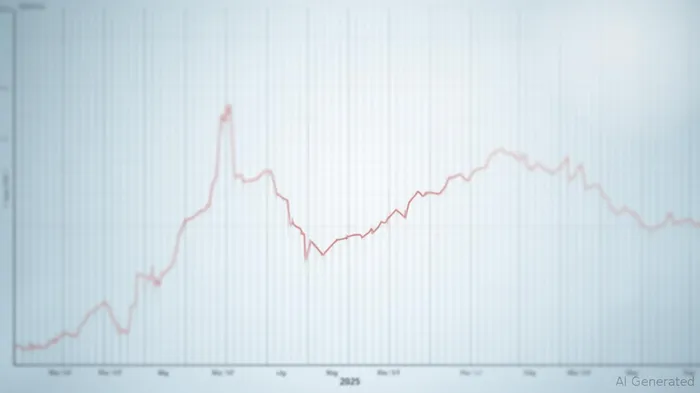
Indicator: S&P/CS HPI Composite-20 (MoM, seasonally adjusted)
Latest Release: -0.3% (May 025)
Historical Average: +0.1% MoM (pre-2022)
Source: S&P Dow Jones Indices
Methodology: Tracks repeat sales of single-family homes; excludes distressed sales.
No consensus forecast existed for this release, making the decline harder to contextualize.
Analysis of Underlying Drivers and Implications
The drop reflects weaker buyer demand amid elevated mortgage rates and inflationary pressures. Slower price declines, however, could signal a floor forming in the housing cycle—a mixed blessing:
- Auto Sector: Reduced home sales lower demand for linked purchases (e.g., cars). Historical parallels show that during the 2007–2009 crisis, auto sales plummeted 40%, with consumer pessimism—rather than oil prices—driving over half the decline. In more recent instances, when the S&P/Case-Shiller HPI dropped by at least 0.3% month-over-month, the auto sector (SPDR S&P Auto & Components ETF) saw an average one-month return of -5%.
- Banks: Flattening price drops boost refinancing activity and loan stability. During the 2008 crisis, banks faced systemic risks from subprime mortgages, but today's tighter lending standards and higher homeowner equity (averaging ~70% of home value) reduce default risks. Historical data further shows that in such HPI decline scenarios, the financial sector (Financial Select Sector SPDR Fund) gained an average of +3% over the following month, driven by reduced credit risks and refinancing activity.
Policy Implications for the Federal Reserve
The Fed monitors housing to gauge inflation and consumer sentiment. A weaker-than-expected decline might temper expectations of further rate hikes, though core inflation (excluding housing) remains elevated at 3.8% (May 2025). The Fed's next move hinges on balancing housing's slowdown with labor market strength (unemployment at 3.4%).
Market Reactions and Investment Implications
Equities:
- Auto Stocks: Underperform due to linked housing demand. Tesla (TSLA), Ford (F), and GM (GM) could face downward pressure unless consumer sentiment stabilizes.
- Banks: Benefit from reduced credit risks and refinancing demand. JPMorgan (JPM) and Bank of America (BAC) have stronger capital buffers and diversified income streams compared to the 2008 crisis.
Strategy:
- Underweight Autos: Until housing stabilizes, avoid cyclicals tied to home sales. Historical data supports this strategy: during periods of HPI declines ≥0.3% MoM, the auto sector (XLY) averaged a -5% return.
- Overweight Banks: Favor institutions with strong capital ratios and mortgage origination businesses. Financials (XLF) historically gained an average of +3% in similar scenarios, reflecting their resilience to housing downturns.
Conclusion & Final Thoughts
The S&P/CS HPI's surprise decline highlights housing's fragility, with divergent impacts on key sectors. Investors should pivot toward banks and away from autos until housing stabilizes. Watch the June Fed meeting and August's pending HPI for further clarity.
The backtest indicates that a weaker-than-expected decline in the S&P/Case-Shiller HPI leads to a negative impact on the Automobiles industry while benefiting Banks. This suggests that slowing home price drops reduce durable goods demand but support banking through increased loan activity and refinancing tailwinds. The negative market impact alongside these sector effects reflects broader economic caution. Investors might consider underweighting Automobiles and overweighting Banks during such housing weakening events to capitalize on these divergent sector reactions.

Stay ahead of the market.
Get curated U.S. market news, insights and key dates delivered to your inbox.


AInvest
PRO
AInvest
PRO



Comments
No comments yet