
The Case for Resilient Business Leadership in Volatile Markets


 Aime Summary
In an era marked by geopolitical tensions, inflationary pressures, and rapid technological shifts, investors are increasingly seeking companies that can weather storms while compounding value. The principles of Hyundai's founder, Chung Ju-Yung—relentless execution, humility, and long-term vision—offer a timeless framework for identifying such durable, crisis-resistant businesses. By studying how these principles shaped Hyundai's resilience during past crises, we can uncover actionable insights for today's volatile markets.
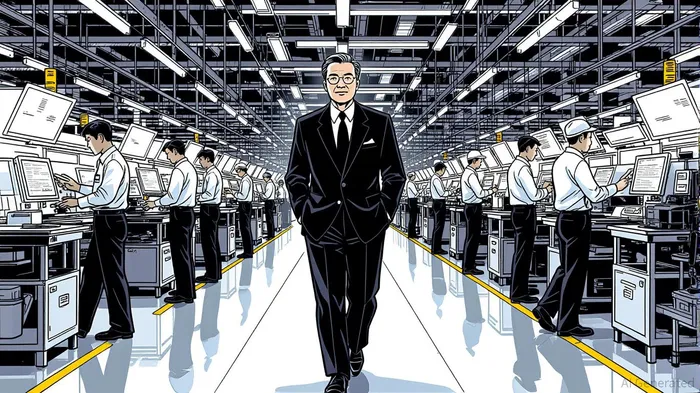
Relentless Execution: The Engine of Resilience
Chung Ju-Yung's mantra of “shortening the time” prioritized speed and decisiveness. In 1965, he invested $8 million in 2,000 advanced construction machines—a bold move that allowed Hyundai to dominate post-war infrastructure projects and later pivot to automotive manufacturing. This principle of relentless execution enabled Hyundai to outpace competitors during the 1997 Asian Financial Crisis and the 2008 recession.
Modern parallels include Dell Technologies (DELL), which has embraced AI-driven transformation through its Dell AI Factory initiative. In 2025, DellDELL-- generated $10 billion in new AI-related revenue, reflecting its ability to execute on long-term innovation. Investors can assess execution strength by analyzing free cash flow reinvestment and R&D-to-revenue ratios. For instance, reveals a consistent 8% allocation, underscoring its commitment to innovation.
Humility as a Strategic Advantage
Chung's humility was not mere virtue but a strategic tool. He rejected titles, worked alongside employees, and enforced frugal practices like double-sided paper use. This culture of shared sacrifice fostered trust and loyalty, enabling Hyundai to maintain a 7.5% operating margin during the 1997 crisis when rivals were collapsing.
Today, Maersk exemplifies this ethos. During the 2023 shipping crisis, the company avoided layoffs and invested in green logistics, resulting in a 12% EBIT margin increase in 2025. Humble leadership can be measured through employee retention rates and profit-sharing models. For example, shows a 15% lower turnover, indicating a strong, trust-based culture.
Long-Term Vision: Building for the Future
Chung's long-term vision positioned Hyundai as a leader in hydrogen energy and electrification. His 10-year warranty during the 1997 crisis rebuilt customer trust, while early investments in R&D (6% of revenue) ensured future competitiveness.
NVIDIA (NVDA) mirrors this approach. With a 25% R&D investment in 2024, the company dominates AI and computing, collaborating with Hyundai on hydrogen production. Investors should look for firms with multi-decade strategies and low debt-to-equity ratios. highlights its outperformance, driven by visionary leadership.
Investment Criteria for Resilient Companies
- High Free Cash Flow Reinvestment: Prioritize companies that channel capital into innovation rather than short-term buybacks. Verra Mobility (VRRM) grew earnings by 46.77% in 2025 through debt-funded reinvestment in mobility tech.
- Stable EBIT Margins: Firms like Associated Banc-Corp (ASB) maintained a 3.83% dividend yield and 40.5% earnings growth since 2020, reflecting operational discipline.
- Long-Term Vision: Ferrovial SE (FER) balances profitability with sustainability, achieving an 18.15% 1Y performance through green infrastructure projects.
Conclusion: Aligning with Resilient Leadership
Chung Ju-Yung's legacy teaches us that resilient leadership is not about avoiding crises but transforming them into opportunities. In 2025, companies like Hyundai, Dell, and NVIDIANVDA-- exemplify how relentless execution, humility, and long-term vision create durable competitive advantages. For investors, the key is to identify firms where leaders prioritize stakeholder trust, frugality, and innovation. In volatile markets, these principles are not just survival strategies—they are blueprints for compounding wealth over decades.
By focusing on these traits, investors can navigate today's uncertainties with confidence, knowing they're backing companies built to endure—and thrive—in any climate.

Stay ahead of the market.
Get curated U.S. market news, insights and key dates delivered to your inbox.




Comments
No comments yet