
The Case for Long-Term Investment in Resilient, Founder-Led Industrial Giants
 Aime Summary
In the annals of industrial history, few figures embody the fusion of resilience, frugality, and long-term vision as profoundly as Chung Ju-Yung, the founder of the Hyundai Group. His journey from a small construction firm in 1940s Korea to a global industrial empire offers a blueprint for identifying modern industrial giants that thrive in volatile markets. For investors seeking contrarian opportunities, the principles that defined Chung's success—relentless execution, strategic frugality, and stakeholder-centric governance—remain as relevant today as they were in the 1960s. By dissecting these mental models, we can uncover high-conviction industrial plays poised to outperform in an era of geopolitical fragmentation and technological disruption.
The Chung Factor: A Framework for Resilient Investing
Chung Ju-Yung's philosophy was rooted in three pillars:
1. Operational Efficiency and Frugality: Chung famously implemented cost-saving measures like double-sided printing and shared meals for executives, embedding a culture of disciplined spending.
2. Long-Term Innovation: His early investments in heavy machinery and infrastructure laid the groundwork for Hyundai's global dominance.
3. People-Centric Governance: He treated employees as stakeholders, fostering loyalty and innovation through profit-sharing and trust.
These principles are not relics of the past. They are mirrored in modern industrial and technology firms that prioritize R&D reinvestment, low debt-to-EBITDA ratios, and ESG alignment. For instance, Nucor (NUE), the U.S. steel giant, has tripled profits by reinvesting $3.2 billion in domestic plant expansions while maintaining a debt-to-EBITDA ratio of 2.5x. Similarly, GE Aerospace (GE) is reshoring LEAP engine manufacturing, projecting a 15.0% return on invested capital (ROIC), a testament to its long-term strategic vision.
Contrarian Plays: Modern-Day Chung-Inspired Giants
- Tesla (TSLA): Elon Musk's vertical integration and AI-driven production reflect Chung's urgency-driven execution. Tesla's 6.5% R&D-to-revenue ratio and <1x debt-to-EBITDA position it as a durable compounder.
- TSMC (TSM): The semiconductor leader reinvests 6.25% of revenue into R&D, maintaining its 3nm chip manufacturing edge. Its <1x debt-to-EBITDA and 50% operating margin underscore its frugality and innovation moat.
- Associated Banc-Corp (ASB): Founder James Rohr's legacy of low overhead and customer trust has driven 40.5% annual earnings growth, with a 3.83% dividend yield and <1x debt-to-EBITDA.
The GRIT Framework: Metrics for Enduring Success
To identify companies aligned with the “Chung Factor,” investors should prioritize:
- R&D-to-revenue ratios >5% (e.g., NVIDIA (NVDA) at 21%).
- Debt-to-EBITDA <2x (e.g., Apple (AAPL) at <1x).
- Strong ESG scores (e.g., Verra Mobility (VRRM), which grew earnings by 46.77% since 2023).
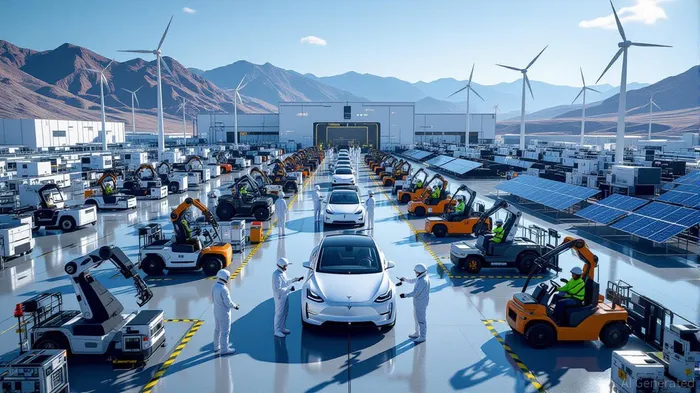
Investment Thesis: Founder-Led Resilience in Action
Founder-led companies like Hyundai Motor Group and SpaceX exemplify the power of cultural grit. Hyundai's $21 billion U.S. manufacturing investment and pivot to EVs mirror Chung's long-term vision. SpaceX's reusable rockets and lean teams echo his frugality-driven innovation. These firms thrive not by chasing short-term metrics but by embedding urgency, reinvestment, and trust into their DNA.
Conclusion: Building Portfolios for the Long Run
In a world where “balance sheet beauties” often mask fragile execution, the Chung Factor offers a contrarian lens. By investing in founder-led industrial giants that prioritize R&D, frugality, and stakeholder trust, investors can build portfolios that endure cycles and compound value. As the 2025 Most Influential Companies List highlights Hyundai as an “Automotive Dark Horse,” the lesson is clear: the future belongs to those who, like Chung Ju-Yung, bet on resilience, not just revenue.
For investors, the takeaway is actionable: allocate capital to companies with high R&D reinvestment, low leverage, and founder-led agility. Avoid firms that prioritize quarterly earnings over long-term innovation. In an era of AI-driven disruption and climate risks, the enduring relevance of Chung's principles is not a coincidence—it's a roadmap.

Delivering real-time insights and analysis on emerging financial trends and market movements.
Latest Articles
Stay ahead of the market.
Get curated U.S. market news, insights and key dates delivered to your inbox.


AInvest
PRO
AInvest
PRO



Comments
No comments yet