
The Case for Infrastructure-Linked Equities in a Rate-Neutral Fed Environment
 Aime Summary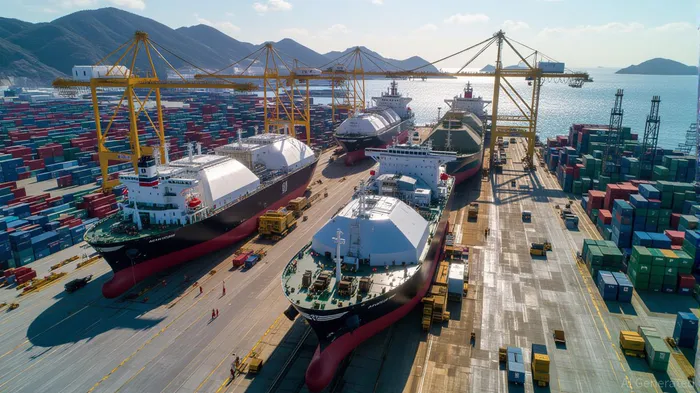
The Federal Reserve's rate-neutral stance in 2025 has created a unique inflection point for infrastructure-linked equities. With inflationary pressures easing and borrowing costs stabilizing, sectors such as construction, shipbuilding, and heavy machinery are poised to outperform. These industries, historically sensitive to interest rate cycles, now benefit from a policy environment that reduces financing burdens while amplifying the returns on long-term capital investments. For investors, this represents an opportunity to identify undervalued, growth-oriented plays—particularly those with operational discipline and strategic agility, as exemplified by Hyundai's global expansion.
The Fed's Rate-Neutral Backdrop: A Tailwind for Infrastructure
The Fed's decision to hold rates steady in 2025 has injected stability into capital-intensive sectors. For construction, this means reduced financing costs for residential and commercial projects, bolstered by government stimulus under the Infrastructure Investment and Jobs Act (IIJA) and the Inflation Reduction Act (IRA). Shipbuilding and heavy machinery, which rely on long-term debt for large-scale projects, also gain from predictable interest rates. Deloitte's Oxford Economic Model projects that a 50-basis-point rate cut in late 2024 will catalyze demand for infrastructure-linked assets, particularly in energy transition and defense.
However, challenges persist. Labor shortages, material cost volatility, and policy-driven tariffs on materials like steel and aluminum could dampen margins. Yet, these headwinds are counterbalanced by structural tailwinds: aging infrastructure upgrades, green energy mandates, and geopolitical demand for secure supply chains.
Hyundai's Strategic Expansion: A Blueprint for Resilience
Hyundai Heavy Industries (HHI) and its affiliates have mastered the art of scaling infrastructure-linked operations amid monetary adversity. From 2020 to 2025, the company leveraged a rate-neutral environment to secure landmark contracts, form global partnerships, and optimize production capacity without overextending financially.
A key example is the $3.9 billion agreement with QatarEnergy to build 17 LNG carriers. This contract, part of the North Field Expansion Project, not only solidified HHI's dominance in the LNG sector but also capitalized on South Korea's 81% global market share in LNG carrier orders. By 2027, these vessels will be delivered from HHI's Ulsan shipyard, leveraging economies of scale to reduce per-unit costs.
HHI's expansion strategy also includes strategic alliances. In April 2025, it signed a Memorandum of Understanding (MOU) with Huntington Ingalls IndustriesHII-- (HII), the U.S.'s largest defense shipbuilder, to co-develop advanced vessels. This partnership combines HHI's technological expertise with HII's domestic production capabilities, addressing U.S. demand for Aegis destroyers and LNG carriers. Similarly, HHI's pursuit of operating rights for Morocco's Casablanca shipyard and its collaboration with India's Cochin Shipyard underscore its focus on diversifying production bases into high-growth markets.
Operational Discipline: Frugality Meets Innovation
Hyundai's success in a rate-neutral environment stems from its operational discipline—a legacy of its 1997 Asian Financial Crisis playbook. The company's “no-wasted-motion” philosophy, which prioritizes cost efficiency and resource optimization, has been critical in managing a $3.9 billion order backlog. By avoiding new shipyard construction (a costly and cyclical endeavor), HHI instead acquires operating rights for existing facilities, such as Subic Bay in the Philippines, to scale production without overleveraging.
This approach mirrors the strategies of modern infrastructure firms like AECOMACM-- and Devon EnergyDVN--, which maintain high EBITDA margins and low leverage while investing in energy transition technologies. Hyundai's $7.4 billion commitment to hydrogen fuel cell R&D by 2025 further illustrates its balance of frugality and long-term innovation.
Investment Implications: Where to Position Capital
For investors, the case for infrastructure-linked equities hinges on three criteria:
1. Policy Alignment: Companies benefiting from IIJA, IRA, or CHIPS Act funding.
2. Operational Resilience: Firms with disciplined capital allocation, low debt, and scalable production models.
3. Strategic Partnerships: Entities forming alliances to access new markets or technologies.
Hyundai's shipbuilding and heavy machinery divisions exemplify these traits. Its global partnerships, backlog of 451 vessels (equivalent to 2.5 years of work), and focus on green technologies position it as a bellwether for the sector. Similarly, firms like CaterpillarCAT-- (CAT) and General Electric (GE) are leveraging rate-neutral conditions to invest in automation and renewable energy infrastructure.
Conclusion: A Window of Opportunity
The Fed's rate-neutral environment has created a rare alignment of low financing costs and structural demand for infrastructure upgrades. For investors, the challenge lies in identifying companies that can navigate near-term headwinds while capitalizing on long-term trends. Hyundai's strategic expansion and operational discipline offer a compelling case study: by balancing frugality with innovation, and leveraging policy stability to secure high-margin contracts, it has positioned itself as a leader in sectors poised for sustained growth.
As the Fed inches toward gradual rate cuts in 2026, infrastructure-linked equities—particularly those with strong balance sheets and global reach—will likely outperform. The key is to act now, before the next rate cycle shifts the landscape.

Stay ahead of the market.
Get curated U.S. market news, insights and key dates delivered to your inbox.




Comments
No comments yet