
The Case for Bond Market Exposure Amid Anticipated Fed Rate Cuts
As the Federal Reserve maintains its patient stance on monetary policy, investors are positioning for a potential shift in interest rates that could redefine opportunities in fixed income. With markets pricing in two rate cuts by year-end and the yield curve signaling easing conditions, intermediate-term Treasuries and mortgage-backed securities (MBS) emerge as strategic allocations for 2025. Let's unpack how monetary policy shifts are shaping this landscape and why now is the time to consider bond market exposure.
The Fed's Crossroads: Caution Meets Expectations
The Federal Reserve's June 2025 meeting underscored its dilemma: holding rates steady at 4.25%-4.50% while navigating tariff-driven economic uncertainty. Despite inflation remaining subdued at 2.4%, Fed Governor Adriana Kugler highlighted risks to both growth and price stability. Yet, markets are already pricing in a 60% chance of a September rate cut, with an 88% probability of two cuts by year-end. This divergence between the Fed's caution and market optimism creates a fertile environment for bond investors.
Yield Curve Dynamics: A Transition to Stability
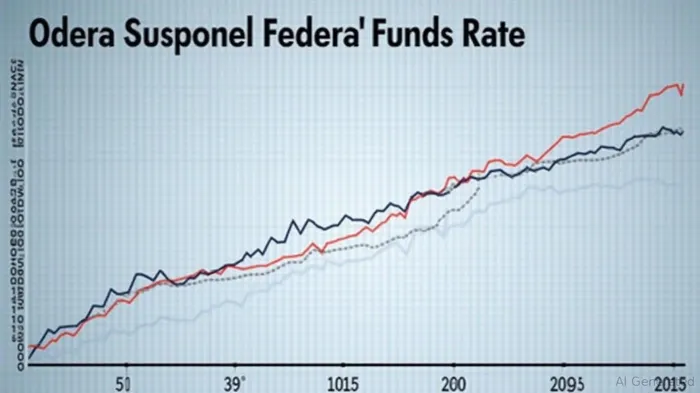
The intermediate Treasury yield curve (5-10 years) has trended downward since early 2025, reflecting market bets on easing. The 10-year Treasury yield dipped to 4.4% in June, down from a February peak of 4.62%, while the 2-year yield fell to 3.96%. This narrowing of the 10-2 year spread—now 45 basis points compared to a negative 35 basis points in late 2024—signifies a less inverted yield curve. Such a shift reduces recession fears and stabilizes expectations for long-term rates.
The data suggests a maturing cycle where the Fed's restraint and market-driven rate expectations are aligning. Analysts project the 10-year yield to average 4.3% by year-end, a level that rewards bond holders as rates decline.
Mortgage-Backed Securities: A Hidden Gem
MBS, particularly those with shorter final maturities or structured as collateralized mortgage obligations (CMOs), offer compelling relative value. Agency MBS spreads over Treasuries remain elevated compared to historical averages, even as other sectors like investment-grade corporates see compressed spreads. This is driven by limited buying from banks, which face liquidity constraints and reduced portfolio cash flows in a high-rate environment.
The current structure of MBS also mitigates interest rate risk. Newer 30-year MBS coupons average 5.5%, far above pre-pandemic lows of 1.18%. This means a +300 basis point rate shock—unlikely but hypothetical—would now trigger a 15% price decline, down from 20% in earlier cycles. The result? Less volatility and better resilience.
Meanwhile, the housing market's resilience—despite 7% 30-year mortgage rates—supports MBS demand. Buyers are still active at these levels, and prepayment risks are manageable. For investors, this creates a “sweet spot”: stable cash flows, attractive spreads, and reduced sensitivity to rate fluctuations.
Building the Case: Why Allocate Now?
- Fed Policy Timing: Markets are pricing in cuts sooner than the Fed's own “dot plot,” which hints at just one cut in 2025. This creates a potential buying opportunity ahead of any Fed action.
- Yield Curve Stability: The flattening 10-2 year spread reduces the risk of a sudden inversion-driven sell-off.
- MBS Relative Value: Spreads over Treasuries are ripe for narrowing as depository institutions eventually return to buying.
Action Items for Investors:
- Intermediate Treasuries (5-10 years): Target ETFs like iShares 7-10 Year Treasury Bond ETF (ITE) or Vanguard Intermediate-Term Treasury ETF (VGIT). Their durations align with the Fed's likely easing timeline.
- MBS Exposure: Consider iShares MBS ETF (MBB) or Vanguard Mortgage-Backed Securities ETF (VMBS), which offer diversified exposure to agency MBS.
Risks and Considerations
- Tariff Volatility: Trump's trade policies could still disrupt inflation and labor markets, derailing Fed easing.
- Rate Cut Delays: If the Fed holds firm beyond expectations, Treasury yields may rise temporarily.
Conclusion: Positioning for the Next Phase
The bond market's quiet June—marked by muted volatility and steady yield declines—masks a deeper opportunity. As the Fed's patience meets market-driven easing expectations, intermediate Treasuries and MBS are positioned to outperform. With spreads favoring fixed income and structural improvements in MBS reducing risk, now is the time to tilt portfolios toward these assets.
Investors who act now may capture not only yield but also capital gains as rates drift lower. The Fed's next move may still be uncertain, but the data and trends point clearly toward bonds.


Stay ahead of the market.
Get curated U.S. market news, insights and key dates delivered to your inbox.






Comments
No comments yet