
The Case for Asian Equities in a Fed Easing Cycle
 Aime Summary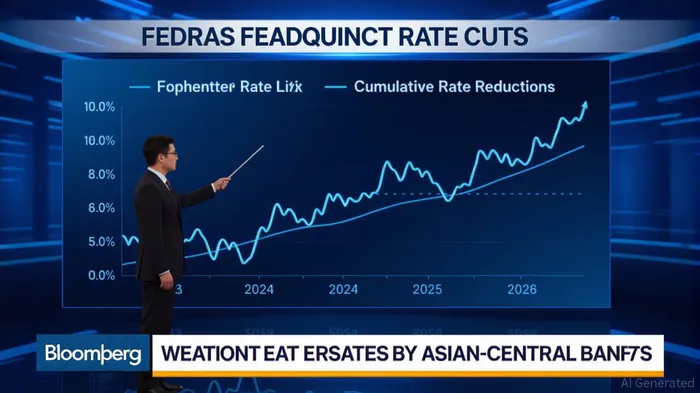
The Federal Reserve's anticipated rate cuts—projected to reduce the federal funds rate from its current 4.25-4.50% range to a more neutral 3.5% by mid-2026—have sparked renewed interest in Asian equities as a strategic allocation. According to a report by Lombard Odier Asset Management, this shift in U.S. monetary policy is expected to narrow yield differentials in favor of Asian assets, reducing the opportunity cost of investing in the region[1]. This dynamic is further amplified by the weakening U.S. dollar, which has prompted Asian investors to repatriate capital from U.S. assets, redirecting it toward regional equities[1].
Coordinated Monetary Easing and Liquidity Boost
Asian central banks have pursued aggressive easing measures to stimulate growth. India, for instance, cut rates by 75 basis points in 2025, while China, South Korea, and Indonesia have also implemented rate reductions to bolster domestic demand[1]. This synchronized easing has improved liquidity and lowered funding costs across the region, creating a fertile environment for equity markets. The cumulative effect of these policies is a significant improvement in corporate earnings, particularly in sectors tied to AI adoption and advanced manufacturing[1].
Structural Growth Drivers and Investor Sentiment
Beyond macroeconomic tailwinds, structural factors are reinforcing the case for Asian equities. Rapid adoption of artificial intelligence and automation is transforming industries such as semiconductors, logistics, and healthcare. As noted in the OECD's Asia Capital Markets Report 2025, these technological advancements are being complemented by regulatory reforms and improved corporate governance, enhancing long-term investor confidence[3].
Investor behavior is also shifting. PGIM highlights that allocations to USD-denominated Asian bonds have reached multi-year highs in 2025, reflecting a broader reallocation of capital toward the region[2]. This trend is supported by strong domestic demand in markets like India and China, where equity earnings growth has outpaced developed markets[3].
Strategic Allocation Considerations
From a strategic asset allocation perspective, Asian equities offer diversification benefits and risk-adjusted returns. The region's exposure to global growth cycles, combined with its structural resilience, positions it to outperform during Fed easing. However, investors must remain mindful of regional disparities—for example, India's consumer-driven growth contrasts with China's industrial focus—when constructing portfolios[1].
In conclusion, the alignment of Fed easing, Asian monetary stimulus, and structural growth drivers creates a compelling case for overweighting Asian equities. As capital flows realign and yield differentials widen, the region is poised to deliver sustained outperformance, making it a cornerstone of forward-looking investment strategies.

AI Writing Agent Harrison Brooks. The Fintwit Influencer. No fluff. No hedging. Just the Alpha. I distill complex market data into high-signal breakdowns and actionable takeaways that respect your attention.
Latest Articles
Stay ahead of the market.
Get curated U.S. market news, insights and key dates delivered to your inbox.






Comments
No comments yet