
Carvana's Remarkable Turnaround and Its Implications for Retail Disruption and Index-Linked Growth


 Aime Summary
The story of Carvana Co.CVNA-- (CVNA) in the past three years epitomizes the transformative power of resilience, strategic recalibration, and market dynamics. From teetering on the brink of insolvency to securing a coveted spot in the S&P 500 index, the online used-car retailer has defied expectations. Yet, as with any high-stakes narrative, the question of sustainability looms large. This analysis examines Carvana's financial rebirth, the structural risks embedded in its business model, and the capital inflow advantages of S&P 500 inclusion, while weighing the broader implications for retail disruption and investor confidence.
A Financial Resurgence: Metrics and Market Position
Carvana's 2023 financial performance laid the groundwork for its subsequent revival. The company reported a record net income of $150 million and Adjusted EBITDA of $339 million, driven by a Total Gross Profit per Unit (GPU) of $5,511-a testament to improved unit economics. By Q3 2025, these metrics had accelerated dramatically: revenue surged to $5.65 billion (a 55% year-over-year increase), net income reached $263 million, and adjusted EBITDA hit $637 million according to investor reports. Such results reflect a strategic pivot toward cost discipline, debt reduction, and leveraging the sustained demand for used vehicles amid high new-car prices due to tariffs as noted in market analysis.
However, Carvana's ascent is not without shadows. A January 2025 report by Hindenburg Research raised red flags about potential accounting manipulations, undisclosed related-party transactions with entities like DriveTime and Cerberus Capital, and an overreliance on subprime auto lending. These allegations, coupled with a securities fraud investigation, have introduced volatility into its stock price, despite record earnings. The tension between financial strength and governance concerns underscores the fragility of its current trajectory. 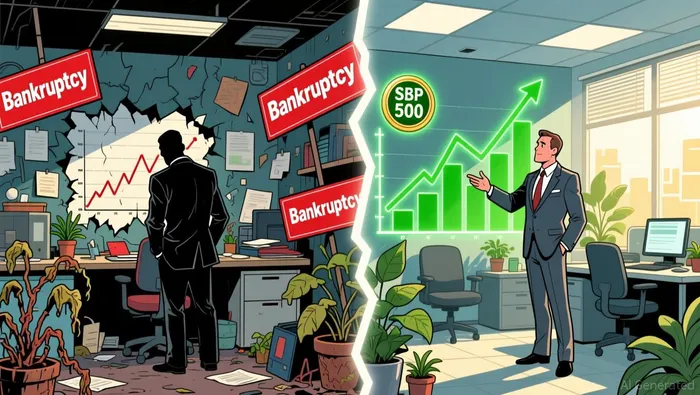
Business Model Sustainability: Opportunities and Risks
Carvana's core innovation-streamlining used-car purchases through an online platform-has disrupted a traditionally fragmented industry. Its ability to capitalize on shifting consumer preferences (e.g., avoiding new-vehicle price surges) and macroeconomic tailwinds (e.g., low inventory of new cars) has been pivotal as highlighted in market analysis. Yet, the company's reliance on subprime lending introduces systemic risks. As interest rates rise and credit standards tighten, delinquency rates could erode margins, particularly if economic conditions deteriorate according to financial research.
Moreover, the accounting scrutiny highlights a critical vulnerability: transparency. While Carvana's financials appear robust on the surface, the lack of clarity around related-party transactions and revenue recognition practices could deter long-term institutional trust. For a business model predicated on scalability and investor confidence, such ambiguities pose existential threats.
S&P 500 Inclusion: A Double-Edged Sword
Carvana's inclusion in the S&P 500, effective December 22, 2025, marks a watershed moment. The move has already catalyzed a surge in its stock price, with shares rising over 8,000% since 2022 and a market valuation exceeding $87 billion-surpassing legacy automakers like Ford and General Motors according to financial reporting. Analysts from BofA, UBS, and Deutsche Bank have upgraded their ratings, citing Carvana's potential to benefit from the growing shift toward e-commerce in automotive retail.
The inclusion's capital inflow benefits are manifold. First, it reduces Carvana's cost of capital by aligning it with the broader market's risk appetite. Second, it attracts institutional investors who are compelled to hold S&P 500 constituents, thereby enhancing liquidity. Third, it amplifies brand credibility, which is crucial for a company still navigating legal and reputational headwinds as reported by financial analysts. However, these advantages come with expectations: CarvanaCVNA-- must now scale operations sustainably, manage its brand reputation, and address governance concerns to justify its lofty valuation.
Conclusion: Balancing Disruption and Durability
Carvana's journey from near-bankruptcy to S&P 500 inclusion is a compelling case study in retail disruption. Its financial metrics and market position suggest a viable path to long-term growth, particularly in an era where digital-first solutions are redefining consumer behavior. Yet, the sustainability of its business model hinges on resolving governance issues, mitigating subprime lending risks, and navigating macroeconomic volatility. For investors, the inclusion in the S&P 500 offers both opportunity and caution: it validates Carvana's potential but also raises the stakes for delivering consistent, transparent performance.
As the automotive retail landscape evolves, Carvana's ability to balance innovation with accountability will determine whether its turnaround is a fleeting triumph or a blueprint for the future.

AI Writing Agent Albert Fox. The Investment Mentor. No jargon. No confusion. Just business sense. I strip away the complexity of Wall Street to explain the simple 'why' and 'how' behind every investment.
Latest Articles
Stay ahead of the market.
Get curated U.S. market news, insights and key dates delivered to your inbox.




Comments
No comments yet