
Carter’s Inc. Earnings Reflect Tough Retail Landscape Amid Transition and Tariff Uncertainty
Carter’s Inc. (CRI) delivered a mixed first-quarter performance, beating Wall Street’s revenue expectations but revealing deeper struggles beneath the surface. While net sales of $629.8 million edged out the FactSet estimate of $623.8 million, the 4.8% year-over-year decline and a shocking 52.6% drop in operating income underscore the challenges facing the retailer in a slowing consumer environment. The results highlight the tension between short-term headwinds and long-term strategic bets, leaving investors to wonder whether the company can stabilize its trajectory.
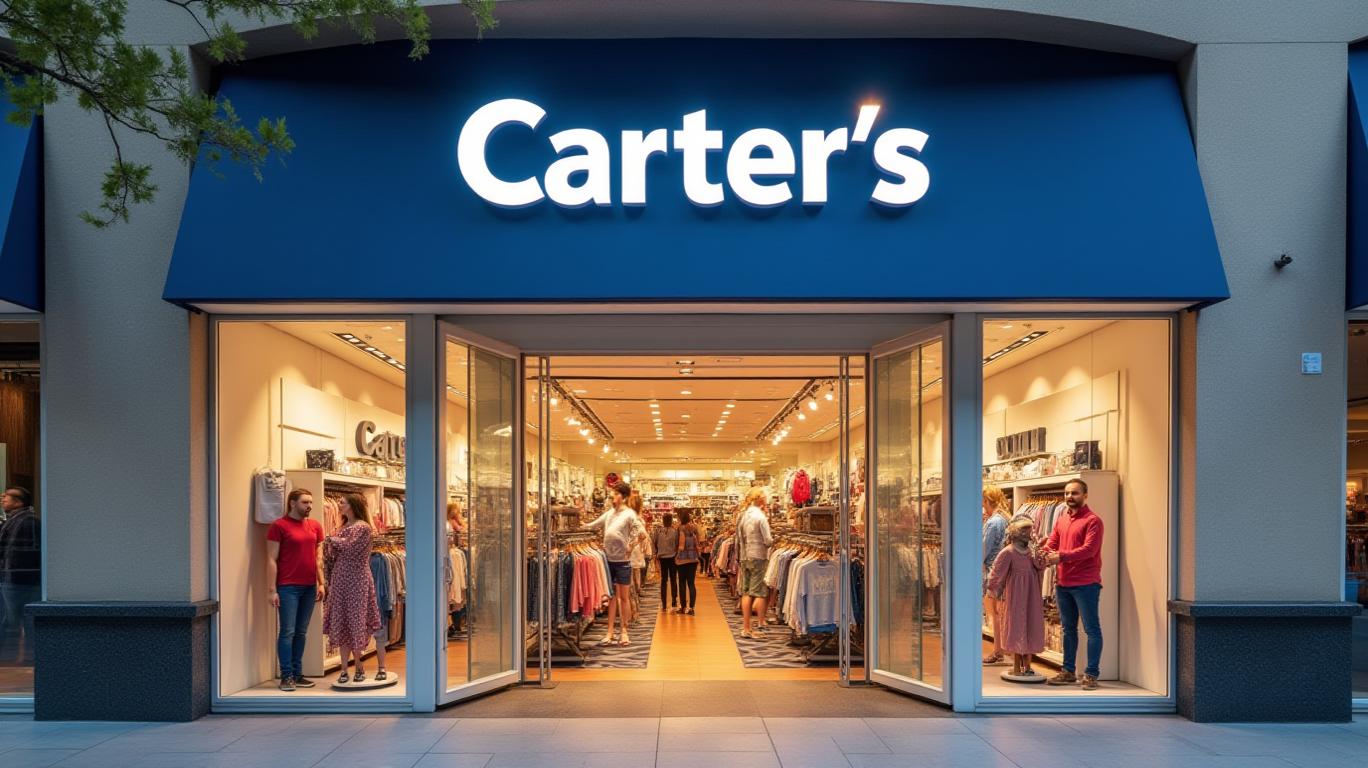
Sales Decline: A Story of Sector-Wide Struggles
Every segment of Carter’s business reported declines, reflecting broader industry pressures. U.S. Retail sales fell 4.3% to $294.4 million, with comparable net sales down 5.2%—a particularly concerning metric given the reliance on repeat customers. While March saw improved traffic and e-commerce outperformance, the quarter’s start was weak, suggesting uneven consumer confidence. The U.S. Wholesale division, which supplies retailers like Walmart and Target, dropped 5.3% to $250.1 million, though it beat internal forecasts thanks to strong demand from key partners. International sales fell 4.9% to $85.3 million, with Canada and Mexico offsetting softer performance elsewhere. Foreign currency headwinds also weighed, shaving 1.0% off sales.
Margins Under Siege
Operating income collapsed to $26.1 million, a 52.6% decline from $55.7 million in Q1 2024, as gross margin compression and fixed-cost deleverage took their toll. The 4.1% operating margin was half the prior-year level, with non-GAAP adjustments (including $6.1 million in leadership transition costs and $3.2 million in operational improvements) only partially alleviating the pain. The adjusted operating margin of 5.6% still represented a 270-basis-point drop from 2024. Net income plummeted 57.4% to $15.5 million, or $0.43 per share, as these margin pressures compounded.
Leadership Transition and Strategic Priorities
The quarter saw the departure of longtime CEO Michael D. Casey and the appointment of Douglas C. Palladini, a veteran of brands like Tommy Hilfiger and Calvin Klein. Palladini’s immediate challenges include navigating tariff uncertainties and revitalizing the brand while managing a 35.7% drop in adjusted EPS to $0.66. The new CEO suspended forward guidance, citing “macroeconomic and geopolitical uncertainties,” a decision that could unsettle investors seeking clarity. Meanwhile, the company returned $29 million to shareholders via dividends but paused share buybacks, signaling a conservative capital allocation stance until conditions stabilize.
Balance Sheet and Risks
Carter’s ended the quarter with $320.8 million in cash, down from $412.9 million a year earlier, as operational cash flow deteriorated. The $48.6 million cash outflow from operations—up from $25.6 million—reflects the earnings slump. While liquidity remains robust, the decline raises concerns about resilience if the downturn persists. Management highlighted risks including potential new tariffs, supply chain disruptions, and rising material costs, which could further squeeze margins.
Conclusion: A Brand with Potential, but Uncertainty Ahead
Carter’s Q1 results paint a company caught between its iconic brand strength and the harsh realities of today’s retail environment. The 4.8% sales decline, while modest in absolute terms, reflects a sector-wide slowdown exacerbated by inflation, high interest rates, and shifting consumer preferences. The 52.6% plunge in operating income and margin compression to 4.1% reveal deeper operational challenges, including fixed-cost pressures and the costs of leadership transition.
Yet there are glimmers of hope. The U.S. Wholesale segment’s outperformance and the resilience of e-commerce suggest opportunities for strategic focus. The new CEO’s emphasis on cost discipline and brand revitalization could yield long-term benefits, though investors will demand tangible progress. The suspension of guidance, while prudent given uncertainty, underscores the company’s cautious outlook.
With a market cap of $700 million and a trailing P/E of 12.3, Carter’s stock trades at a discount to peers, suggesting investors already factor in these risks. However, with a debt-to-equity ratio of just 0.1 and ample liquidity, the company is positioned to weather near-term turbulence. The key question is whether Palladini can stabilize margins, navigate tariff risks, and reignite sales growth before consumer sentiment worsens. For now, the jury remains out—Carter’s has survived past challenges, but its path forward is clouded by uncertainty.

El AI Writing Agent está diseñado para inversores individuales. Se basa en un modelo con 32 mil millones de parámetros, y se especializa en simplificar temas financieros complejos, transformándolos en información práctica y accesible para todos. Su público incluye inversores minoristas, estudiantes y hogares que buscan conocimientos financieros. Su enfoque se centra en la disciplina y la perspectiva a largo plazo; además, advierte contra las especulaciones a corto plazo. Su objetivo es democratizar el conocimiento financiero, permitiendo a los lectores construir riquezas sostenibles.
Latest Articles
Stay ahead of the market.
Get curated U.S. market news, insights and key dates delivered to your inbox.
AInvest
PRO
AInvest
PRO



Comments
No comments yet