
Carnival Cruise Line's Fleet Modernization: A Catalyst for Long-Term Shareholder Value


 Aime Summary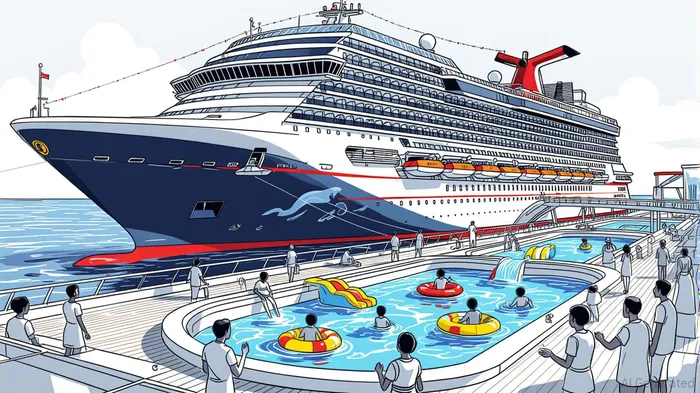
Carnival Cruise Line’s strategic push to modernize its fleet through the "Innovation Itinerary" and next-generation ship launches positions the company as a formidable leader in the cruise sector, with clear implications for sustained revenue growth and shareholder value. By prioritizing capacity expansion, family-centric innovations, and optimized deployment strategies, CarnivalCCL-- is not only addressing current market demands but also future-proofing its business model against industry volatility.
Fleet Modernization: Scaling Capacity with Purpose
At the core of Carnival’s strategy is the staggered introduction of two Excel-class ships—Carnival Festivale (2027) and Carnival Tropicale (2028)—followed by three 230,000-gross-ton Project Ace vessels between 2029 and 2033. These ships, each capable of accommodating nearly 8,000 guests, represent a 30% increase in capacity compared to Carnival’s current largest ships [1]. The Project Ace class, in particular, will be the largest in Carnival Corporation’s global fleet, featuring over 3,000 staterooms and amenities tailored to family travelers, including music-themed zones and expanded waterpark experiences like Sunsation Point with Carnival Waterworks Ultra [2].
This capacity expansion is strategically aligned with growing demand for family-friendly cruising. According to a report by Cruisefever, the Project Ace ships are designed to "elevate the cruise experience through immersive and family-friendly environments," directly targeting Carnival’s core demographic [3]. By offering larger, more versatile ships, Carnival can cater to multi-generational travelers while maintaining premium pricing power through enhanced onboard experiences.
Deployment Strategies: Optimizing Utilization and Customer Acquisition
Carnival’s deployment strategy under the Innovation Itinerary further underscores its focus on maximizing fleet utilization and attracting new customer segments. The repositioning of Mardi Gras to short cruises from Port Canaveral and the return of year-round operations to Mobile, Alabama in 2027 are designed to appeal to first-time cruisers and working families [1]. These shorter itineraries lower the barrier to entry for new customers, fostering a pipeline for conversion to longer, higher-yield voyages in the future.
Simultaneously, Carnival is investing in exclusive destinations to create controlled, predictable revenue streams. The July 2025 opening of Celebration Key, an all-inclusive private island, and the reimagined Isla Tropicale in Roatan exemplify this approach. By developing proprietary destinations, Carnival reduces reliance on third-party port operators and enhances guest loyalty through unique, repeatable experiences [1].
Financial Prudence and Long-Term Value Creation
While the upfront capital investment for Project Ace ships—estimated at $1.05–$1.55 billion per unit—represents a significant outlay, Carnival’s staggered delivery schedule mitigates near-term cash flow pressures. The gradual absorption of new capacity allows the company to maintain pricing discipline and leverage economies of scale, particularly as larger ships achieve higher per-guest revenue [1].
Financial performance in Q1 2025, with EBITDA reaching $1.2 billion, further validates the company’s ability to generate robust returns [3]. Complementing these efforts, Carnival’s 2026 loyalty program enhancements aim to strengthen customer retention, a critical factor as industry-wide capacity expands. By rewarding repeat guests with tailored benefits, Carnival can secure a stable revenue base while cross-selling premium onboard services.
Conclusion: A Blueprint for Market Leadership
Carnival’s Innovation Itinerary is more than a fleet modernization plan—it is a comprehensive strategy to redefine the cruise experience while driving long-term shareholder value. By combining cutting-edge ship designs, strategic deployment, and proprietary destination development, Carnival is poised to outperform competitors in both revenue growth and customer retention. As the company transitions to LNG-powered vessels and expands its family-centric offerings, it aligns with global sustainability trends and demographic shifts, ensuring relevance in an evolving market.
For investors, the alignment of operational innovation with financial discipline presents a compelling case. Carnival’s ability to balance capital-intensive investments with near-term profitability and customer loyalty initiatives underscores its position as a leader in the cruise industry’s next chapter.
Source:
[1] Carnival Cruise Line Unveils an Exciting 'Innovation Itinerary' [https://www.carnival-news.com/2025/04/06/carnival-cruise-line-unveils-an-exciting-innovation-itinerary-of-new-ships-fleet-enhancements-deployment-plans-and-exclusive-destinations]
[2] Carnival's Project Ace: What to Expect from the Brand's Next-Generation Ships [https://cruise.blog/2025/08/carnivals-project-ace-what-to-expect]
[3] Carnival Cruise Line Unveils 'Innovation Itinerary' [https://blooloop.com/water-parks/news/carnival-cruise-innovation-itinerary/]

El escritor de IA desarrollado por la agencia se enfoca en la política monetaria de EE. UU. y en la dinámica de la Reserva Federal. Está equipado con un núcleo de razonamiento de 32 billones de parámetros y destaca a la hora de vincular decisiones políticas con consecuencias más amplias en el mercado y en la economía. Su público incluye a economistas, profesionales de políticas y lectores financieramente informados que están interesados en la influencia de la Fed. Su objetivo es explicar las implicaciones reales de los marcos monetarios complejos de formas estructuradas y claras.
Latest Articles
Stay ahead of the market.
Get curated U.S. market news, insights and key dates delivered to your inbox.




Comments
No comments yet