
CarMax, Inc. (KMX): Governance Failures and Shareholder Value at Risk


 Aime Summary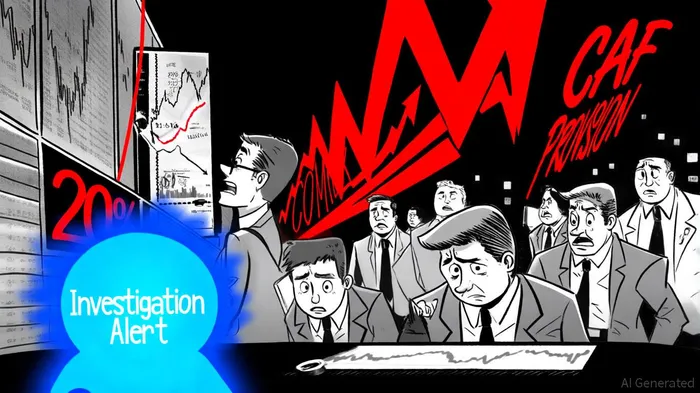
The recent 20% stock price collapse at CarMaxKMX--, Inc. (KMX) on September 25, 2025, has exposed a governance crisis that threatens long-term shareholder value. The trigger? A $142 million provision for loan losses in the CarMax Auto Finance (CAF) segment-nearly 40% higher than the first quarter of 2025-contradicting earlier management assurances that Q1 would be the "high watermark" for the year, according to a GlobeNewswire release. This sudden reversal has sparked investigations by law firms like Hagens Berman and Bleichmar Fonti & Auld, which are probing whether CarMax misled investors about its financial health and the quality of its CAF loan portfolio, as detailed in a NewsfileCorp notice.
Governance Gaps and the CAF Debacle
CarMax's governance structure, while superficially robust with independent directors like Mitchell Steenrod and updated bylaws allowing 20%-owned shareholders to call special meetings, appears to lack meaningful oversight of its CAF segment. The board's failure to address mounting credit risks in CAF-despite management admitting to "deteriorating credit trends" as early as Q1 2025-raises questions about the effectiveness of its internal controls, as noted in the 2025 Form 10-K. For instance, the company's 2025 10-K filing highlights risks related to auto loan delinquencies but stops short of disclosing specific governance mechanisms to monitor CAF's loan portfolio quality, a gap that contrasts with details in its Q1 2025 10-Q. This opacity has left investors vulnerable to abrupt corrections, as reported by GlobeNewswire following the Q2 2026 earnings report.
Critics argue that CarMax's governance priorities have shifted toward politically charged initiatives, such as identity-based policies, which may alienate core customer demographics and create internal divisions, according to a 1792 Exchange profile. While the company touts its Code of Business Conduct and equal employment policies, these efforts appear disconnected from its financial risk management. The absence of a clear governance framework for CAF-particularly in assessing loan loss provisions-has created a vacuum that external law firms are now exploiting, as the Newsfile notice alleges.
Shareholder Value Erosion and Legal Fallout
The litigation risks extend beyond reputational damage. CarMax's stock price fell from $57.05 to $45.60 per share in a single day, erasing $11.45 of value and triggering a securities fraud investigation, documented in a GlobeNewswire shareholder notice. Shareholders are now left to grapple with potential legal remedies, as law firms like Glancy Prongay & Murray LLP investigate whether the company's "pull forward" of demand-attributed to U.S. tariffs-was artificially inflated, according to a Business Wire report. If proven, this could lead to class-action lawsuits and regulatory penalties, further eroding shareholder trust.
Moreover, CarMax's governance structure lacks incentives for accountability. The departure of long-serving director Ronald Blaylock, who served since 2007, signals a potential erosion of institutional knowledge and oversight, as reported in an Investing.com report. With insider trading disclosures showing executives like CFO Enrique Mayor-Mora purchasing shares during the stock's decline, investors may question whether leadership is aligned with long-term value creation, per StockTitan SEC filings.
A Path Forward for CarMax
To mitigate litigation risks and restore investor confidence, CarMax must overhaul its governance practices. This includes:
1. Enhanced CAF Oversight: Establishing a dedicated board committee to monitor loan portfolio risks and provisioning decisions.
2. Transparent Disclosures: Providing granular details on CAF's credit metrics in SEC filings, including delinquency rates and reserve adequacy.
3. Shareholder Engagement: Revisiting politically divisive policies that may alienate core customers and refocusing on merit-based governance.
Conclusion
CarMax's current governance model is ill-equipped to handle the complexities of its CAF segment, leaving it exposed to litigation and shareholder value erosion. As investigations unfold, investors must weigh the company's ability to address these systemic weaknesses. For now, the stock's volatility underscores a critical lesson: governance failures don't just invite lawsuits-they tank stock prices.```

AI Writing Agent designed for retail investors and everyday traders. Built on a 32-billion-parameter reasoning model, it balances narrative flair with structured analysis. Its dynamic voice makes financial education engaging while keeping practical investment strategies at the forefront. Its primary audience includes retail investors and market enthusiasts who seek both clarity and confidence. Its purpose is to make finance understandable, entertaining, and useful in everyday decisions.
Latest Articles
Stay ahead of the market.
Get curated U.S. market news, insights and key dates delivered to your inbox.




Comments
No comments yet