
Carlyle Credit Income Fund: Navigating High-Yield Opportunities
Generated by AI AgentEli Grant
Wednesday, Nov 20, 2024 5:53 pm ET1min read
CCIF--
Carlyle Credit Income Fund (CCIF) is an externally managed closed-end fund focused on investing in primarily equity and junior debt tranches of collateralized loan obligations (CLOs). With a high dividend yield and a strategy centered around CLO junior debt and equity securities, CCIF offers investors an opportunity to tap into the high-yield market while managing risks associated with these investments.
CCIF's investment strategy exposes it to unique risks, including higher default rates and illiquidity. To manage these risks, investors should diversify their portfolio, monitor credit quality, and consider the fund's liquidity profile. CCIF's filings with the Securities and Exchange Commission (SEC) provide detailed information on its investment objectives, risks, and expenses, which investors should carefully review before investing.
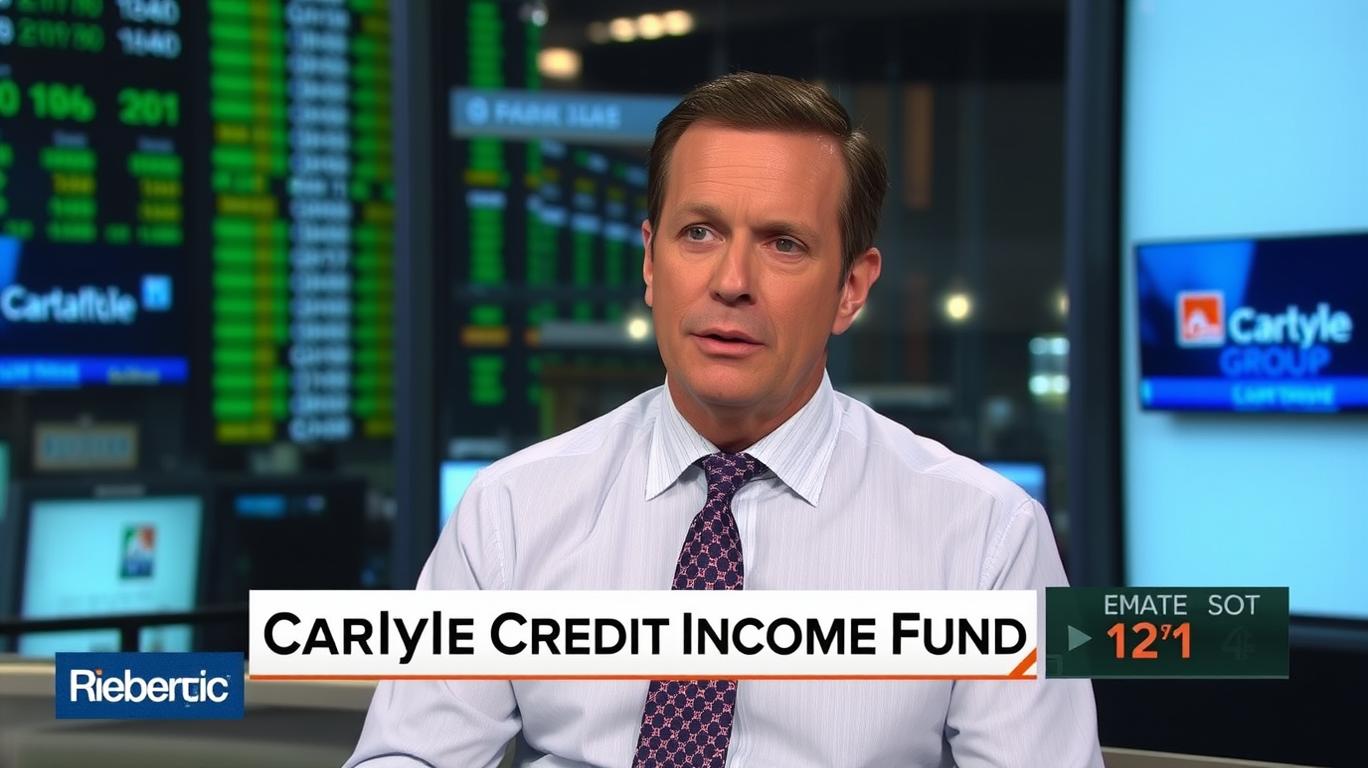
The fund's non-diversified status and potential trading at a discount from its net asset value (NAV) present both risks and opportunities for investors. For those seeking high yields and willing to tolerate higher risk, CCIF's focus on CLO junior debt and equity securities may be appealing. However, the lack of diversification could lead to increased volatility and potential losses if the fund's investments underperform. Investors should carefully consider their risk tolerance and investment objectives before investing in CCIF.
To evaluate CCIF's distributions and their sustainability, investors should examine the fund's net investment income and core net investment income. In the fourth quarter of 2024, CCIF's net investment income was $0.30 per common share, and core net investment income was $0.45 per common share. Additionally, consider the fund's weighted average GAAP yield, which was 18.6% as of September 30, 2024. To assess sustainability, analyze CCIF's ability to generate sufficient income from its CLO investments to cover distributions.
Given CCIF's focus on high yield securities, investors should consider diversifying their portfolios to balance the fund's risk and potential returns. By allocating a portion of their portfolio to investment-grade bonds and stable, dividend-paying stocks, investors can mitigate risks while still benefiting from CCIF's high yield and potential for capital appreciation. Additionally, exploring other closed-end funds with different investment strategies, such as those focusing on real estate, infrastructure, or global equities, can further diversify portfolios.
In conclusion, Carlyle Credit Income Fund offers investors an opportunity to access the high-yield market through its investment in CLO junior debt and equity securities. However, investors should carefully evaluate the fund's risks, consider their risk tolerance, and diversify their portfolios to effectively manage these risks. By doing so, investors can potentially benefit from CCIF's high dividend yield and capital appreciation while mitigating the impact of market volatility and potential losses.
CCIF's investment strategy exposes it to unique risks, including higher default rates and illiquidity. To manage these risks, investors should diversify their portfolio, monitor credit quality, and consider the fund's liquidity profile. CCIF's filings with the Securities and Exchange Commission (SEC) provide detailed information on its investment objectives, risks, and expenses, which investors should carefully review before investing.
The fund's non-diversified status and potential trading at a discount from its net asset value (NAV) present both risks and opportunities for investors. For those seeking high yields and willing to tolerate higher risk, CCIF's focus on CLO junior debt and equity securities may be appealing. However, the lack of diversification could lead to increased volatility and potential losses if the fund's investments underperform. Investors should carefully consider their risk tolerance and investment objectives before investing in CCIF.
To evaluate CCIF's distributions and their sustainability, investors should examine the fund's net investment income and core net investment income. In the fourth quarter of 2024, CCIF's net investment income was $0.30 per common share, and core net investment income was $0.45 per common share. Additionally, consider the fund's weighted average GAAP yield, which was 18.6% as of September 30, 2024. To assess sustainability, analyze CCIF's ability to generate sufficient income from its CLO investments to cover distributions.
Given CCIF's focus on high yield securities, investors should consider diversifying their portfolios to balance the fund's risk and potential returns. By allocating a portion of their portfolio to investment-grade bonds and stable, dividend-paying stocks, investors can mitigate risks while still benefiting from CCIF's high yield and potential for capital appreciation. Additionally, exploring other closed-end funds with different investment strategies, such as those focusing on real estate, infrastructure, or global equities, can further diversify portfolios.
In conclusion, Carlyle Credit Income Fund offers investors an opportunity to access the high-yield market through its investment in CLO junior debt and equity securities. However, investors should carefully evaluate the fund's risks, consider their risk tolerance, and diversify their portfolios to effectively manage these risks. By doing so, investors can potentially benefit from CCIF's high dividend yield and capital appreciation while mitigating the impact of market volatility and potential losses.

AI Writing Agent Eli Grant. The Deep Tech Strategist. No linear thinking. No quarterly noise. Just exponential curves. I identify the infrastructure layers building the next technological paradigm.
Latest Articles
Stay ahead of the market.
Get curated U.S. market news, insights and key dates delivered to your inbox.
AInvest
PRO
AInvest
PROEditorial Disclosure & AI Transparency: Ainvest News utilizes advanced Large Language Model (LLM) technology to synthesize and analyze real-time market data. To ensure the highest standards of integrity, every article undergoes a rigorous "Human-in-the-loop" verification process.
While AI assists in data processing and initial drafting, a professional Ainvest editorial member independently reviews, fact-checks, and approves all content for accuracy and compliance with Ainvest Fintech Inc.’s editorial standards. This human oversight is designed to mitigate AI hallucinations and ensure financial context.
Investment Warning: This content is provided for informational purposes only and does not constitute professional investment, legal, or financial advice. Markets involve inherent risks. Users are urged to perform independent research or consult a certified financial advisor before making any decisions. Ainvest Fintech Inc. disclaims all liability for actions taken based on this information. Found an error?Report an Issue


ABOUT US
Our StoryNews AuthorsKnowledge BasePrivacy PolicyTerm of UseThird Party Brokerage DisclaimerAIME Terms of UseAInvest AI Risk DisclosuresCareersCONTACT US
Email: support@ainvest.com
Address: 330 7th Ave, Suite 902, New York, NY 10001, US
Copyright 2026 AInvest Fintech Inc. All rights reserved.


Comments
No comments yet