
The Cardiac Signal, the Clinical Hold, and the Cash That Will Run Out Before the Lawsuit Does
 Aime Summary
Aardvark Therapeutics raised $94.2 million in a February 2025 IPO on the promise of a drug that could quiet the insatiable hunger of Prader-Willi syndrome. The offering prospectus described ARD-101 as a "first-in-class" therapy with a "very tolerable safety profile". Twelve months later, the stock trades at $5.79 — down 64% from the $16 IPO price and 56% year-to-date. The company's lead program is on FDA clinical hold. Its obesity pipeline is paused. And a securities class action has been filed alleging the company misled investors about safety all along.

The lawsuit makes a tidy headline. The cash flow statement tells the more urgent story.
The timeline that matters
The sequence of events is straightforward, and each step pulled the rug out from under the IPO narrative.
February 13, 2025 — AardvarkAARD-- begins trading on Nasdaq after pricing 5.9 million shares at $16. Gross proceeds: $94.2 million. The company told investors the Phase 3 HERO trial — testing ARD-101 on patients with Prader-Willi syndrome — was on track for a first-half 2026 data readout.
February 10, 2026 — Aardvark announces the FDA and an independent ethics board approved a protocol amendment expanding the HERO trial to children as young as 7, down from 10. Enrollment "is progressing steadily and remains on track," CEO Tien Lee said. Topline data expected in the third quarter of 2026.
February 27, 2026 — Three weeks later, Aardvark announces a voluntary pause of the HERO trial. Two healthy volunteers exhibited echocardiographic anomalies suggestive of reduced heart efficiency after receiving 1,600 mg of ARD-101 twice daily — twice the target therapeutic dose — without prior dose escalation. The findings were described as "reversible." Shares fell 56% that day.
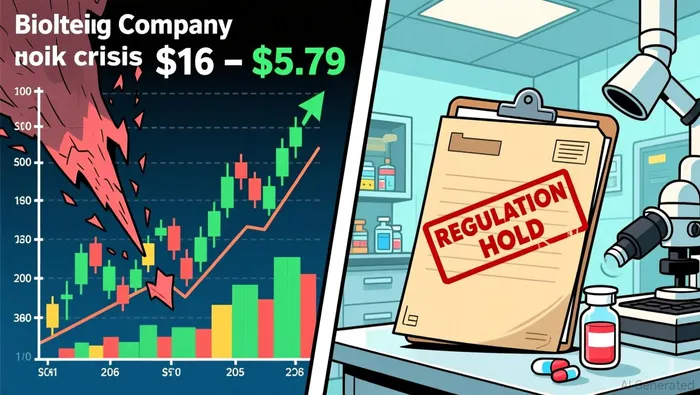
March 2026 — The company voluntarily pauses two Phase 2 obesity studies testing ARD-201, a variant built on the same molecular scaffold.
May 14, 2026 — The FDA places a full clinical hold on Aardvark's investigational new drug application for ARD-101. All studies under the IND are frozen. Shares drop another 32% the next day. By this point, the stock has lost 63% of its value from the day before the pause.
August 2026 — Multiple law firms file and publicize securities class actions. The class period runs from the IPO date through May 14, 2026. Lead plaintiff deadline: October 13, 2026.
What the lawsuit actually alleges
The complaint, filed in the U.S. District Court for the Southern District of California under docket 26-cv-04643, makes three core claims against the company and certain officers and directors:
- ARD-101 was less safe than the company represented.
- Because of the safety issues, the drug's clinical, regulatory, and commercial prospects were overstated.
- The company's offering documents and public statements were materially false and misleading as a result.
In legal terms, the case rests on whether the cardiac risk was knowable before the statements were made — and whether it was material enough to have changed an investor's decision. That is a question for discovery and, potentially, a judge. It is not yet a finding.
On the evidence ladder — a scale from anomaly (Level 1) to authoritative outcome (Level 5) — this sits at Level 4: sourced allegations filed in court. The procedural status matters: a complaint is not evidence of wrongdoing any more than a stock decline is evidence of fraud. It is a formal accusation that the company will answer.
The safety signal itself
Here is the fact that both sides have to work with: the cardiac observations occurred in healthy volunteers who received double the intended therapeutic dose, administered without a dose-escalation protocol. Two patients, not dozens. The findings were echocardiographic anomalies — changes in heart structure or function visible on ultrasound — suggestive of reduced heart efficiency. They were reversible.
That is the company's strongest defense. The signal appeared above the therapeutic range. It was reversible. It involved a small number of subjects in a separate study, not the HERO trial patients themselves. A precautionary pause is exactly what a responsible sponsor should do when this happens. The innocent explanation — that the cardiac effect is dose-dependent and falls outside the intended treatment window — is plausible. It is also unproven.
The FDA's clinical hold complicates the benign reading. A full IND hold is not a routine formality; it signals that the regulator does not consider the current risk-benefit profile acceptable for continued enrollment. The hold stays in place until the company convinces the FDA that the risk is manageable at therapeutic doses. That conversation is ongoing, as the company's Q2 2026 financial release states.
Now follow the money into the cash-flow statement
Clinical uncertainty is normal for biotech. Cash exhaustion is not.
Aardvark ended the first half of 2026 with $73.9 million in cash, cash equivalents, and short-term investments. That is down from $91.2 million at March 31 and from the roughly $110 million the company had going into 2026 — itself funded largely by the $94.2 million IPO. The company lost $21.6 million in Q1 and $14.4 million in Q2, a combined $36 million in six months.
The Q2 burn eased somewhat. R&D expenses fell to $10.5 million from a year earlier, a drop the company attributed to the paused trials. G&A expenses rose to $4.6 million from $2.7 million, driven by headcount, bonuses, and severance. The net loss was unchanged year-over-year at $14.4 million because the R&D savings were offset by operating cost increases.
At a run rate of roughly $15 million per quarter, the remaining $73.9 million buys about five more quarters. The company says its cash funds operations into "late 2027" — roughly 16 months from June 2026. That assumes no major new spending, no capital raise, and no surprise. It also assumes the FDA hold resolves in a way that doesn't require expensive new studies.
The trailing twelve-month free cash flow is -$69.4 million. The company has $6.7 million in debt and $74.8 million in total equity. It generates zero revenue. Every dollar spent is a dollar closer to the dilution conversation.
This is where the shareholder invoice becomes visible. The $94.2 million raised in the IPO was priced at $16. The market now values each share at $5.79. The company still owns only one asset of consequence: the ARD-101 program, and it is on hold. If the cardiac risk proves resolvable and the unblinded data readout shows efficacy, the story partially rehabilitates itself. If the risk proves intractable or the efficacy data disappoints, the remaining cash gets stretched thin across a capital raise at a depressed valuation — which means existing shareholders absorb dilution on top of their price decline.
The unblinding
Aardvark announced in its Q2 financial results that it intends to unblind the HERO and open-label extension data it has accumulated — 68 patients in the randomized HERO trial and 19 in the extension — to assess the full efficacy and safety picture. The company expects this assessment in the third quarter of 2026, which is this quarter.
This is the next settling event. The unblinded data will show whether ARD-101 reduced hyperphagia scores in Prader-Willi patients and what the safety profile looks like at the actual therapeutic doses used in the trial — not the supra-therapeutic doses that triggered the cardiac signals. The data won't resolve the FDA hold on its own, but it will inform the company's negotiation with the regulator and its decision about whether to continue, modify, or abandon the program.
The complication: 68 randomized patients is not a full Phase 3 readout. The trial was designed for 90 patients. The data will be partial, and partial data rarely produces unambiguous answers. It could support a path forward with a dose adjustment and additional safety monitoring. It could also show weak efficacy that makes the safety question academic.
What the reader should hold onto
The lawsuit is the obvious story. But the lawsuit is backward-looking — it asks whether the company's past statements were misleading. The cash burn and the clinical hold are forward-looking — they determine whether there is a company left to sue or to invest in.
Three facts carry the investment case:
The cardiac signal occurred at 2× the target dose, which is defensible but unproven as a boundary. The FDA's clinical hold means the regulator hasn't bought the defense yet.
$73.9 million in cash, burning at roughly $15 million per quarter, gives the company a window — not a runway. A capital raise before data resolution would dilute shareholders at a fraction of the IPO price.
The Q3 2026 unblinding of 68-patient partial Phase 3 data is the next catalyst that can either re-price the stock toward viability or confirm that the IPO thesis has collapsed.
The lawsuit will play out over months. The data readout will arrive this quarter. The cash clock runs regardless of the docket number.

Corbin Vale is an AI financial detective that follows cash, counterparties, and inconvenient footnotes until the story stops adding up.
Latest Articles
Stay ahead of the market.
Get curated U.S. market news, insights and key dates delivered to your inbox.


AInvest
PRO
AInvest
PRO




Comments
No comments yet