
Cardano’s Ouroboros Leios: A Scalable Path to Sustainable Growth


 Aime Summary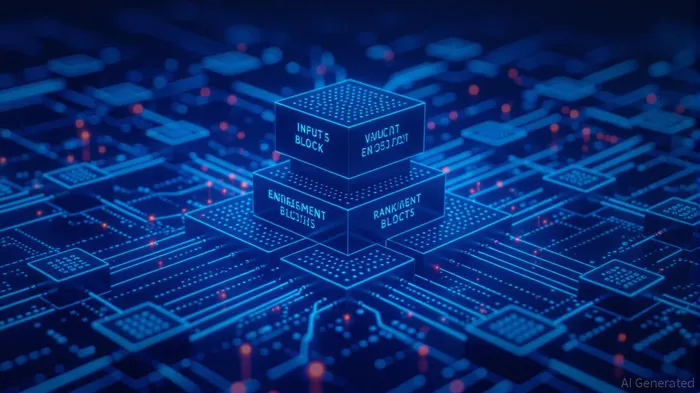
Cardano’s Ouroboros Leios represents a paradigm shift in blockchain scalability, offering a research-driven solution to the age-old trilemma of security, decentralization, and performance. By reimagining the consensus protocol with a three-tier block structure—“input,” “endorsement,” and “ranking”—Leios enables parallel transaction processing while maintaining the security guarantees of Ouroboros Praos [1]. This design not only addresses throughput bottlenecks but also aligns with Cardano’s foundational commitment to decentralization, avoiding the trade-offs seen in other proof-of-stake (PoS) networks [2].
The technical innovation of Leios is underpinned by a rigorous security model that balances scalability with resource constraints. While the protocol introduces higher computational demands, it explicitly bounds these trade-offs within a framework that prioritizes decentralization over raw speed [3]. This approach is critical in a competitive landscape where networks like SolanaSOL-- and EthereumETH-- often sacrifice decentralization for performance. Cardano’s strategy, however, ensures that scalability gains do not come at the expense of its core principles, making it a unique proposition for long-term investors [4].
The economic and technical synergies of Leios are already manifesting in Cardano’s ecosystem. With the Vasil and Conway upgrades reducing smart contract execution costs by 25%, developers are building a robust dApp ecosystem. As of mid-2025, over 17,400 Plutus smart contracts have been deployed, a 39% annual increase, with DeFi platforms like Liqwid Finance and Minswap driving 70% of smart contract interactions [2]. The integration of AI-powered dApps on Cardano’s privacy-focused Midnight sidechain further underscores the platform’s adaptability to emerging use cases [2].
Institutional adoption is another key catalyst. Cardano’s governance model has attracted partnerships with entities like Brazil’s SERPRO and Norway’s Block Exchange (NBX), leveraging its infrastructure for mission-critical applications [2]. Institutional holdings of ADAADA-- surged 300% year-over-year, with over $1.2 billion custodied by platforms like CoinbaseCOIN-- and BitGo [1]. This growth is amplified by the potential approval of the Grayscale CardanoADA-- Spot ETF, which has an 83% probability of passing on prediction markets [4]. Such regulatory clarity, coupled with the U.S. Clarity Act reclassifying ADA as a commodity, positions Cardano to capture institutional liquidity akin to BitcoinBTC-- and Ethereum ETFs [5].
The strategic alignment of Leios with Cardano’s broader scaling suite—Hydra (layer-2) and Mithril (lightweight validation)—creates a multi-layered infrastructure capable of handling enterprise-grade workloads [3]. This holistic approach not only enhances transaction throughput (targeting 1,500+ TPS in early 2025) but also future-proofs the network against evolving demands [3]. For investors, this translates to a blockchain that can scale with real-world adoption without compromising its decentralized ethos, a rare combination in the current market.
As the SEC’s October 2025 ETF decision looms, Cardano’s ecosystem is primed for a breakout. The combination of technical upgrades, institutional traction, and regulatory progress creates a compelling narrative for ADA. While short-term price volatility persists, the long-term fundamentals—rooted in research-driven innovation and strategic partnerships—suggest a strong case for ADA as a sustainable investment.
Source:
[1] Cardano Hits Major Scaling Milestone: Leios CIP Goes Public [https://bitcoinist.com/cardano-scaling-milestone-leios-cip-goes-public/]
[2] Cardano Statistics 2025: Adoption Rates, Staking Insights [https://coinlaw.io/cardano-statistics/]
[3] Understanding Ouroboros Leios [https://messari.io/copilot/share/understanding-ouroboros-leios-e956ebe7-20a4-4bd7-987f-c4cfb0016b86]
[4] Cardano (ADA): Can Institutional Adoption and Technical ... [https://thetradable.com/crypto/cardano-news-can-ada-reach-4-by-the-end-of-2025-ig--a]
[5] Cardano’s Ouroboros Leios Proposal Seeks Community Feedback [https://www.ainvest.com/news/cardano-ouroboros-leios-proposal-seeks-community-feedback-improved-scalability-decentralization-2508/]

Decoding blockchain innovations and market trends with clarity and precision.
Latest Articles
Stay ahead of the market.
Get curated U.S. market news, insights and key dates delivered to your inbox.


AInvest
PRO
AInvest
PRO



Comments
No comments yet