
Cardano News Today: Intentional Test or Felony Attack? Cardano's Chain Split Sparks FBI Probe and Regulatory Scrutiny


 Aime Summary
Cardano's blockchain network experienced a temporary chain split on November 21, 2025, after a malformed delegation transaction exploited a long-standing software vulnerability, prompting an emergency response from developers and a public apology from the user responsible. The incident caused the network to fracture into two competing chains, with newer node versions accepting the problematic transaction while older versions rejected it, according to an incident report from Cardano's governance organization, Intersect. The split led to delays in block production and raised concerns about orphaned transactions and potential double-spends, though no user funds were lost.
The malformed transaction, attributed to a stake pool operator identified as "Homer J," was described by CardanoADA-- co-founder Charles Hoskinson as a "premeditated attack" by a disgruntled actor seeking to undermine the network's reputation according to reports. Homer J, who admitted responsibility on X (formerly Twitter), claimed the action was a personal challenge to test the system using AI-generated code, but expressed regret for the unintended consequences. "I didn't have evil intentions," they wrote, acknowledging the negligence and stress caused. Hoskinson, however, emphasized the severity, stating the incident could be classified as a felony in multiple jurisdictions and prompted an FBI investigation.
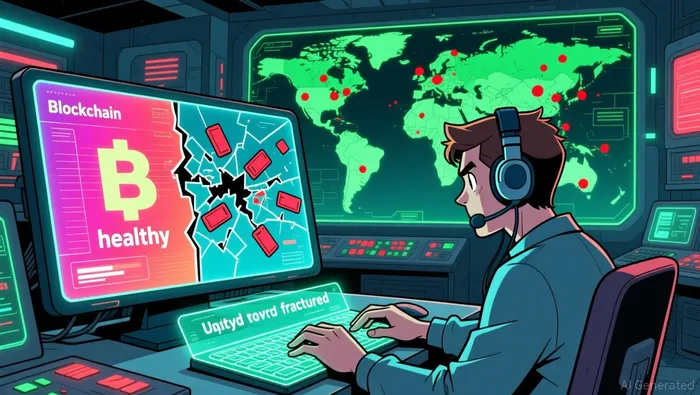
Cardano's ecosystem swiftly mobilized to address the crisis. Stake pool operators were directed to upgrade to node versions 10.5.2 and 10.5.3 to realign the network, with Intersect confirming the "healthy" chain was becoming dominant as operators adopted the patched software. The split disrupted derivatives markets, with Coinglass data showing $91 million in short leverage against ADAADA-- versus $11.5 million in long positions, heightening risks of further price declines. Despite these challenges, ADA's price fell modestly to $0.40 from $0.44, reflecting broader crypto market weakness rather than isolated damage from the incident.
Hoskinson urged the community to remain unified, calling Cardano's resilience "proven" by its rapid response and technical coordination. "Cardano is not going to fail," he stated, while acknowledging the need for ongoing vigilance against vulnerabilities according to reports. Intersect and Input Output Global (IOG) released a detailed incident report, outlining the root cause and steps taken to prevent future occurrences. A full after-action review is pending once reconciliation of ledger discrepancies is complete according to the report.
The incident highlights the fragility of blockchain networks even when core protocols remain functional. While Cardano's governance structure enabled a coordinated fix, the event underscores the risks of adversarial actors exploiting technical flaws. With the FBI and other authorities now involved, the case may set precedents for how regulatory bodies address cyberattacks on decentralized systems.

Stay ahead of the market.
Get curated U.S. market news, insights and key dates delivered to your inbox.


AInvest
PRO
AInvest
PRO



Comments
No comments yet