
Cardano News Today: DeFi's Smart Contract Weaknesses Expose Systemic Fragility


 Aime Summary
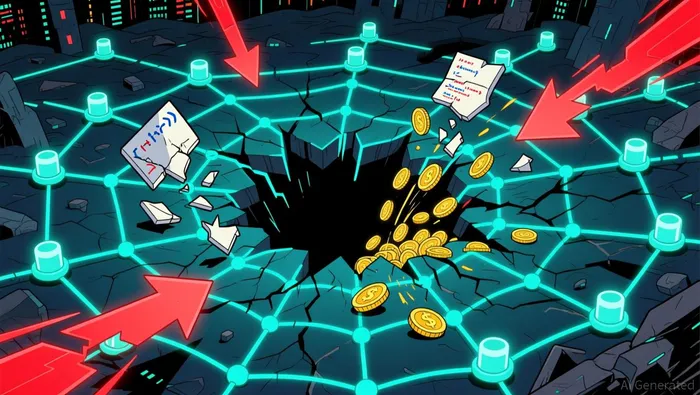
The decentralized finance (DeFi) sector faces mounting scrutiny after a series of high-profile exploits exposed vulnerabilities in its protocols, with the latest breach draining over $116 million from the Ethereum-based platform BalancerBAL--. The incident, confirmed by a TradingView report citing blockchain security firm PeckShield, marks Balancer's third major security failure since 2020 and highlights the fragility of DeFi's smart contract infrastructure.
On November 3, 2025, attackers exploited a faulty access control vulnerability in Balancer's boosted pools, which use Ether-based derivatives. By manipulating the `manageUserBalance` function, hackers drained assets including 6,587 WETH ($24.46 million), 6,851 osETH ($26.86 million), and 4,259 wstETH ($19.27 million) from the EthereumETH-- mainnet and cross-chain networks like Base and Polygon, the report said. The stolen funds were funneled into a single wallet, 0x506D19...AE03207, before being swapped through Balancer's vault contracts.
 The attack's impact extended beyond Balancer, with its forked version, Beets on the SonicS-- network, also reporting losses. Analysts suggest the exploit targeted a shared vulnerability in liquidity infrastructure codebases. Balancer's governance token, BALBAL--, dropped over 8% intraday as investors reacted to the breach, according to a FinanceFeeds report.
The Balancer incident underscores a broader fragility in DeFi's interconnected protocols. A separate crisis emerged when Elixir, a synthetic dollar protocol, announced the retirement of its deUSD stablecoin after its primary borrower, Stream Finance, collapsed. Stream's external fund manager revealed a $93 million loss, triggering a chain reaction that saw its xUSDXUSD-- token plummet below $0.20. Elixir halted redemptions for 80% of deUSD holders and plans to redeem remaining balances 1:1 for USDCUSDC-- via a claims portal.
These events echo the 2022 collapses of Terra's UST and Iron Finance, where leveraged lending loops and opaque collateral practices amplified contagion. Elixir emphasized that deUSD liabilities remain fully backed but stressed the need to unwind lending positions with Stream.
While security flaws dominate headlines, governance challenges further complicate DeFi's evolution. CardanoADA--, a blockchain with 1.3 million active staking users, struggles to translate this engagement into DeFi activity. Founder Charles Hoskinson attributes the platform's low total value locked (TVL) of $271 million to coordination and accountability issues rather than technological shortcomings, in a Coinotag analysis. Despite high development activity, Cardano's TVL pales against Ethereum's $85.5 billion and Solana's $11.29 billion.
Hoskinson's proposed solutions—integrating BitcoinBTC-- liquidity and real-world lending via projects like Midnight and RealFi—aim to break the "chicken and egg" cycle of low liquidity and participation. However, ADA's weak technical indicators, including a price below key moving averages, suggest skepticism about the strategy's immediate impact.
The recent spate of attacks has intensified calls for improved security audits and governance frameworks. Balancer's team urged users to revoke protocol approvals and monitor wallet activity, while Elixir prioritized creditor protection over immediate market operations. Meanwhile, projects like Mutuum Finance, which is nearing 90% allocation in its presale, emphasize rigorous audits and testnet deployments to build trust, according to a GlobeNewswire release.
As DeFi's total value locked rebounds from a 2024 low, the sector's resilience will depend on addressing both technical vulnerabilities and governance gaps. For now, investors remain wary, with Balancer's BAL token and ADAADA-- both trading below critical support levels.

Stay ahead of the market.
Get curated U.S. market news, insights and key dates delivered to your inbox.






Comments
No comments yet