
Cardano News Today: Cardano's Split: Technical Glitch or Governance Failure?


 Aime Summary
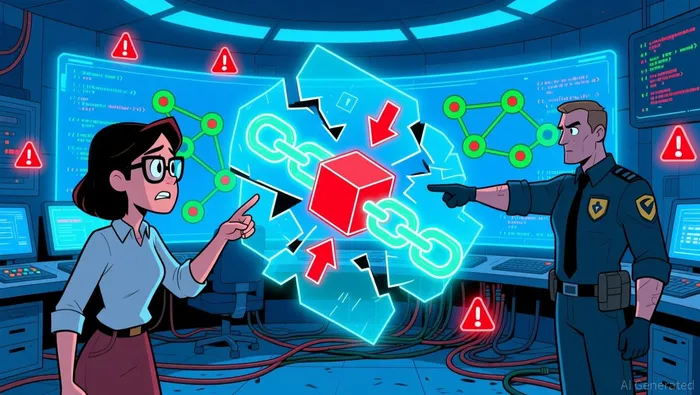
Cardano's November 2025 chain split, triggered by a deliberately crafted delegation transaction exploiting a deserialization bug, exposed critical vulnerabilities in the blockchain's consensus mechanisms and governance structure. The incident, which caused the network to diverge into two parallel chains for several hours, disrupted exchanges, block explorers, and decentralized finance (DeFi) applications, leading to temporary halts in ADAADA-- trading and price volatility. According to reports, the event sparked debates over accountability, legal risks for developers, and the need for stronger validation safeguards in blockchain infrastructure.
The exploit originated from a malformed transaction that bypassed validation on newer node versions but was correctly rejected by older ones, creating inconsistent ledger states. This divergence, first observed on a testnet the day prior, highlighted a long-standing bug dating back to 2022. Input Output Global (IOG), the CardanoADA-- Foundation, and other stakeholders coordinated an emergency response, releasing patched node software within three hours to realign the network. Despite the swift fix, the fragmented state caused operational chaos: exchanges like CoinbaseCOIN-- and Upbit suspended ADA deposits and withdrawals, block explorers displayed conflicting data, and DeFi protocols faced mismatches in transaction confirmations according to reports.
The incident's aftermath added layers of controversy. An anonymous developer, "Homer J (AAA)," publicly apologized, claiming the transaction was a personal experiment using AI-generated commands, while co-founder Charles Hoskinson framed the event as a "premeditated attack" by a disgruntled stake pool operator. Hoskinson's characterization prompted federal investigations, including FBI involvement, and led to the resignation of an IOG engineer who cited concerns over potential legal repercussions for routine development errors according to reports. This tension between technical oversight and governance accountability underscored broader challenges in managing decentralized ecosystems.
Market reactions were immediate. ADA prices dropped over 6% in the days following the incident, risking its lowest annual close. Derivatives data revealed bearish sentiment, with short positions accounting for 53.29% of derivatives contracts and the long-to-short ratio at 0.8765. The technical indicators, including an oversold RSI and a MACD nearing a bearish crossover, further signaled potential for a 15% price decline to $0.3264. However, the Cardano community approved a $2 million treasury loan to fund tier-1 exchange listings for native tokens, aiming to stimulate demand and stabilize ADA's value.
The incident has intensified calls for architectural upgrades to prevent future splits. Experts emphasize the need for stricter validation rules, formal verification of critical components, and improved coordination among node operators. The event also exposed weaknesses in version fragmentation and backward compatibility, as older and newer nodes processed transactions differently. Strengthening these areas, along with enhanced testing protocols and clearer governance frameworks, will be critical for Cardano's long-term resilience.

Stay ahead of the market.
Get curated U.S. market news, insights and key dates delivered to your inbox.




Comments
No comments yet