
Cardano News Today: Cardano's Chain Split Ignites Debate: Stress Test or Security Failure?


 Aime Summary
The CardanoADA-- blockchain experienced a rare and disruptive chain split on November 21, 2025, after a malformed delegation transaction exploited a known software vulnerability, according to an incident report from the Cardano governance body Intersect. The incident, described by co-founder Charles Hoskinson as a "premeditated attack" by a disgruntled stake pool operator, temporarily fractured the network into two competing chains, triggering emergency upgrades and a 6% drop in ADA's price.
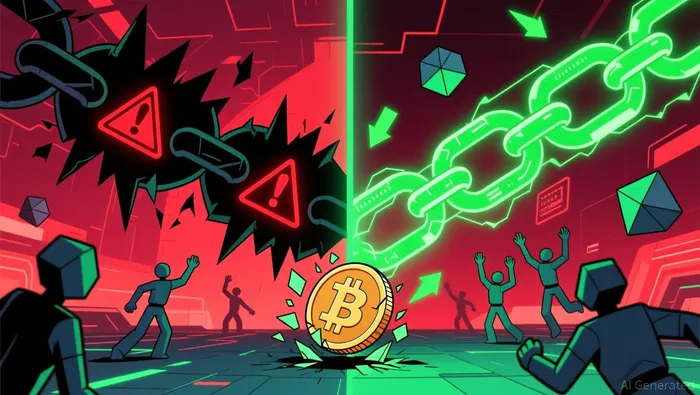 The chain split originated from a delegation transaction with a formatting error that bypassed validation checks on newer node versions but was rejected by older ones. This divergence exploited a bug in Cardano's underlying software library, first identified in 2022, causing nodes to process transactions differently and creating parallel "poisoned" and "healthy" chains. Intersect confirmed no user funds were lost, but the disruption affected block production, DeFi protocols, and stake pool rewards, with full recovery expected to take weeks.
Hoskinson attributed the incident to a former testnet participant, who later apologized on X, admitting he used AI-generated terminal commands to replicate the malformed transaction. The user claimed no malicious intent, stating he acted alone and felt "ashamed" upon realizing the scale of the disruption. Despite his apology, Hoskinson and Intersect emphasized the attack's premeditated nature, noting the operator had previously sought ways to harm Cardano's reputation.
In response, developers deployed emergency patches, urging node operators to upgrade to versions 10.5.2 and 10.5.3 to restore consensus. Exchanges and wallet providers paused deposits and withdrawals as a precaution, though retail wallets remained unaffected due to their use of components that safely ignored the malformed transaction, as reported. Intersect and IOG praised the ecosystem's swift coordination but acknowledged the incident exposed long-standing vulnerabilities, with the FBI now investigating potential cyberattack links.
The market reaction was swift. ADAADA-- fell from $0.44 to $0.40 in the immediate aftermath, extending a broader crypto downturn that saw $20 billion in liquidations in October. Derivatives data revealed heightened bearish sentiment, with open interest rising 30% to 1.64 billion ADA, while long positions face $7.5 million in liquidation risk near $0.38. Analysts warn that further declines to $0.30 could follow if the network fails to stabilize, though oversold technical indicators hint at potential short-term rebounds.
Hoskinson called for unity among stakeholders, stressing that Cardano's resilience depends on cooperation during crises. "Cardano is not going to fail," he stated, highlighting the ecosystem's ability to recover from past setbacks. Intersect pledged a detailed post-mortem report to outline root causes and preventive measures, while the community remains divided between those viewing the incident as a necessary stress test and critics questioning the project's security fundamentals, as reported.
As upgrades proceed, the focus shifts to whether Cardano can rebuild confidence amid renewed scrutiny of its governance and technical safeguards. For now, the network's canonical chain appears to be reasserting dominance, but the incident underscores the fragility of decentralized systems in the face of both human error and targeted exploitation.
---

Stay ahead of the market.
Get curated U.S. market news, insights and key dates delivered to your inbox.






Comments
No comments yet